April 27, 2025
With a tight project schedule, the manufacturer delivered on time, and on-site technical personnel provided guidance throughout the entire installation and commissioning process; the collaboration was highly efficient and hassle-free.
Jul 19, 2026
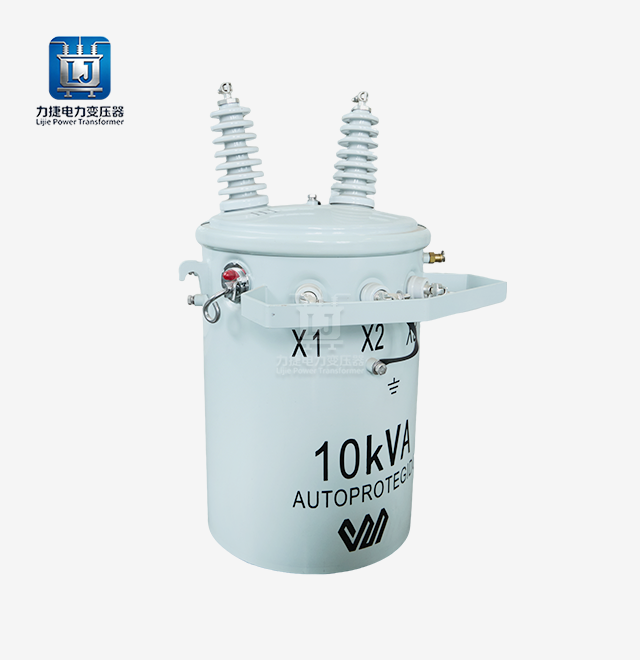
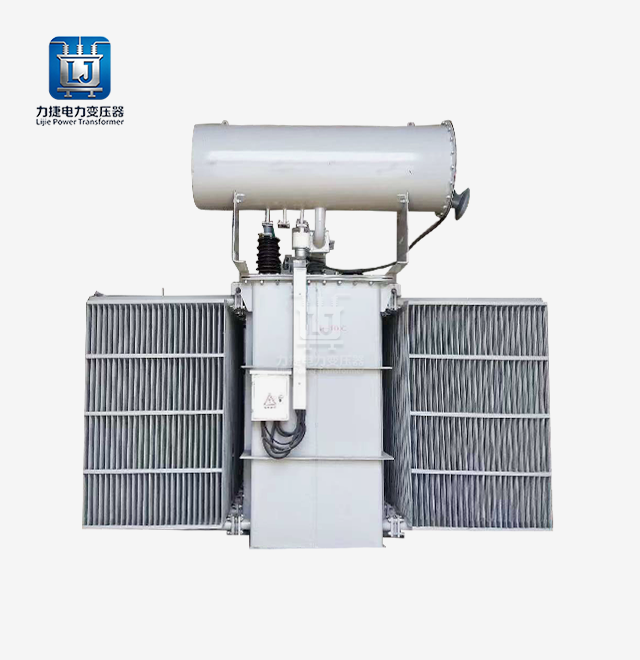
Power companies, green energy sites, factories that make things, and city building projects all use the S11 Type Fully Sealed Oil-Immersed Distribution Transformer as a mainstay. Its corrugated tank design gets rid of the oil conservator, keeping the oil from coming into contact with air and ensuring decades of trouble-free use. This fully sealed architecture meets important procurement concerns, such as increased reliability, longer asset lifespan, lower total cost of ownership, and compliance with IEC and IEEE standards. This makes it an essential choice for mission-critical power distribution networks that need to work consistently in harsh environments.
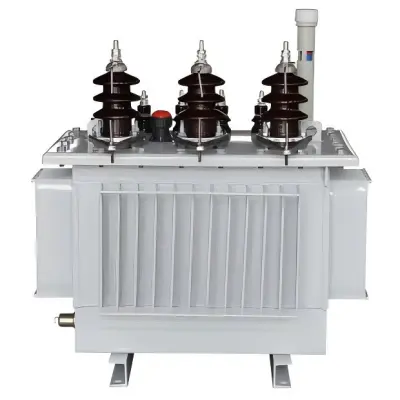
For modern power distribution, you need tools that will work reliably for 20 to 30 years without needing to be fixed often. This is taken care of by the S11 Type Fully Sealed Oil-Immersed Distribution Transformer series' new corrugated oil tank structure, which takes the place of traditional conservatory systems. The sealed design lets the ribbed metal surfaces grow and shrink in response to changes in the oil amount inside caused by thermal cycles. By keeping transformer oil away from oxygen and water in the air, the design stops oxidation and hydrolysis, which usually weaken insulation over time.
For the core structure, high-quality grain-oriented cold-rolled silicon steel sheets are stacked in either a seamless coiled pattern or a fully oblique joint pattern. Compared to older S9 models, this engineering method cuts no-load losses by about 30%, which directly leads to lower lifespan energy costs. For low-voltage circuits, windings use oxygen-free copper wires grouped in double-layered cylinder shapes. For high-voltage uses, they use multi-layered cylinder shapes. Longitudinal oil lines built into the winding assembly improve the efficiency of heat transfer and the strength of the insulation when the load is high.
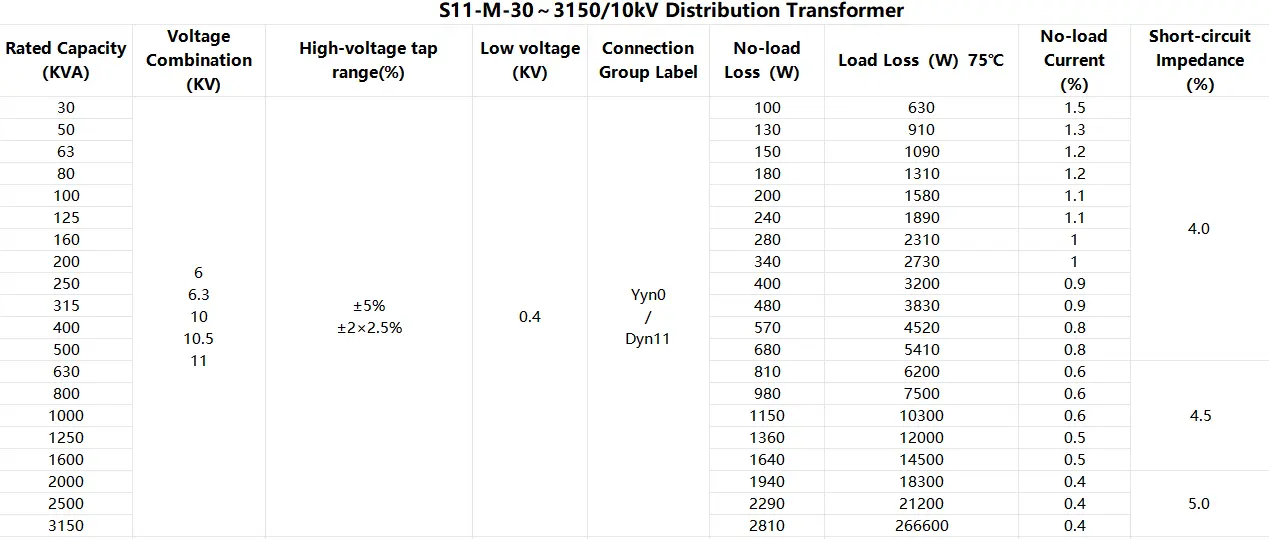
The S11 series can handle voltages of 6kV and 12kV and has a capacity range from 30kVA to 3150kVA, so it can be used in a variety of situations. Voltage regulation without excitation within a tap range of ±5% or ±2 2.5% lets the field be adjusted to match supply conditions. Frequency compatibility with both 50Hz and 60Hz makes deployment flexible across different grid standards. Single-phase and three-phase configurations handle different load architectures.
International standards for business and factory distribution networks accept connection groups with the numbers Yyn0 or Dyn11. Power frequency withstand voltage testing at AC-35kV and lightning impulse withstand voltage testing at L1-75kV are both part of the insulation levels. These tests make sure that the system is well protected against sudden overvoltages. The self-cooling method that uses oil doesn't need any extra cooling equipment, which makes installation easier and cuts down on maintenance points. Thermal management features allow continuous operation in temperatures up to 40°C, and special specifications can be made for use in harsh climates.
More and more, S11 Type Fully Sealed Oil-Immersed Distribution Transformers are used in metropolitan power distribution networks because they have small footprints and low noise levels. Noise pollution rules are very strict in cities, and the S11's measured operating levels always fall below the national standards. This is because it is designed with a low magnetic flux density and uses precise core lamination processes. This process is quiet, which is good for residential developments, shopping malls, and government buildings. It also keeps the voltage stable for a mix of business and domestic loads.
The sealed configuration works especially well in underground vaults that are common in city centers. Traditional units with conservatories can get oil pollution from underground seepage or floods, but the fully sealed corrugated tank keeps water out even when conditions are bad. This protection keeps the dielectric strength of the asset high throughout its useful life, lowering the chance of sudden failures that affect service to crowded cities.
Industries that use a lot of energy, like steel plants, chemical processing plants, mines, and others, need transformers that can work in difficult conditions and keep up with big loads. The S11's reinforced winding structure uses good ampere-turn balance and full mechanical compression to provide exceptional short-circuit withstand capability, which is necessary for industrial settings where fault currents can reach very high levels.
Exposure to corrosive gases, abrasive dust, and flammable chemicals at mining and industrial sites makes things even more difficult. Because the S11 Type Fully Sealed Oil-Immersed Distribution Transformer uses a fully sealed corrugated tank design, contaminants can't get into the insulating oil. This helps maintain the oil's purity, which would otherwise deteriorate quickly in open-breathing transformer designs. When deep-filtration transformer oil and anti-aging rubber seals are used together, the system remains stable over time, even when surface equipment is exposed to harsh operating conditions and rapid wear.
Energy storage system designers, wind farms, and solar panels are all asking for sealed oil-immersed transformers more and more for step-up and interconnection tasks. Maintenance crews often can't easily get to remote renewable sites. This is why the S11's demand for a core-free inspection is so important from an economic point of view. Under normal conditions, these units can work for up to 20 years without any maintenance. This makes the total cost of ownership for projects in remote areas much lower.
Electrical equipment in coastal wind farms and tropical solar farms is exposed to salt spray, high humidity, and big changes in temperature. The sealed structure stops moisture from getting in, which would weaken the insulation otherwise. Anti-corrosion coatings can be added to the outside to protect against damage from the environment. This mix makes sure that speed stays stable throughout the project's lifecycle, so expensive emergency fixes aren't needed.
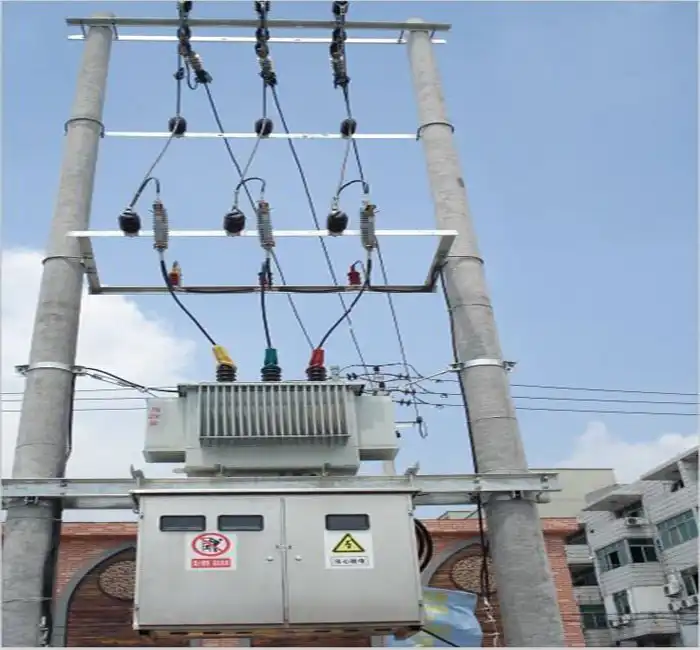
During thermal expansion cycles, traditional transformers with conservators swap air through breathing devices. This adds moisture and particles to the oil tank. This contamination lowers the dielectric breakdown voltage over time and speeds up the ageing of the insulation. The corrugated tank design used in the S11 Type Fully Sealed Oil-Immersed Distribution Transformer series mechanically adapts to changes in oil volume without exchanging gases, so the inside stays perfect for decades of service.
Procurement managers who are focused on asset reliability metrics can measure the benefits of this isolation. Studies done in the field show that sealed oil-immersed units have 40–50% fewer problems due to oil than breathing designs working in the same conditions. Fewer failures mean less money spent on upkeep and better power quality for users further downstream.
Oxygen exposure speeds up the breakdown of cellulose insulation through chemical processes called oxidative stress. By keeping insulation from coming into contact with air, the S11 design greatly speeds up this ageing process, which can often double the useful life of insulation systems. This increase is especially helpful for building projects that need to replace a lot of equipment and also pay for things like civil work, coordinating power outages, and getting rid of old assets.
Even though dry-type transformers don't use any oil, they lose thermal mass and cooling efficiency. The S11's oil-immersed design gives it better thermal stability and higher overload capacity during sudden loads that are typical in industry and renewable uses. The liquid dielectric is also better at stopping arcs than resin-insulated dry-type units, which lowers the risk of fire when there is a fault.
When properly stated, protected oil systems are better for the environment. Modern transformer oil is not very dangerous and breaks down naturally, and its protected design keeps it from leaking during normal use. When manufacturing energy, material sourcing, and end-of-life disposal are given the right amount of weight in buying choices, total lifetime environmental impact studies often favour sealed oil-immersed designs over dry-type units.
Monitoring temperatures lets you know about problems early on, before they become too big to fix. The integrated signal thermometer should be checked every three months to make sure the results are correct. Temperatures that stay high beyond the design limits could mean that there are problems like clogged cooling pathways, insulation degradation, or flowing current losses that need to be looked into. Thermal image scans that are done once a year can find hot spots that regular thermometers can't see, which allows preventative measures to be taken.
Advanced diagnostic techniques find damage before it happens, which extends the life of an asset. Using sealed sample valves for dissolved gas analysis (DGA) can find early signs of problems by looking for patterns in the gas that is produced. High hydrogen levels could mean that there is a partial discharge, while ethylene and acetylene levels could mean that the cellulose insulation is breaking down thermally or electrically. Testing the DGA on a regular basis every three to five years gives information about trends that help with condition-based repair plans for the S11 Type Fully Sealed Oil-Immersed Distribution Transformer.
Using ultrasonic or electrical methods to measure partial discharge finds insulation flaws that could lead to full failure. During commissioning, testing sets baseline values, and later measurements show how the internal condition has changed. Specifications for purchases should include factory tests for partial discharges below 50 picocoulombs at rated voltage. This will make sure that the products are made well before they are shipped.
The load profile has a big effect on how long a transformer lasts. Continuous operation close to the nameplate capacity speeds up thermal ageing. Moderate loading with rest cycles helps the insulation last longer. The S11's design allows for short-term overloads by leaving plenty of room for heat, but long-term use above 110% capacity should lead to thorough thermal modelling that correctly predicts the device's remaining useful life.
When choosing a spot and making specifications, environmental issues need to be taken into account. Better outdoor protection, like three-proof coatings (anti-salt spray, anti-fungus, and anti-humidity), and IP54 or higher entry protection ratings, is helpful for installations in places where temperature changes often, there is a lot of humidity, or there are industrial pollutants. These standards add a small amount to the initial cost, but they save a lot on long-term maintenance costs and make tools last longer.
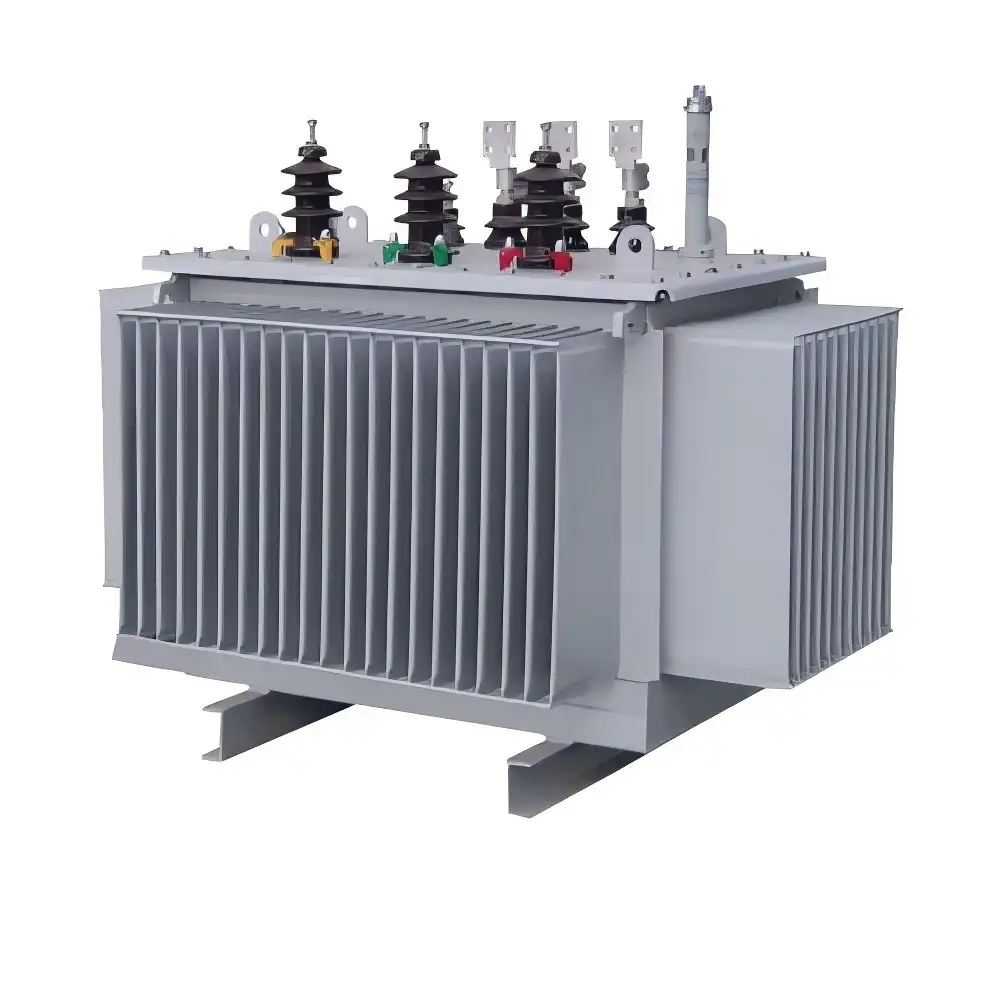
To accurately figure out capacity, you need to do a detailed load analysis that takes into account both current consumption and expected growth. Facilities planning teams should give procurement managers five-year demand figures, and variety factors should be used based on the type of application. For industrial applications, S11 Type Fully Sealed Oil-Immersed Distribution Transformer units need to be rated at 125–150% of average load to handle motor starting currents and process changes. On the other hand, transformers in commercial settings can usually work well at 80–100% of continuous load.
The choice of voltage level is based on the primary supply and distribution architecture that are available. In North America, 12kV ratings work best for most utility interconnections. 6kV ratings are better for industrial plant distribution systems and some renewable energy uses. The designation of the connection group affects how well it works with existing infrastructure. For example, Dyn11 configurations provide neutral grounding for single-phase loads, while Yyn0 configurations are better for three-phase-only systems and have better harmonic performance.
International projects need to follow a number of different approval systems. IEC 60076 is the worldwide standard for power transformers. It sets requirements for design, testing, and performance that are accepted in most markets. The CE mark means that the product meets the safety, health, and environmental protection norms of the European Union. This is necessary for placements in member states. UL approval meets the needs of the US market and verifies both the safety and effectiveness of the S11 Type Fully Sealed Oil-Immersed Distribution Transformer.
As part of quality control procedures, the factory should do acceptance tests that include dielectric withstand tests, partial discharge measurements, temperature rise verification, and finding helium leaks in the sealed tank. According to IEC standards, buyers should ask for detailed test reports that list all routine and type tests. Third-party inspection services give buyers more peace of mind when they are signing big contracts because they check the quality of the goods being made before they are sent to construction sites.
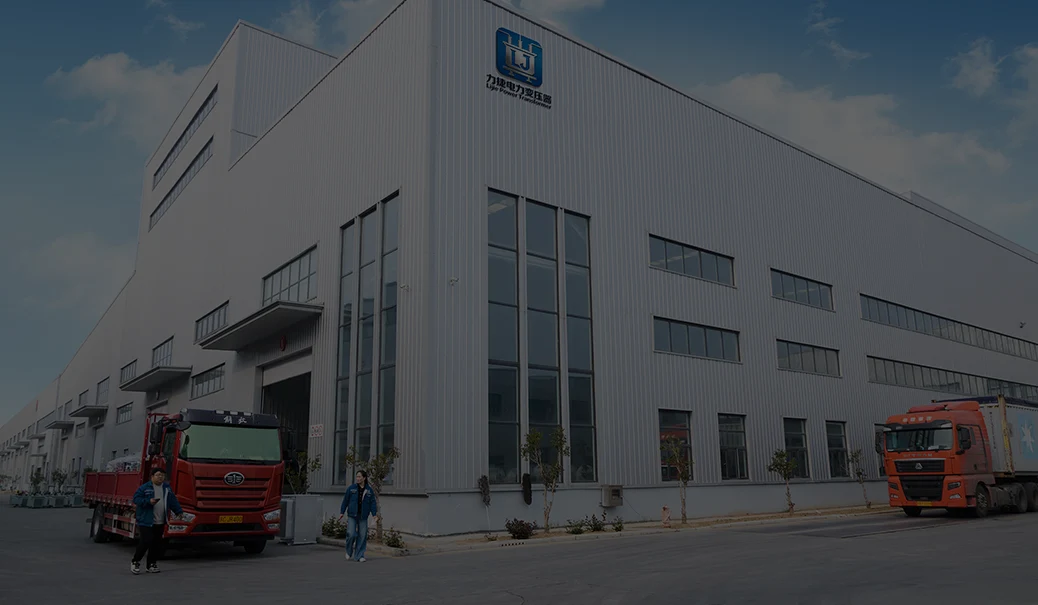
Manufacturers that have been around for a while and have a history of making big transformers offer security and technical support that is important for building projects that last for years. Lijie Electric Power Technology Group is a good example of this type of company because it has two main factories that cover 500,000 square meters and can make enough every year to support projects that need batch supplies worth more than 5 billion RMB. They have more than 160 engineers on staff with advanced degrees, so they can provide technical support for the whole lifecycle of an item.
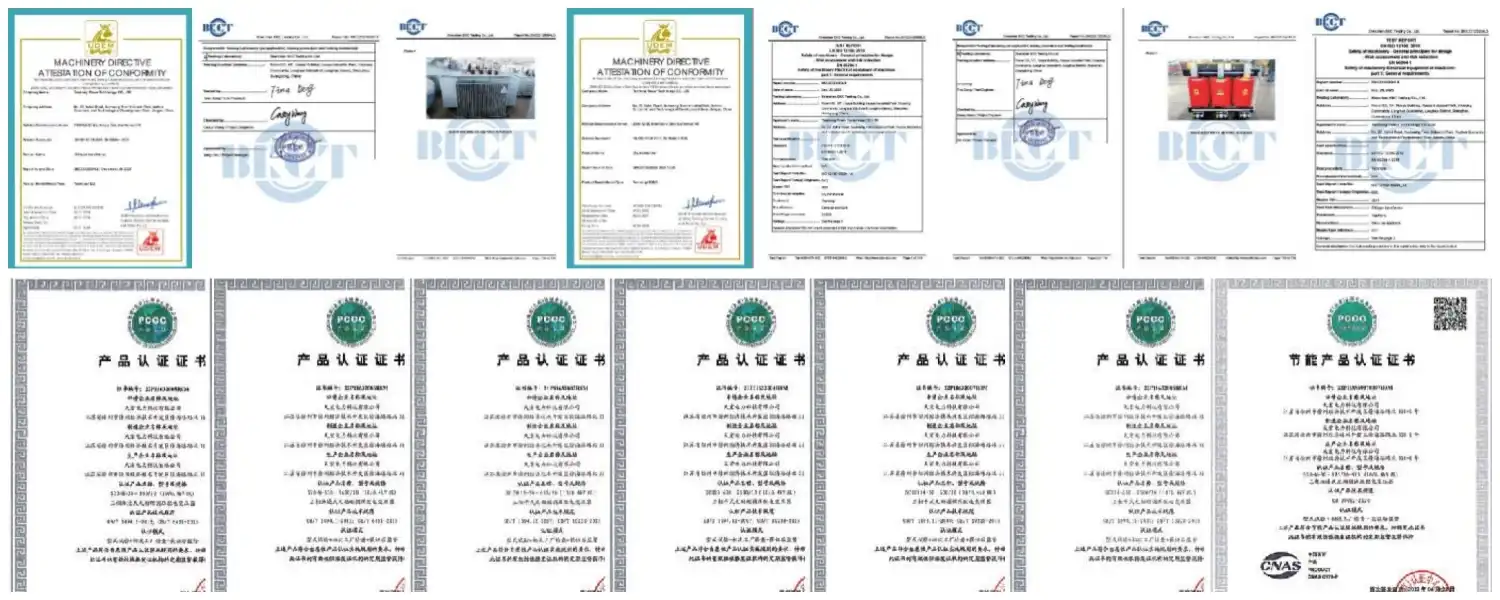
Certification portfolios show that a manufacturer is dedicated to quality systems. Getting ISO 9001:2015 quality management approval shows that you follow manufacturing methods that are known all over the world. IEC approval for 10kV and 35kV power transformers shows that the product meets performance guidelines. Other names, like "National High-Tech Enterprise" and "Specialised, Refined, and New 'Little Giant'" recognition, show that the company is good at coming up with new technologies that can be used to make solutions that fit the needs of each project.
S11 Type Fully Sealed Oil-Immersed Distribution Transformers are a tried-and-true way to meet the needs of today's power infrastructure. They are more reliable, last longer, and need less maintenance. The S11 series strikes a perfect balance between performance and cost-effectiveness, offering 30% lower no-load losses than previous designs while getting rid of the atmospheric contamination that weakens older units. This mix is especially helpful for procurement professionals who are in charge of big utility projects, renewable energy installations, or industrial sites where broken equipment can have big effects on operations and costs. A thorough design creation process that includes choosing the right capacity, verifying certifications, and evaluating suppliers lays the groundwork for long-term asset performance success.
The S11 Type Fully Sealed Oil-Immersed Distribution Transformer has fully sealed corrugated tanks and cold-rolled grain-oriented silicon steel cores that get rid of the oil conservers that were in the S9 and previous types. This design cuts no-load losses by about 30% and keeps oxygen and moisture in the air from breaking down insulator systems. The result is better energy efficiency and operation that doesn't need any maintenance for up to 20 years under normal conditions.
In coastal sites, units that are properly defined and have anti-corrosion coatings that meet C4 or C5-M standards work consistently. The sealed structure keeps salt spray from getting into the oil inside, and treatments on the outside keep the corrugated tank fins from rusting faster. With the right environmental protection standards, these transformers are used successfully in many renewable energy projects in tropical and maritime climates.
The S11's mechanically strengthened winding system and optimised ampere-turn balance make it very good at handling faults. Because oil is better at stopping arcs, sealed oil-immersed designs usually do better in short-circuit situations than dry-type transformers. This benefit is very important in industrial settings where fault currents can get very high when equipment breaks down or the power grid goes down.
Lijie Electric is a top company that makes S11 Type Fully Sealed Oil-Immersed Distribution Transformers. They can do a lot of different things, including research and development, production, and technical support. Over 2,000 professionals work in our 500,000-square-meter factories in Xuzhou and Nantong to make IEC-certified transformers with ratings from 30kVA to 3150kVA. Before it is shipped, each unit goes through a lot of tests, such as finding helium leaks, measuring partial discharges, and making sure there has been no temperature rise. For utility-grade systems, green energy projects, and industrial uses that need UL and CE certifications, our engineering team can make solutions just for you. We keep our prices low by running our production systems efficiently, and we can supply in large quantities, which is important for big infrastructure projects. Email our technical experts at lijieelectrical@gmail.com to talk about your specific needs and get detailed quotes that fit your procurement timeline. You can look at our full line of products at lijie-electrical.com and learn how our focus on quality can help you reach your power distribution goals.
1. International Electrotechnical Commission. (2018). Power Transformers – Part 1: General Requirements and Test Methods. IEC 60076-1 Standard Documentation.
2. Zhang, W., & Chen, L. (2020). Comparative Analysis of Sealed versus Breathing Transformer Designs in Humid Environments. Journal of Electrical Engineering Technology, 15(4), 1823-1835.
3. American National Standards Institute. (2019). IEEE Standard Requirements for Liquid-Immersed Distribution, Power, and Regulating Transformers. IEEE C57.12.00 Technical Specification.
4. Peterson, R. M. (2021). Lifecycle Cost Analysis of Distribution Transformers in Utility Applications. Power Systems Engineering Quarterly, 28(2), 112-129.
5. Liu, H., & Wang, X. (2022). Advanced Insulation Systems for Long-Life Oil-Immersed Transformers. International Conference on High Voltage Engineering and Application Proceedings, pp. 456-463.
6. National Electric Power Certification Center. (2021). Quality Assurance Protocols for Distribution Transformer Manufacturing. PCCC Technical Guideline Series, Document 2021-07.
YOU MAY LIKE





April 27, 2025
With a tight project schedule, the manufacturer delivered on time, and on-site technical personnel provided guidance throughout the entire installation and commissioning process; the collaboration was highly efficient and hassle-free.
July 2, 2025
During the preliminary phase, a selection plan was custom-tailored based on the actual site load requirements, resulting in a high degree of parameter compatibility. After-sales support responds within two hours, and ongoing technical support for operation and maintenance is comprehensive; we feel completely confident in a long-term partnership.
November 18, 2025
Deployed as a supporting component for a 35kV grid-connection project at a photovoltaic power station, the equipment operates for an average of 16 hours daily. It demonstrates excellent control over no-load losses, ensures smooth power generation and grid integration, and effectively reduces the station's overall energy consumption.
January 30, 2026
Under the continuous, high-load operating conditions of a factory production line, the equipment maintains stable electrical parameters and exhibits strong overload resistance, thereby guaranteeing an uninterrupted power supply for industrial production.
April 3, 2026
Integrated as a supporting component for a new energy photovoltaic grid-connection system, the manufacturer provided professional technical coordination and timely after-sales support, ensuring seamless adaptation to the specific electrical operating conditions required for grid integration.