April 27, 2025
With a tight project schedule, the manufacturer delivered on time, and on-site technical personnel provided guidance throughout the entire installation and commissioning process; the collaboration was highly efficient and hassle-free.
Jul 12, 2026
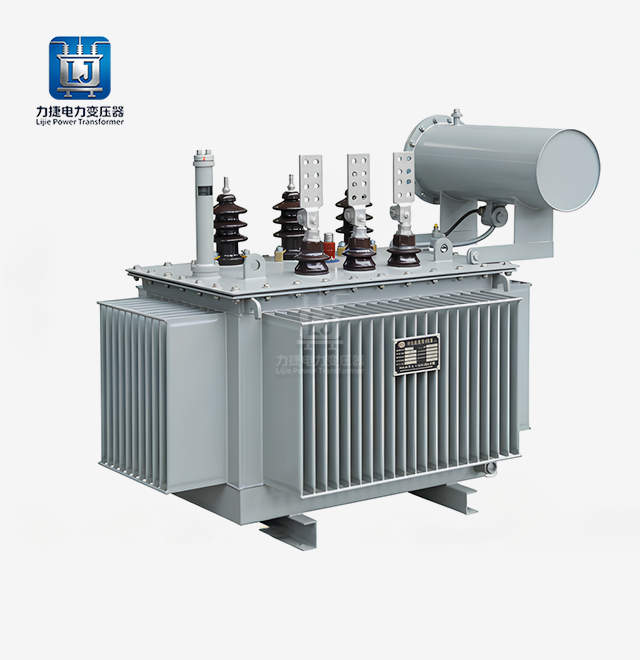
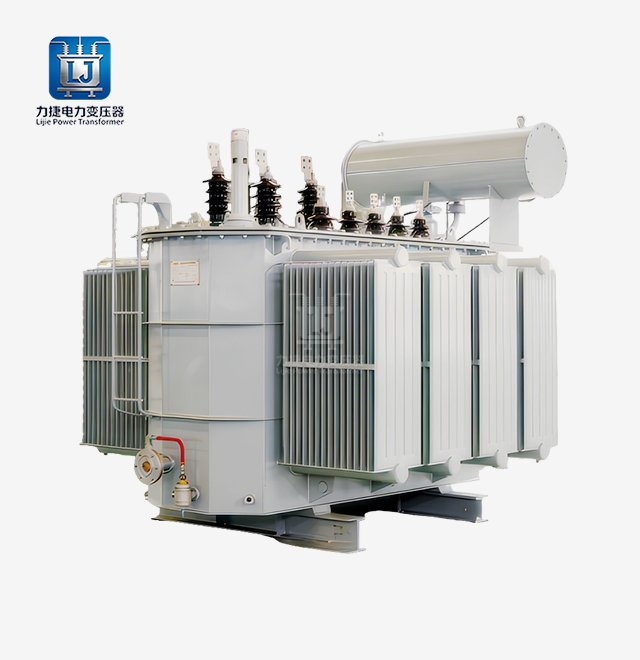
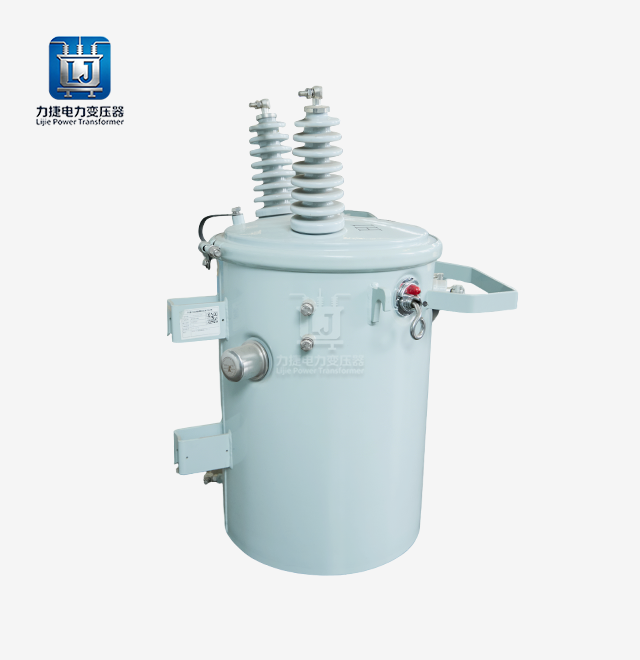
The S(B)H15 type three-phase fully sealed distribution transformer is the best choice for building projects that need to provide stable power for decades. This advanced amorphous alloy transformer cuts no-load losses by 80% compared to regular silicon steel models. This helps grid operators with their biggest problem: the cost of energy over a transformer's whole life. Its fully sealed design keeps oil from oxidising and moisture from getting inside, so it can be used for more than 30 years with almost no maintenance. When purchasing managers look at transformer options for green energy installations, industrial buildings, or urban substations, they need to know why this technology works better than older options in order to make smart, cost-effective choices.
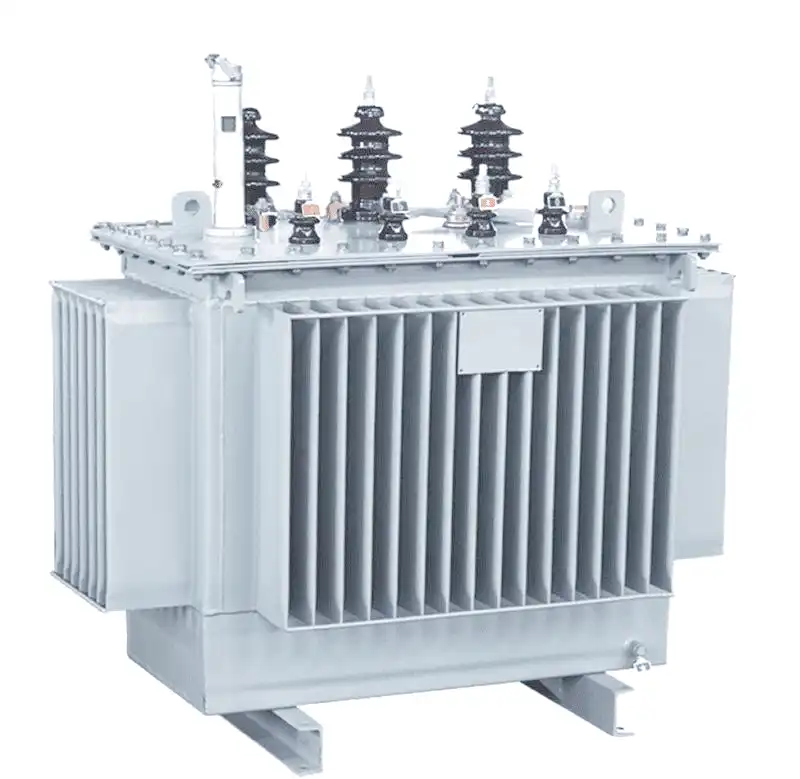
Amorphous metal is a big change in the way magnetic materials work. In contrast to crystalline silicon steel, these iron-boron-silicon alloys solidify quickly, making an atomic structure that is not ordered. This special setup lets magnetic domains align and realign with very little resistance, which greatly lowers hysteresis losses. The result is real practical savings: an amorphous core magnetises and demagnetises much more effectively during each power cycle, reducing no-load losses by around 70–80% compared to regular S11 or S13 series transformers.
The term "fully sealed" refers to corrugated-fin tanks that can handle temperature growth without the need for separate tanks. Through breather devices, traditional oil-immersed transformers expose the shielding oil to airborne moisture and oxygen, which weakens the dielectric over time. Our sealed design has corrugated walls that are shaped like bellows and can adapt to changes in oil volume across temperature ranges from -40°C to +40°C while still keeping the oil completely sealed.
The S(B)H15 type three-phase fully sealed distribution transformer has voltage ranges from 6kV to 12kV and power levels from 30kVA to 2500kVA. Dyn11 vector groups are chosen for their better harmonic suppression, and Yyn0 arrangements are used when the system calls for them. Tap changers offer ±5% or ±2×2.5% voltage adjustment ranges through non-excitation mechanisms. They work well in stable grid conditions where regulation isn't needed often.
Operating frequencies can work with both 50Hz and 60Hz networks, which makes international deployment possible. Standard technical parameter tables show that the impedance voltage should be between 4 and 6 percent for distribution applications. This makes sure that the short-circuit protection works well with the other parts of the system. These specs are in line with IEEE and IEC rules, and they meet the approval needs of the North American and European markets, such as UL and CE marks.
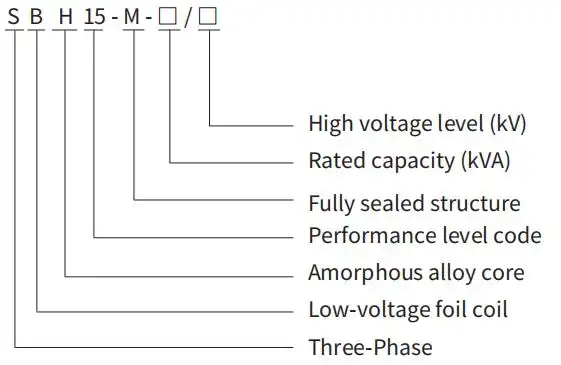
Choosing the S(B)H15 type three-phase fully sealed distribution transformer depends on the benefits that can be measured and how they affect the total cost of ownership. We looked at performance data from thousands of installations side by side to find out where this technology really adds value.
The highest rating for energy efficiency, according to national standards, is Level 1. Take a look at a 1000kVA unit that runs at 50% load for 8,760 hours a year: traditional silicon steel transformers use about 15,000 kWh just to lose power when they're not in use. This is cut down to 3,000 kWh by amorphous options, which saves 12,000 kWh a year. Based on average commercial energy rates of $0.12/kWh in the U.S., this saves each transformer $1,440 per year. Over the course of 25 years, the savings add up to $36,000, which is often more than the initial cost of the equipment.
When winding patterns are optimised, load losses also go down. Copper wires are annealed at exact temperatures, which reduces resistance losses during times of high demand. Overall power transmission usually gets better by 2% to 3% when efficiency gains are added together. This saves a lot of energy across distribution networks with dozens or hundreds of units.
Because sealed construction doesn't need regular oil testing, moisture sampling, or breather maintenance like traditional transformers do, it's easier to keep up with. When technicians' time, testing tools, and consumables are added in, utility companies say that maintenance labour costs for each conventional oil-immersed unit are about $800 to $1,200 a year on average. For sealed amorphous transformers, all that needs to be done is regular thermal imaging and load tracking, which can be done during standard rounds without any harm.
This benefit for upkeep is especially useful for sites that are far away. Transformers are often put in places where technicians can't easily get to them, like in wind farms, solar arrays, and mining operations. A S(B)H15 type three-phase fully sealed distribution transformer that doesn't need to be maintained and works reliably for decades cuts down on operational complexity and costs by a huge amount.
Amorphous cores naturally have higher magnetostriction than silicon steel, which could make the noise louder. This problem is less of a problem with modern mechanical locking devices. We use special clamping structures covered in plastic that stop shocks before they reach the tank walls. Field measures show that sound levels are less than 50 dBA at a distance of one metre for units up to 1000kVA, which meets strict standards for hospital grounds, schools, and residential areas.
When putting transformers near things that are sensitive to noise, acoustic treatment is a must. Local laws are making it harder for machines to make noise at night, so choosing a low-noise generator is now a legal matter instead of just a matter of choice.
To buy transformers successfully, you need to find a balance between technical specs, business terms, and supplier dependability. After working on jobs ranging from installing a single unit to updating the grid with 500 or more S(B)H15 type three-phase fully sealed distribution transformers, we've learned what makes a procurement good or unsuccessful.
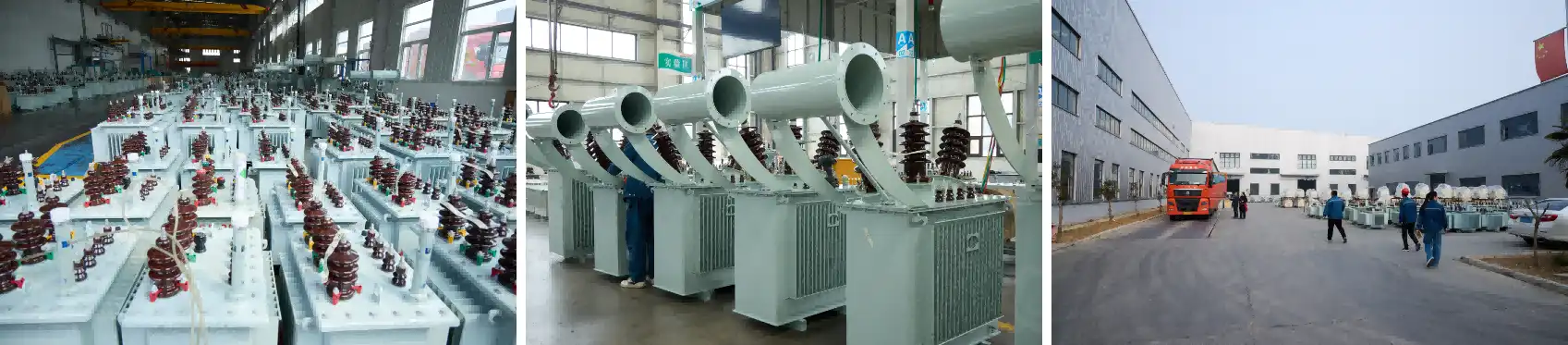
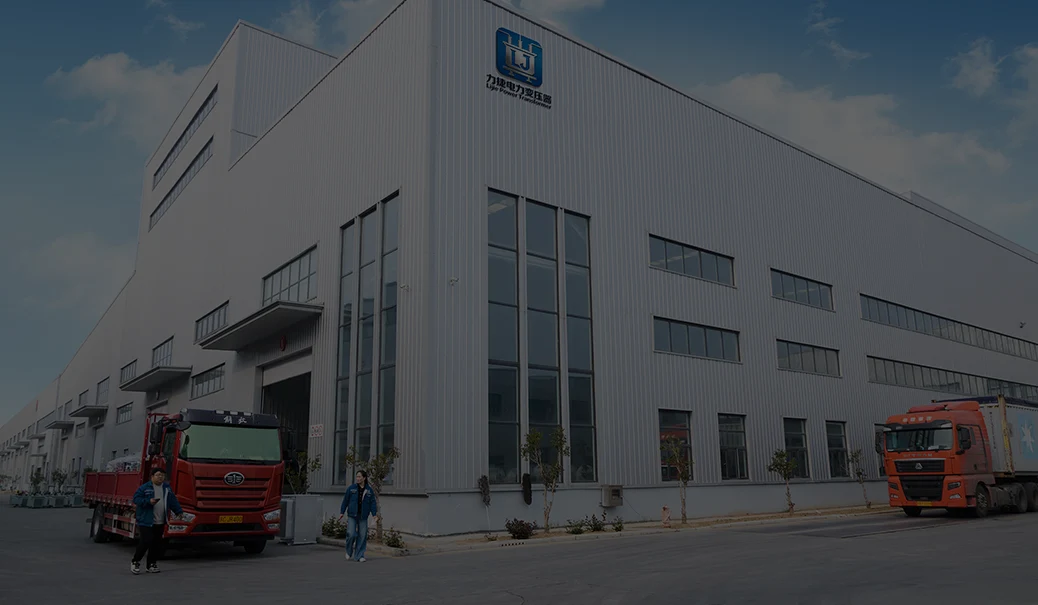
When buying from well-known manufacturers, going factory-direct has a lot of benefits over going through distributors. Buyers can talk directly to tech teams about customisation, see clear quality paperwork, and easily manage their warranties. Lijie Electric's 500,000-square-meter manufacturing footprint in Xuzhou and Nantong shows that it has the production capacity needed to complete large projects. Our 2,000-person staff includes 160 engineers with advanced degrees, which gives us a level of technical depth that smaller companies can't match.
Transformer prices are based on the cost of raw materials, how hard they are to make, and whether they meet certification requirements. Amorphous metal ribbon costs more than silicon steel, usually 15 to 25 percent more than base transformer costs. But this extra cost up front is economically justified when energy savings over the life of the product are added to the total cost model.
Making a volume promise opens up better price levels. A 50-unit order usually saves 8–12% of the cost of a single-unit purchase by making better use of materials and making better use of production schedules. Buyers should set up framework deals with set yearly amounts while still allowing for freedom in delivery times. This way of doing things strikes a good balance between minimising costs and managing project cash flow.
Handling at the port and transportation within the country must be carefully thought out for international goods. A 1500kVA transformer is about 3,500 kg heavy and measures 2.4m x 1.8m x 2.1m. It needs special tools to move and permission to do so. Think about these logistics when planning the timeline for your project. Shipping and installation take longer than you think they will, which can cause expensive delays.
The dependability and efficiency of an S(B)H15 type three-phase fully sealed distribution transformer are directly affected by how well it is installed. We have put together a list of the best installation practices that we have learned from helping with thousands of field commissioning tasks in a wide range of working settings.
The foundation must be able to hold the weight of the transformer + 25% as a safety cushion. It takes at least 28 days for concrete pads to harden before tools can be put on them. Make sure the surfaces are level within a ±0.5° range to stop oil from pooling, which lowers the cooling effectiveness. Drainage holes around the installation site keep it from flooding, since even a short submersion can damage a sealed tank.
Clearance requirements follow NFPA 70 and local electrical codes. Keep all sides at least 1.2 meters clear for repair work and emergency reaction. Indoor setups need enough air flow because even though sealed transformers don't give off oil vapour, they still produce heat that needs to be removed by airflow.
Resistance in grounding systems must be less than 10 ohms, and it should be less than 5 ohms for sensitive electrical load safety. Drive earth rods to the right depth and use earth testers to check the resistance. Multiple parallel ground paths help fault currents spread out better and lower step-potential risks when there is a fault.
Pre-energization testing makes sure that the placement is correct. For new transformers, the insulation resistance test between the windings and the ground should be more than 1,000 megohms. Values less than 500 megohms mean that moisture contamination might be present and needs to be looked into. Turns ratio testing shows that the voltage transformation is working right, with ratios that are within ±0.5% of what the nameplate says they should be.
During the initial energisation process, thermal imaging finds hot spots that could mean link problems or core flaws. Set up standard thermal profiles that can be used as a guide for future maintenance checks. Watch the loading slowly for the first 72 hours to give you time to find any problems before it reaches its full rated capacity.
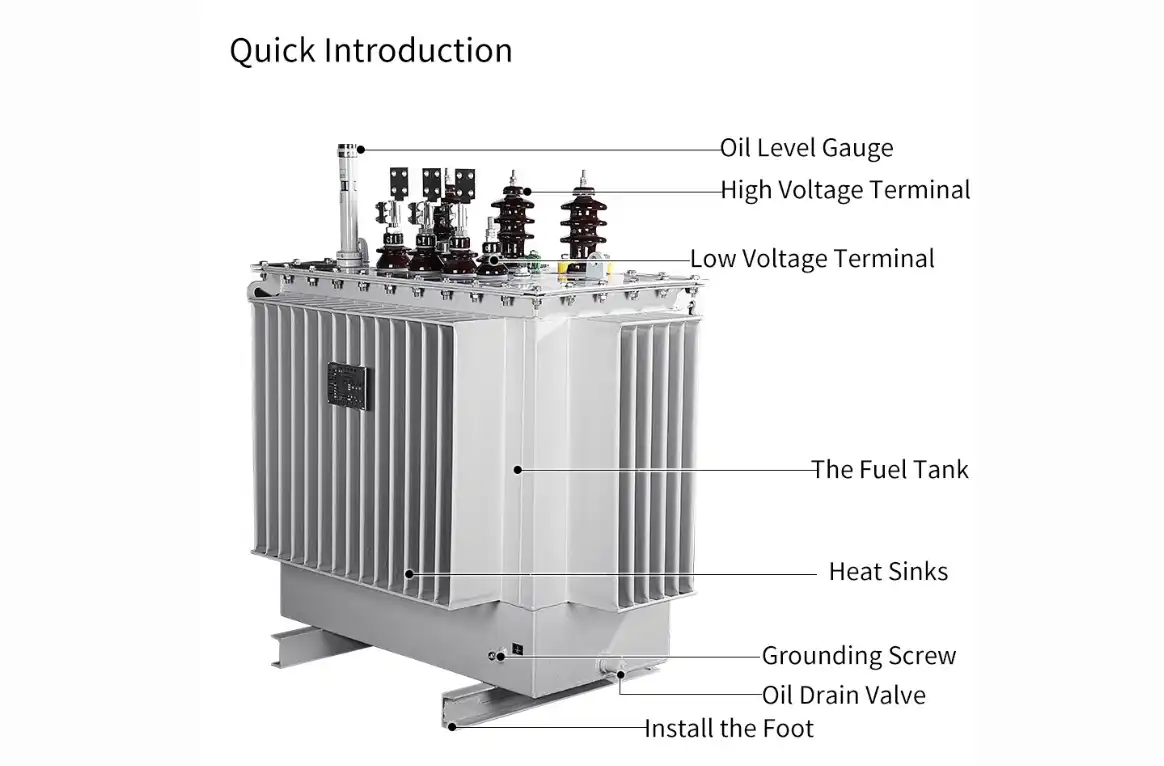
Choosing the right S(B)H15 type three-phase fully sealed distribution transformer can have long-lasting effects on the reliability of the grid and the costs of running it. This technology solves important problems in the industry by using tried-and-true technology: it has a sealed construction that doesn't need any maintenance, and it uses Level 1 energy efficiently. These traits directly lead to lower lifetime costs and better grid sustainability. When purchasing teams compare transformer specs to project needs, this technology offers strong technical and economic benefits that have been proven in thousands of installations around the world. It can help with integrating renewable energy, expanding industries, or updating utility grids.
Amorphous metal alloys have special atomic structures that don't have crystalline order. This lets magnetic domains line up with little energy loss. This cuts down on feedback losses every time the magnetisation cycles. The thin ribbon structure (25–30 micrometres) reduces eddy current losses even more. Together, these features give a 70–80% no-load loss reduction to the S(B)H15 type three-phase fully sealed distribution transformer compared to regular grain-oriented silicon steel cores.
Hermetically sealed tanks keep oil from coming into contact with oxygen and moisture in the air. This means that oil sampling, dielectric strength testing, breather upkeep, and conservator checks are not necessary. These tasks need to be done on traditional transformers once a year or every six months, and they cost between $800 and $1,200 per unit per year. During routine inspections, sealed designs only need non-invasive thermal monitoring and load verification.
The initial equipment prices show that the costs of amorphous metal materials are higher than those of silicon steel by 15 to 25 percent. However, the money saved on energy usually pays for itself within 4 to 7 years of operation. Total cost of ownership estimates that include a 25-year lifespan show significant net savings, which means that amorphous technology is more cost-effective even though it requires a bigger initial investment.
Every S(B)H15 type three-phase fully sealed distribution transformer project that Lijie Electric works on is backed by more than 20 years of specialised production experience. We are a certified provider of this equipment. Our ISO 9001:2015, CE, UL, and IEC certifications make sure that we meet foreign standards. Our engineering teams make solutions that are tailored to your voltage needs, site limitations, and integration requirements. Email our technical experts at lijieelectrical@gmail.com to talk about the details of your project and get full proposals that include lifetime cost analyses. We offer factory-direct prices, guaranteed lead times, and full warranty coverage. Our track record of working with utility companies, renewable energy developers, and industrial operators in more than 20 countries is proof of this.
1. IEEE Standard C57.12.00-2015, "IEEE Standard for General Requirements for Liquid-Immersed Distribution, Power, and Regulating Transformers," Institute of Electrical and Electronics Engineers, 2015.
2. International Electrotechnical Commission, "IEC 60076-1: Power Transformers – Part 1: General," Edition 3.0, 2011.
3. National Electrical Manufacturers Association, "NEMA TP 1-2002: Guide for Determining Energy Efficiency for Distribution Transformers," 2002.
4. Azuma, D. and Ota, T., "Amorphous Metal Materials for Distribution Transformer Cores: Properties and Applications," Journal of Materials Engineering and Performance, Vol. 27, No. 6, pp. 2873-2881, 2018.
5. GB/T 25446-2010, "Three-Phase Distribution Transformers with Amorphous Metal Core," Standardization Administration of China, 2010.
6. Kulkarni, S.V. and Khaparde, S.A., "Transformer Engineering: Design, Technology, and Diagnostics," Second Edition, CRC Press, 2013.
YOU MAY LIKE



April 27, 2025
With a tight project schedule, the manufacturer delivered on time, and on-site technical personnel provided guidance throughout the entire installation and commissioning process; the collaboration was highly efficient and hassle-free.
July 2, 2025
During the preliminary phase, a selection plan was custom-tailored based on the actual site load requirements, resulting in a high degree of parameter compatibility. After-sales support responds within two hours, and ongoing technical support for operation and maintenance is comprehensive; we feel completely confident in a long-term partnership.
November 18, 2025
Deployed as a supporting component for a 35kV grid-connection project at a photovoltaic power station, the equipment operates for an average of 16 hours daily. It demonstrates excellent control over no-load losses, ensures smooth power generation and grid integration, and effectively reduces the station's overall energy consumption.
January 30, 2026
Under the continuous, high-load operating conditions of a factory production line, the equipment maintains stable electrical parameters and exhibits strong overload resistance, thereby guaranteeing an uninterrupted power supply for industrial production.
April 3, 2026
Integrated as a supporting component for a new energy photovoltaic grid-connection system, the manufacturer provided professional technical coordination and timely after-sales support, ensuring seamless adaptation to the specific electrical operating conditions required for grid integration.