April 27, 2025
With a tight project schedule, the manufacturer delivered on time, and on-site technical personnel provided guidance throughout the entire installation and commissioning process; the collaboration was highly efficient and hassle-free.
Sep 16, 2026
Electricity from the power grid is sent to commercial buildings at voltages that are way too high for everyday tools to safely handle. A step-down transformer fixes this basic problem by lowering the high voltage that comes in (usually between 4,160V and 13,800V) to a level that can be used, like 480V, 208V, or 120V. Without this change, HVAC systems, lighting panels, lifts, and office equipment would be in danger of being severely damaged by overvoltage. Voltage regulation that works right is not a nice-to-have; it's required by code and necessary for operation. This book helps procurement managers, electrical engineers, and project teams understand the technical details, selection criteria, and new trends that affect this important piece of business infrastructure.
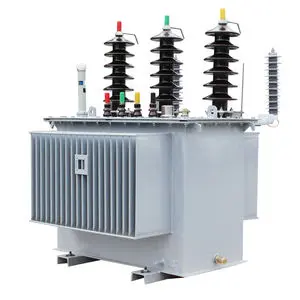
To keep resistive losses as low as possible over long distances, utility companies send power at high voltages. When electricity gets to a business, it still has voltage levels that aren't compatible with the building's systems. So, changing the voltage at the point of entry is the first important step in designing any business power distribution system.
Faraday's Law of Electromagnetic Induction tells us how a distribution transformer works. There are more turns on the primary winding, which is connected to the high-voltage supply coming in, than on the secondary winding. The output voltage is set by this turn ratio. For example, a machine with a 10:1 ratio can change 4,800V input to 480V output. The process saves real power while proportionally adjusting voltage and current, keeping energy delivery efficient and stable.
Stepped-down power is important for almost every major building system. Most air handlers and HVAC fans require 480V three-phase power to operate, while lighting circuits and plug panels commonly use 120/208V. In many data centers, a dedicated Step-down Transformer is used to provide stable power and help protect sensitive server loads from electrical noise generated by other parts of the building. Different systems, including fire alarms, access control panels, and elevator drives, also require different voltage levels. To meet these requirements, the building's electrical distribution system may use cascading transformer stages, with each Step-down Transformer serving a specific voltage conversion role. Selecting the appropriate Step-down Transformer for each stage helps ensure that connected equipment receives the correct and stable power supply.
Controlling voltage isn't the only thing these units do well. The overall improvement in building performance is big and can be measured.
Here are the main operational benefits that make them unbeatable in business settings:
These benefits directly lead to lower costs over the course of the system's life, fewer unplanned power outages, and better compliance with NEC Article 450 and ASHRAE 90.1 energy guidelines. When purchasing teams look at the total cost of ownership instead of just the unit price, they always find that buying a properly rated and approved unit pays for itself in three to five years.
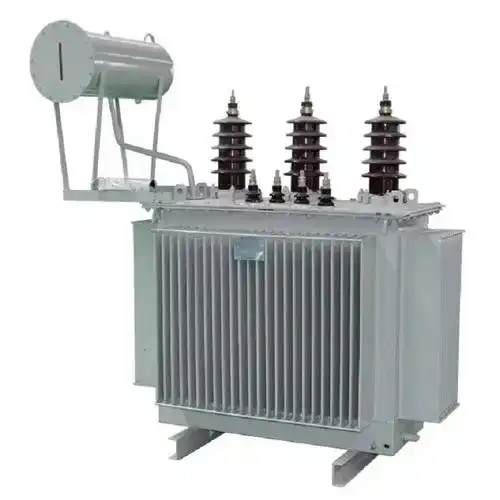
Buck converters and electronic voltage regulators can lower voltage in some low-power applications, but they generally cannot handle the hundreds of kilowatt loads common in commercial buildings. A Step-down Transformer is better suited to high-power commercial distribution because it can reduce voltage while supporting substantial electrical loads. Autotransformers can provide a compact alternative for smaller voltage changes, such as converting 480V to 208V. However, an autotransformer does not provide the galvanic isolation available with an isolation-type Step-down Transformer, which can be important for protecting sensitive equipment and meeting applicable electrical requirements in certain installations. For commercial facilities with demanding loads, selecting the right Step-down Transformer helps ensure reliable voltage conversion and appropriate system protection.
Light panelboards and office receptacle circuits are examples of small loads that can be handled by single-phase units. Three-phase Step-down Transformers are the most common way to power mechanical equipment, elevator systems, and whole electrical distribution boards in medium- to large-sized business projects. The choice depends on the size of the load, the required power factor, and the configuration of the utility service that is available. In their major electrical rooms, most buildings larger than 50,000 square feet only use three-phase distribution transformers.
Specification work is needed to make sure that the transformer is right for the job. One of the most common and expensive mistakes made in commercial construction procurement is rushing the selection process.
When buying things for big projects or multiple buildings, purchasing managers should check the supplier's batch consistency, lead time dependability, and technical help after installation. These are all things that are just as important over the life of a framework agreement as unit price.
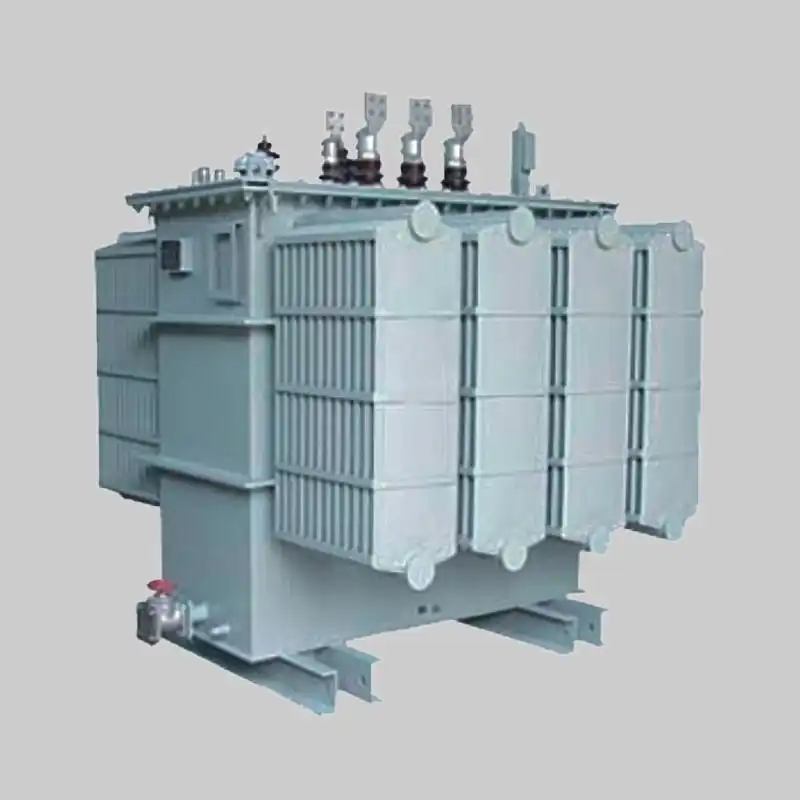
One of the most important improvements in distribution transformer efficiency is amorphous alloy core technology. Amorphous metal cores can achieve about 70–80% lower no-load losses than traditional silicon-steel cores, making an amorphous-core Step-down Transformer an attractive option for commercial buildings focused on energy efficiency. By reducing no-load losses, this type of Step-down Transformer can support buildings pursuing LEED certification or net-zero energy goals. For projects where long-term energy consumption is a major consideration, selecting an efficient Step-down Transformer with an amorphous alloy core can provide meaningful operational benefits.
Another expectation that is rising is the integration of smart monitoring. Sensors built into the transformer track the temperature, load factor, and harmonic distortion of the windings in real time. This lets predictive maintenance plans be used to make the transformer last much longer than the standard 25 years. This information helps demand-response programs and utility reward qualification when it is added to building energy management systems.
Transformer requirements are changing because more and more commercial buildings are installing solar panels on the roof, charging stations for electric vehicles, and battery storage. With these distributed energy resources, power flows in both directions, and there are new harmonic profiles that need to be taken into account when designing and testing transformers. This is because IEC and IEEE standards have been updated.
Step-down Transformer units are widely used in commercial buildings because they provide an effective way to bridge the gap between utility-supplied voltage and the voltage required by building systems on a large scale. In addition to converting voltage, a properly selected Step-down Transformer can help protect electrical equipment, reduce energy losses, isolate sensitive loads, and support compliance with evolving efficiency requirements. For procurement and engineering teams, choosing the right Step-down Transformer is one of the most important decisions in a commercial electrical project. The unit should be correctly sized, appropriately certified, and supplied by a manufacturer known for consistent production quality and reliable batch performance.
Dry-type units are the standard choice for indoor commercial installations because they eliminate fire risk associated with insulating oil and require minimal maintenance. Oil-immersed transformers are generally reserved for utility-grade or heavy industrial applications where higher KVA ratings justify the additional safety protocols.
Annual visual inspections are standard practice. Thermal imaging scans every two to three years can identify hotspots before they cause failures. For units serving critical loads—data centers, hospitals—more frequent monitoring using embedded temperature sensors is strongly recommended.
The audible hum originates from magnetostriction in the core laminations. It is a normal phenomenon. However, an increase in noise level or a change in pitch can signal loose core clamping, overloading, or harmonic distortion—all conditions worth investigating promptly.
Absolutely. DOE 2016-compliant transformers are required for new commercial construction in the United States, and specifying high-efficiency or amorphous alloy units contributes to LEED and ASHRAE 90.1 compliance documentation.
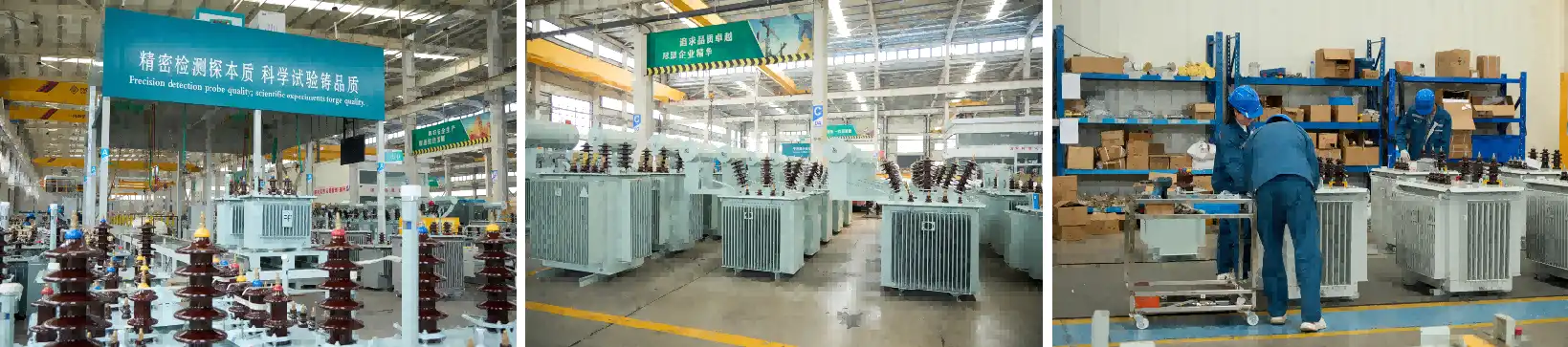
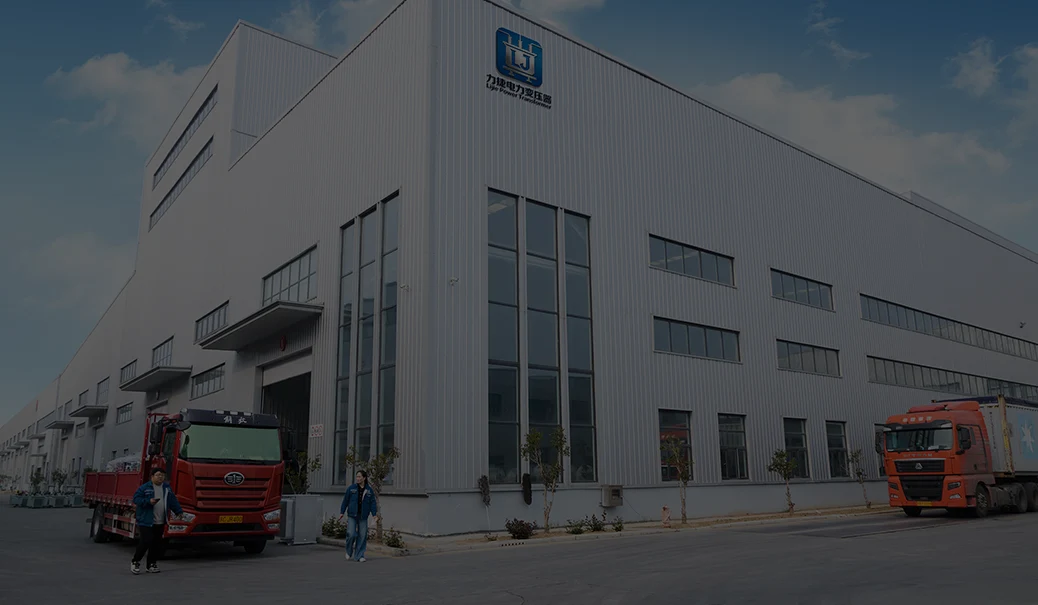
Lijie Electric Power Technology Group manufactures a comprehensive range of distribution transformers—dry-type, oil-immersed, amorphous alloy, and cast-resin—covering 35kV and below, all certified to ISO 9001:2015, IEC, CE, and UL standards. As a trusted Step-down Transformer manufacturer with over 2,000 employees and annual sales exceeding 5 billion RMB, we deliver consistent quality at scale. Contact our engineering team today to discuss custom specifications, bulk procurement timelines, or OEM requirements. Reach us at lijieelectrical@gmail.com or visit lijie-electrical.com to explore our full product catalog.
1. IEEE Std C57.12.00-2015 — IEEE Standard for General Requirements for Liquid-Immersed Distribution, Power, and Regulating Transformers, IEEE, 2015.
2. IEC 60076-1:2011 — Power Transformers – Part 1: General, International Electrotechnical Commission, 2011.
3. U.S. Department of Energy — Energy Conservation Standards for Distribution Transformers, Federal Register, 2013.
4. NEMA TP-1-2002 — Guide for Determining Energy Efficiency for Distribution Transformers, National Electrical Manufacturers Association, 2002.
5. ASHRAE — ASHRAE 90.1-2022: Energy Standard for Sites and Buildings Except Low-Rise Residential Buildings, American Society of Heating, Refrigerating and Air-Conditioning Engineers, 2022.
6. Chapman, S.J. — Electric Machinery Fundamentals, 5th ed., McGraw-Hill, 2012.
April 27, 2025
With a tight project schedule, the manufacturer delivered on time, and on-site technical personnel provided guidance throughout the entire installation and commissioning process; the collaboration was highly efficient and hassle-free.
July 2, 2025
During the preliminary phase, a selection plan was custom-tailored based on the actual site load requirements, resulting in a high degree of parameter compatibility. After-sales support responds within two hours, and ongoing technical support for operation and maintenance is comprehensive; we feel completely confident in a long-term partnership.
November 18, 2025
Deployed as a supporting component for a 35kV grid-connection project at a photovoltaic power station, the equipment operates for an average of 16 hours daily. It demonstrates excellent control over no-load losses, ensures smooth power generation and grid integration, and effectively reduces the station's overall energy consumption.
January 30, 2026
Under the continuous, high-load operating conditions of a factory production line, the equipment maintains stable electrical parameters and exhibits strong overload resistance, thereby guaranteeing an uninterrupted power supply for industrial production.
April 3, 2026
Integrated as a supporting component for a new energy photovoltaic grid-connection system, the manufacturer provided professional technical coordination and timely after-sales support, ensuring seamless adaptation to the specific electrical operating conditions required for grid integration.