April 27, 2025
With a tight project schedule, the manufacturer delivered on time, and on-site technical personnel provided guidance throughout the entire installation and commissioning process; the collaboration was highly efficient and hassle-free.
Sep 5, 2026
As the United States accelerates its clean energy transition, the backbone holding it all together is often overlooked — the high voltage transformer. Whether you're a procurement manager sourcing equipment for a 500MW solar farm or an electrical engineer designing a new transmission corridor, understanding how these devices support grid expansion and renewable energy integration is essential. This article walks through the technical foundations, procurement realities, and future directions shaping this critical equipment category.


A High Voltage Transformer does more than just change voltages. International standards like IEC 60076 and IEEE C57.12.00 control this carefully designed asset. These standards set limits for things like no-load losses, short-circuit resistance, and partial discharge (usually less than 10pC). The windings, magnetic core, insulation system, and cooling unit are its main parts, and they all need to work together perfectly for 10 to 30 years of steady use.
The cold-rolled grain-oriented silicon steel (CRGO) used to make the magnetic core reduces hysteresis and eddy current losses, which directly lowers the lifecycle energy costs. Cooling methods like ONAN (Oil Natural Air Natural) and ONAF (Oil Natural Air Forced) keep temperatures stable even when the load changes. This is very important for grid workers who have to deal with changing demand trends.
According to the U.S. Energy Information Administration (EIA), by 2035, energy use will have grown by almost 15%. This means that transmission and delivery networks need to be greatly expanded in order to handle this increase. High Voltage Transformers that can handle high voltage ratios without affecting dielectric integrity are needed in 110kV, 220kV, and even 500kV substations. Vacuum-impregnated cellulose insulation and synthetic ester dielectrics have become the most popular choices because they offer high dielectric strength and better fire safety.
Thorough testing before launching is the first step in keeping High Voltage Transformers healthy. Dissolved Gas Analysis (DGA) creates a chemical baseline to find early signs of problems in the oil, like arcing or thermal degradation. Sweep Frequency Response Analysis (SFRA) checks the integrity of the core and windings after shipping. This is a test that isn't used very often but is very important for big building projects. When these measurements are combined with full-load temperature rise tests, project managers get useful information that they can use to stop unexpected outages.
Power quality changes when renewable energy sources are used, which is something that regular grid equipment wasn't made to deal with. Wind turbines make electricity at frequencies that change with the speed of the wind, while solar photovoltaic arrays make DC power that needs to be inverted and step-up transformed before it can be fed into the grid. In both cases, you need special High Voltage Transformer designs that can handle harmonics better and change the voltage quickly.
Dry-type High Voltage Transformers with ratings of 35kV or less are commonly used in solar farms because they are less likely to catch fire and need less upkeep when they are outside. In offshore wind farms, oil-immersed units with covered tanks can handle environments that are wet and salty. Prefabricated substations, which are small, pre-wired assemblies that include the transformer, switchgear, and protection systems, have cut installation times for large renewable projects by a huge amount. In fact, some developers have reported that commissioning is up to 40% faster with prefabricated substations than with traditional field-built solutions.
These changes directly lead to measured improvements in how things work. The efficiency of a renewable-grade High Voltage Transformer is defined by the following:
These features work together to give makers of green energy sources peace of mind when they connect generation assets to the grid. They know that their transformer infrastructure can handle changes in the real world without any problems.

There is no one right answer for every job. At high MVA ratings, oil-immersed High Voltage Transformers are still the best choice for utility-scale transmission applications because they cool better and are more cost-effective. On the other hand, dry-type units work best in indoor industrial settings, urban substations, and places where there is a risk of environmental poisoning.
Oil-filled units are more efficient at big capacities, and their reliability profile has been supported by decades of field evidence. Concerns about oil containment are gone with dry-type High Voltage Transformers, and they also make environmental compliance easier and upkeep intervals shorter. These are all benefits that industrial makers working in regulated settings will appreciate. Not just the unit price, but also the installation environment, load profile, and total lifecycle cost of the project are taken into account when making the choice.
When working on big infrastructure or renewable energy projects, procurement managers know that long lead times for High Voltage Transformers mean a lot of extra risk for the project. Complex, high-MVA units can take anywhere from 20 to 40 weeks to deliver, depending on how the design is customized and how long it takes to make. It is important for buyers to build relationships with makers who can provide large quantities of goods, not just prototypes.
Here are the main factors that supply chain experts use to choose which transformer companies to work with:
These criteria narrow the supplier pool considerably, and they explain why procurement teams increasingly favor long-term framework agreements over transactional spot purchases.
Adding smart tracking is changing how High Voltage Transformer asset management is done. Embedded sensors now make it possible to track the temperature, moisture content, and partial discharge activity of oil in real time. This data is fed into predictive maintenance platforms that find problems early on before they become failures. The International Energy Agency (IEA) says that predictive repair plans can cut the number of transformer failures in grid use by as much as 25%.
Eco-friendly insulation materials, like natural ester fluids made from vegetable oils, are becoming more popular as long-term alternatives to mineral oil because they break down more slowly and have higher fire ratings. As the number of autonomous energy generation assets grows, High Voltage Transformer designs are also changing to meet the needs for two-way power flow, which includes both normal grid-to-load transfer and reverse flow from distributed generation assets into the transmission network.

Grid growth and integrating green energy are not goals for the future; they are engineering and purchasing problems that need to be solved right now. High Voltage Transformers are in the middle of both of these areas. Picking the right equipment from a reputable seller has a direct effect on project timelines, energy efficiency, and long-term costs. The technical depth and supply stability of your transformer partner are just as important as the specs on the nameplate, whether you're connecting green energy, sending power on a utility scale, or running an industrial power supply.
Check for at least ISO 9001:2015 quality management certification, IEC 60076 compliance, CE marking for projects in Europe, and UL approval for projects in North America. For utility grid hookups, PCCC certification and national type-test approvals give even more peace of mind about the quality of the High Voltage Transformer.
For outdoor, high-capacity, and transmission-level uses, oil-immersed High Voltage Transformer units work best. Dry-type units work well indoors, in places with strict fire safety rules, and on projects where it's not possible to use oil containment equipment. The installation environment, load profile, and lifetime upkeep costs should all be taken into account when making the choice.
Ask for routine dielectric test reports, data on partial discharge measurements (ideally below 10pC), temperature rise test results, and a DGA baseline before shipping. For big High Voltage Transformer units, SFRA testing after shipping is also a good idea to make sure the winding is still intact.
It usually takes 8–14 weeks to ship standard distribution High Voltage Transformers. It could take 20 to 40 weeks to make a custom high-MVA unit for grid or industrial use. At the inquiry stage, making sure that the production capacity and delivery schedule commitments are still valid protects your project timeline.
The Lijie Electric Power Technology Group makes many types of High Voltage Transformers, from ultra-high-voltage units with 500kV to 35kV fixed substations. Their goods are certified by ISO 9001:2015, IEC, CE, and UL. As a seller of High Voltage Transformers with a lot of knowledge, we can help with large project orders by giving you personalized technical advice. Contact our engineering team at lijieelectrical@gmail.com or visit lijie-electrical.com to discuss your project requirements and receive a customized supply plan.

1. International Electrotechnical Commission. IEC 60076-1: Power Transformers – General. IEC, 2011. https://www.iec.ch/homepage
2. IEEE. IEEE C57.12.00: Standard for General Requirements for Liquid-Immersed Distribution, Power, and Regulating Transformers. IEEE, 2021. https://standards.ieee.org/ieee/C57.12.00/10695/
3. U.S. Energy Information Administration. Annual Energy Outlook 2023. EIA, 2023. https://www.eia.gov/outlooks/aeo/
4. International Energy Agency. Electricity Grids and Secure Energy Transitions. IEA, 2023. https://www.iea.org/reports/electricity-grids-and-secure-energy-transitions
5. U.S. Department of Energy. Transformer Resilience and Advanced Components (TRAC) Program. DOE, 2022. https://www.energy.gov/oe/transformer-resilience-and-advanced-components-trac-program
6. National Renewable Energy Laboratory. Grid Modernization and the Role of Advanced Power Electronics. NREL, 2022. https://www.nrel.gov/grid/
YOU MAY LIKE
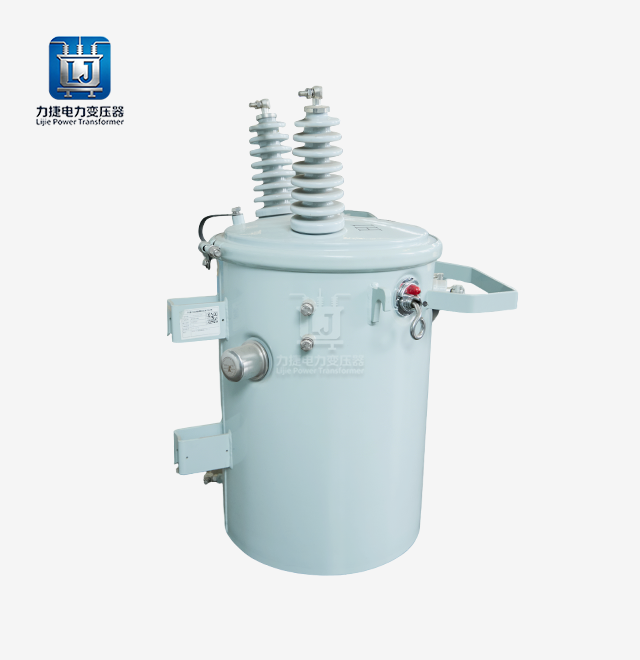
14%20Epoxy%20Resin%20Dry%20Type%20Transformer.webp)


12%20type%2035KV%20dry-immersed%20transformer_1778136610496.webp)
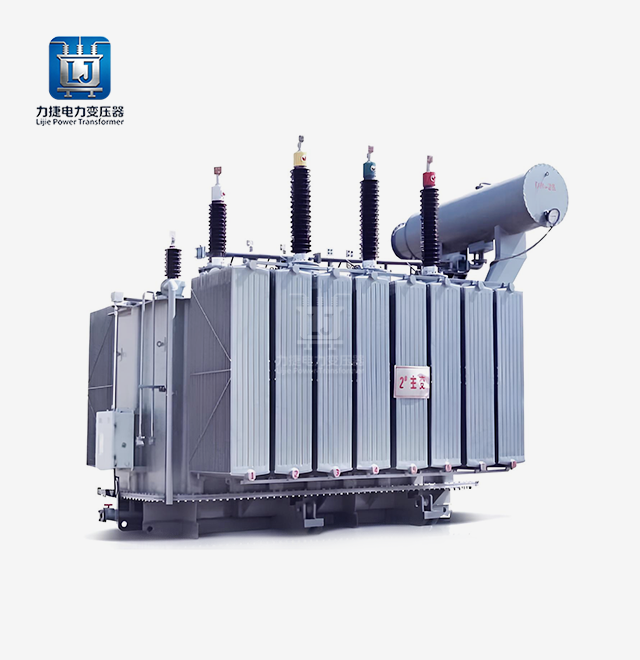
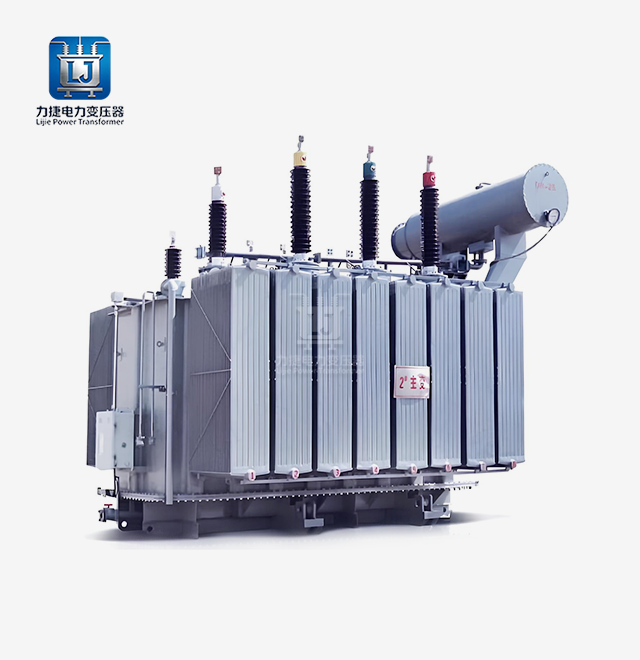
12%20Series%20Dry%20Type%20Transformer.webp)
April 27, 2025
With a tight project schedule, the manufacturer delivered on time, and on-site technical personnel provided guidance throughout the entire installation and commissioning process; the collaboration was highly efficient and hassle-free.
July 2, 2025
During the preliminary phase, a selection plan was custom-tailored based on the actual site load requirements, resulting in a high degree of parameter compatibility. After-sales support responds within two hours, and ongoing technical support for operation and maintenance is comprehensive; we feel completely confident in a long-term partnership.
November 18, 2025
Deployed as a supporting component for a 35kV grid-connection project at a photovoltaic power station, the equipment operates for an average of 16 hours daily. It demonstrates excellent control over no-load losses, ensures smooth power generation and grid integration, and effectively reduces the station's overall energy consumption.
January 30, 2026
Under the continuous, high-load operating conditions of a factory production line, the equipment maintains stable electrical parameters and exhibits strong overload resistance, thereby guaranteeing an uninterrupted power supply for industrial production.
April 3, 2026
Integrated as a supporting component for a new energy photovoltaic grid-connection system, the manufacturer provided professional technical coordination and timely after-sales support, ensuring seamless adaptation to the specific electrical operating conditions required for grid integration.