April 27, 2025
With a tight project schedule, the manufacturer delivered on time, and on-site technical personnel provided guidance throughout the entire installation and commissioning process; the collaboration was highly efficient and hassle-free.
Sep 14, 2026
Manufacturing plants run on power—and not just any power. They need voltage levels that match heavy motors, precision CNC equipment, arc furnaces, and automated production lines. An MV transformer (medium-voltage transformer) bridges the gap between utility transmission lines and the actual machinery on the plant floor. Operating in the 1 kV to 35 kV range, these units step voltage down to workable levels while minimizing line losses, stabilizing supply, and providing galvanic isolation that protects expensive downstream assets. Without one, a plant's electrical infrastructure simply cannot function safely or efficiently at industrial scale.
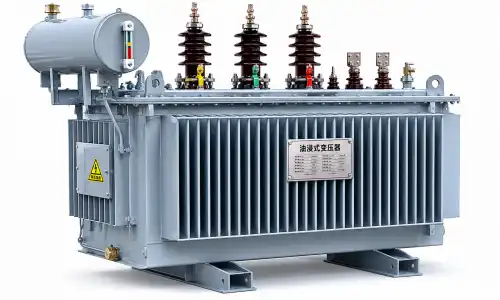
It's helpful to know exactly what this technology does and how it works before deciding if your building needs one.
It moves electricity from one circuit to another using electromagnetic induction at voltages usually between 1 kV and 35 kV. This is called a medium-voltage transformer. Its three main parts—a silicon steel core with a grain orientation, copper or aluminum coils, and stacked insulation—all work together to lower the voltage from the power grid to a level that industrial equipment can use. High-permeability silicon steel cores cut no-load losses by a large amount, which is very important when a transformer is used all the time for decades.
There are two main types that are used in factory settings. Dry-type (cast resin) transformers don't need any liquid insulation, so they can be used indoors, in basement substations, and other places where fire safety is very important. Mineral or biodegradable fluid cooling is used in oil-immersed units, which are classified under ONAN or ONAF systems according to IEC 60076. These systems provide better thermal management for high-load, outdoor, or substation applications.
Pad-mounted MV Transformer units are commonly used for outdoor yard installations, while pole-mounted MV Transformer units are used in distribution infrastructure. Indoor enclosure types are suitable for combined substation rooms and other protected electrical spaces. One of the first tasks for electrical engineers and procurement managers is to ensure that the selected MV Transformer design fits the plant layout, available installation space, and overall distribution requirements.
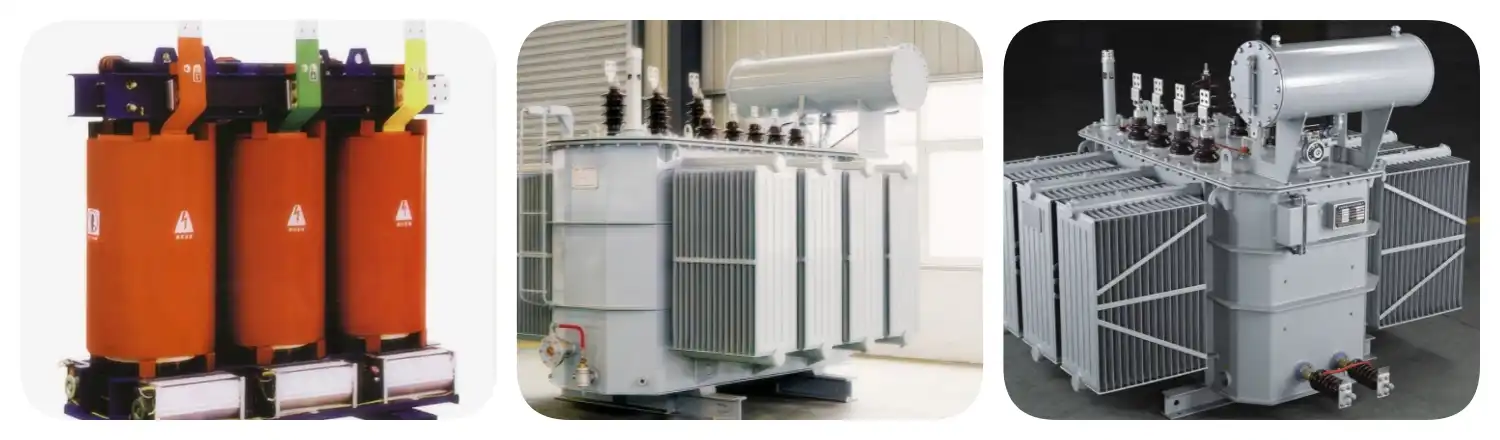
Electrical infrastructure in heavy industry has to handle a lot of stress that regular low-voltage systems can't handle on their own. That's why medium-voltage delivery is so important at the plant level.
Manufacturing plants get huge, changing loads. Stable medium-voltage power is needed in steel mills that use electric arc furnaces, chemical plants that run big compressor drives, and car factories that power robotic welding lines. A well-designed medium-voltage transformer can handle changes in voltage from the grid and provide a steady output. This keeps precision machinery from experiencing the kind of instability that leads to early failure.
Another important factor is how energy-efficient it is. The U.S. Department of Energy says that distribution transformers are responsible for about 2–3% of all the energy that is made in the U.S. Over the course of 20–30 years, the cost of replacing poor units adds up to a lot of money. Modern high-efficiency designs that meet DOE 2016 efficiency standards cut no-load and load losses by a measurable amount, which lowers energy bills on a large scale.
Here are the most important operational benefits that medium-voltage transformers bring to factories:
Over time, these benefits grow. If a company keeps its medium-voltage generator in good shape for 25 years, it not only saves a lot on energy costs, but it also avoids the much more expensive downtime that comes from electrical problems. When procurement managers look at total cost of ownership, that lifetime economics point often makes the difference.
If you pick the wrong unit, you'll have trouble for decades. Methodical evaluation is needed to make the right choice.
Undersizing causes thermal stress and shortens the life of the product, while oversizing wastes money. Before giving a kVA number, engineers should look at the peak demand, task cycle, harmonic loading from inverters, and expected future load growth. The most accurate starting point for sizing is a demand study that includes load data from at least 12 months.
In indoor industrial settings, dry-type cast resin transformers are usually used because they don't pose a fire risk from dielectric fluid and don't need much upkeep. For outdoor substations, high-capacity uses with more than 10 MVA, and sites where thermal performance is the main concern, oil-immersed units are still the best choice. Environmental compliance is also important here, and recyclable ester fluids are being asked for more and more to meet local rules.
In the industry, well-known companies like ABB, Siemens, and Schneider Electric are often used as examples. When looking for an MV Transformer provider, make sure they have the right certifications, like IEC 60076, IEEE C57.12.00, ISO 9001:2015, CE, and UL. You should also make sure they can produce large orders and meet your unique needs.
If installed or maintained incorrectly, even the best-designed unit won't work well.
Article 450 of the NEC says that when something is physically installed, it must take into account clearance lengths, air needs, earthquake anchoring, and grounding. Before turning on the power, pre-commissioning tests are done to make sure the unit arrived and was installed without any harm. These tests include measuring the insulation resistance (per IEEE C57.12.91), checking the turns ratio, and checking the winding resistance.
Load testing after installing an MV Transformer in a real plant environment helps confirm its thermal behavior and verify that safety relay settings operate correctly. To identify potential hotspots, routine maintenance of an MV Transformer should include infrared thermography scans, oil sampling, and dissolved gas analysis (DGA) for oil-immersed units, along with visual inspections of bushings, gaskets, and tap changers. Early detection of insulation deterioration or abnormal gas production can help prevent catastrophic failures that could bring production to a halt for days or weeks. Regular monitoring of each MV Transformer therefore plays an important role in maintaining reliable plant operations and reducing unexpected downtime.
When buying medium-voltage distribution equipment on an industrial scale, it's not enough to just compare unit prices.
For big projects, you need suppliers whose bulk production abilities have been checked and whose lead times are stable. Framework agreements that lock in prices, delivery dates, and technical details protect project schedules from problems in the supply chain. Customization is also very important, since grid interconnection voltage, installation surroundings, harmonic content, and local regulatory standards are all very different between sites and areas.
The warranty terms and the system for after-sales service should be looked at just as carefully as the technical specs. Over the 25–30 year life of the transformer, operational risk is lower if the supplier offers quick technical support, spare parts, and on-site commissioning help.
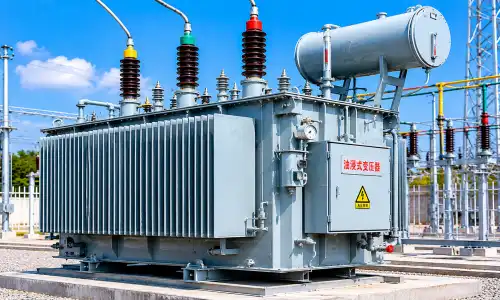
Medium-voltage power delivery that is safe and effective is needed for manufacturing companies to keep their processes running smoothly and at a low cost. A properly chosen and well-maintained MV Transformer provides stable power, low energy use, electrical separation, and compliance with regulations—all at the same time. Making sure the specifications, supplier, and upkeep plan are correct from the start saves not only the generator investment but also the whole plant operation it supports.
Most medium-voltage transformers work between 1 kV and 35 kV, but some regional standards allow them to work up to 69 kV. Most uses in factories are between 6 kV and 35 kV, depending on the voltage at the utility connection and the needs of the factory's own distribution system.
A good medium-voltage generator can work effectively for 25 to 30 years with the right care. By finding damage early, routine checks, dissolved gas analysis for oil units, and infrared thermography all make service life much longer.
There is no fire risk with dry-type transformers because they use cast resin insulation and don't use dielectric fluid. This makes them perfect for indoor installations. Oil-immersed units have better thermal performance for large-scale or outdoor uses, but they need to be checked for oil regularly and have containment systems in place.
Put IEC 60076, IEEE C57.12.00, ISO 9001:2015, CE certification, and UL listing at the top of your list. For jobs in areas with specific grid codes, make sure the provider can show proof that they follow the rules for connecting utilities in that area.
Lijie Electric Power Technology Group has provided certified medium-voltage solutions for commercial projects around the world. Their goods have been checked against IEC 60076, ISO 9001:2015, CE, and UL standards. As a reliable MV Transformer manufacturer with over 160 engineers and annual sales of more than 5 billion RMB, we offer custom designs, the ability to supply in bulk, and dedicated support after the sale. To ask for a technical advice, please email our team at lijieelectrical@gmail.com or go to lijie-electrical.com.
1. IEEE C57.12.00 — IEEE Standard for General Requirements for Liquid-Immersed Distribution, Power, and Regulating Transformers, IEEE, 2021.
2. IEC 60076-1 — Power Transformers – Part 1: General, International Electrotechnical Commission, 2011.
3. U.S. Department of Energy — Distribution Transformer Energy Efficiency: Final Rule Technical Support Document, DOE Office of Energy Efficiency & Renewable Energy, 2013.
4. National Fire Protection Association — NFPA 70: National Electrical Code, NFPA, 2023.
5. IEEE C57.12.91 — IEEE Standard Test Code for Dry-Type Distribution and Power Transformers, IEEE, 2020.
6. U.S. Department of Energy — Improving Motor and Drive System Performance: A Sourcebook for Industry, DOE Industrial Technologies Program, 2014.
April 27, 2025
With a tight project schedule, the manufacturer delivered on time, and on-site technical personnel provided guidance throughout the entire installation and commissioning process; the collaboration was highly efficient and hassle-free.
July 2, 2025
During the preliminary phase, a selection plan was custom-tailored based on the actual site load requirements, resulting in a high degree of parameter compatibility. After-sales support responds within two hours, and ongoing technical support for operation and maintenance is comprehensive; we feel completely confident in a long-term partnership.
November 18, 2025
Deployed as a supporting component for a 35kV grid-connection project at a photovoltaic power station, the equipment operates for an average of 16 hours daily. It demonstrates excellent control over no-load losses, ensures smooth power generation and grid integration, and effectively reduces the station's overall energy consumption.
January 30, 2026
Under the continuous, high-load operating conditions of a factory production line, the equipment maintains stable electrical parameters and exhibits strong overload resistance, thereby guaranteeing an uninterrupted power supply for industrial production.
April 3, 2026
Integrated as a supporting component for a new energy photovoltaic grid-connection system, the manufacturer provided professional technical coordination and timely after-sales support, ensuring seamless adaptation to the specific electrical operating conditions required for grid integration.