April 27, 2025
With a tight project schedule, the manufacturer delivered on time, and on-site technical personnel provided guidance throughout the entire installation and commissioning process; the collaboration was highly efficient and hassle-free.
Jul 11, 2026
The S(B)H15 type three-phase fully sealed distribution transformer is one of the most important parts of modern infrastructure for distributing power in a way that saves energy. This advanced type of transformer has an amorphous alloy core and a construction that keeps out air. It works very well in renewable energy installations, grid modernisation projects, and critical facilities that need to be reliable and lose as little energy as possible. Its fully sealed design keeps oil from coming into contact with airborne pollutants, and the amorphous core lowers no-load losses by about 70–80% compared to regular silicon steel transformers. This makes it especially useful for businesses that want to cut costs over the life of an asset and be good stewards of the environment.
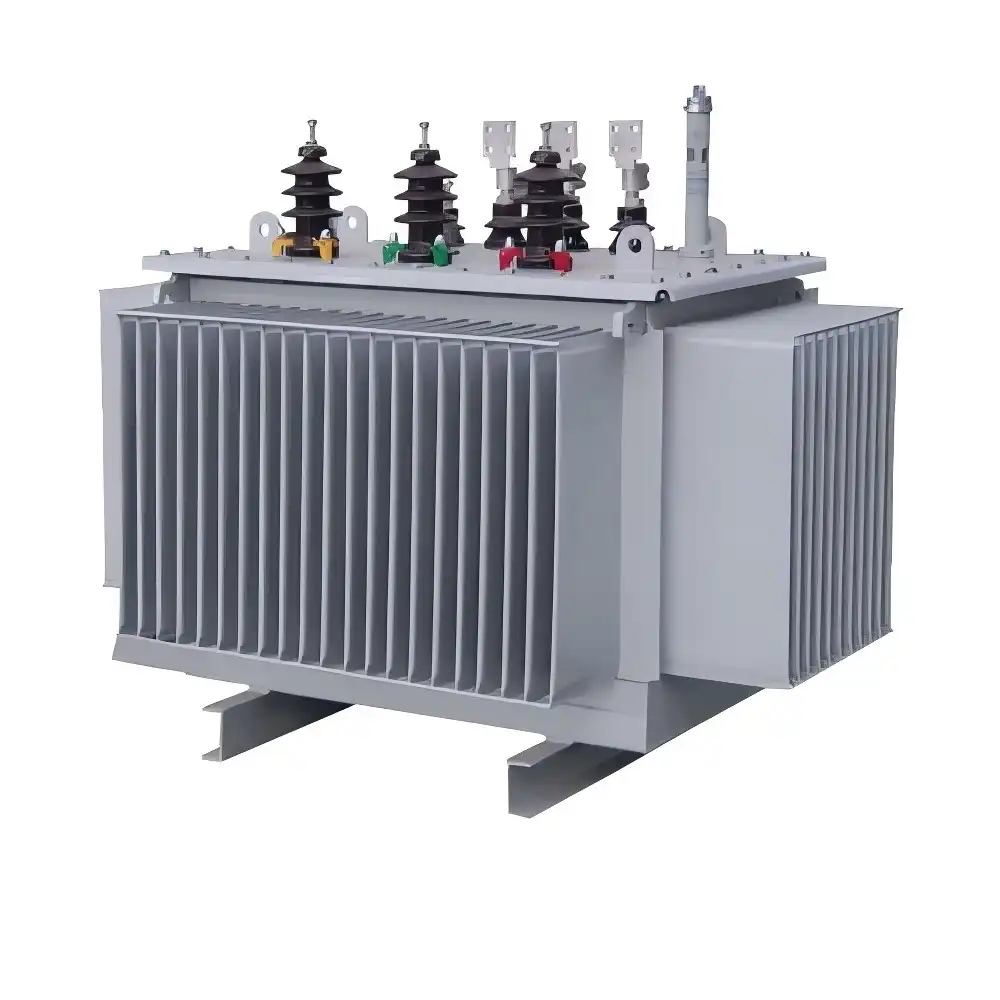
The amorphous metal core makeup of this distribution transformer is what makes it unique. Amorphous metal bands are different from regular crystalline silicon steel because they have an atomic structure that is not crystalline. This is achieved through fast solidification processes. This jumbled arrangement of molecules makes it possible for magnetic domains to realign with little energy resistance. This greatly reduces hysteresis losses during magnetisation cycles. The iron-silicon-boron mix has great ferromagnetic qualities and is also strong and resistant to rust. This means that the magnets will work properly for the whole time the transformer is in use.
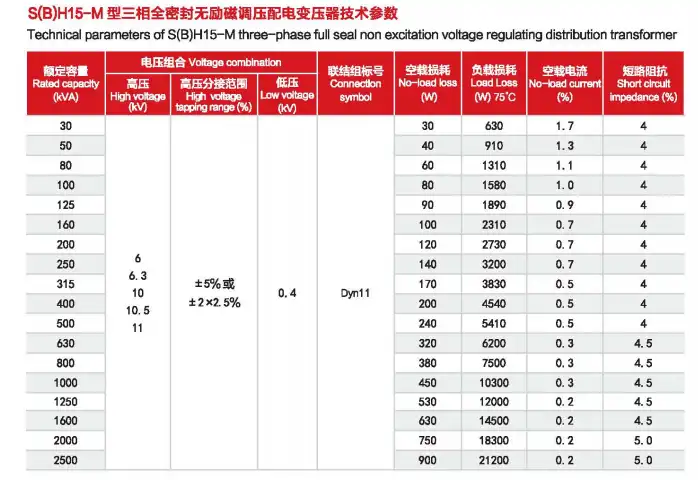
These S(B)H15 type three-phase fully sealed distribution transformers were made by our engineering team to meet strict international and domestic standards. The voltage ratings range from 6kV to 12kV, and the capacity options go from 30kVA to 2500kVA. This means that they can meet the needs of a wide range of distribution applications, from small commercial buildings to large industrial complexes. The Dyn11 vector group configuration is very good at handling neutral current and reducing harmonics. This is especially helpful in places with nonlinear loads, like data centers or factories with variable frequency drives.
The insulation system can handle tests for power frequency at 35kV AC and shock voltages up to 75kV, which is in line with GB/T 25446 and IEC 60076. This strong dielectric strength makes sure that the system stays safe even during short-lived overvoltage events that happen a lot in places where lightning strikes or where the power grid isn't stable. The way the temperature rises meets the standards for Class A insulation, so the winding stays intact at room temperatures up to 40°C without degrading.
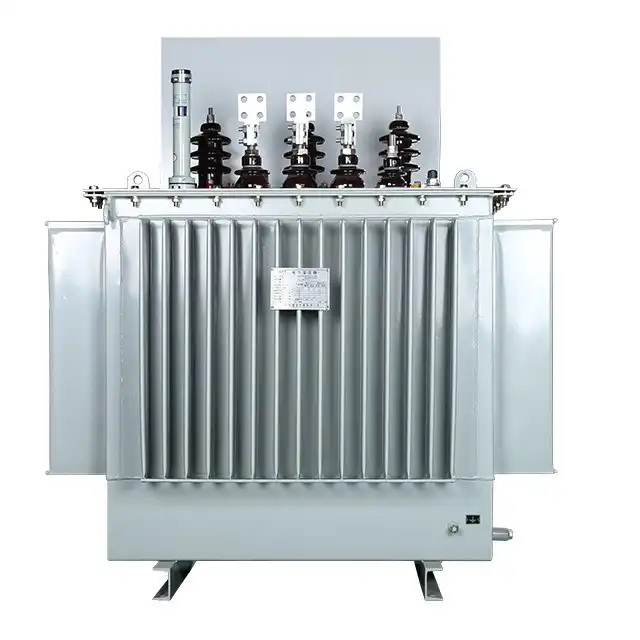
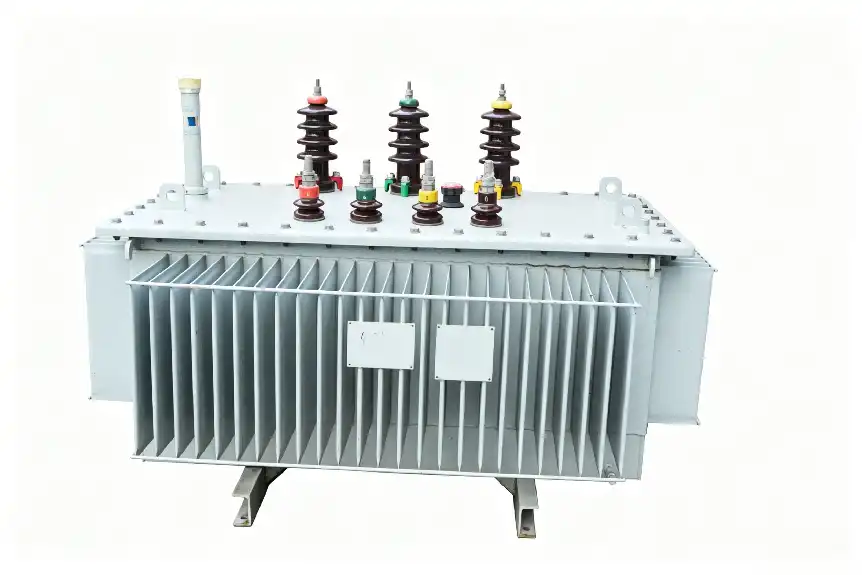
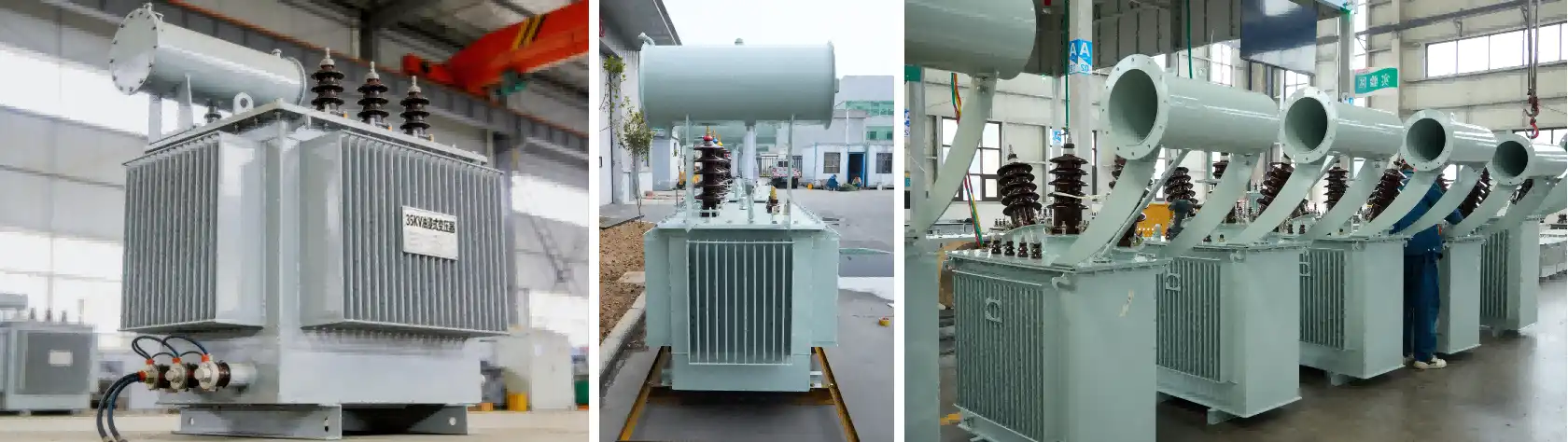
The completely sealed tank design is very different from most transformers that have a custodian. Corrugated radiator fins can be used as both cooling surfaces and expansion tanks. They can handle the expansion of thermal oil without the need for empty spaces. This gets rid of the oxidation routes that usually make shielding oil less effective over many years of use. When Hoover oil is filled during production, it gets rid of dissolved gases and moisture. This creates an internal environment that keeps the insulating properties forever as long as the seal stays in place.
Welded seams of the S(B)H15 type three-phase fully sealed distribution transformer are put through strict pressure tests to make sure they are leak-proof before they are put into service. The tank is made of corrosion-resistant steel that has been coated in a way that makes it suitable for use in marine settings, chemically-rich workplaces, and places where temperatures change quickly. This care for the environment makes the operational reliability even better in harsh deployment situations where regular transformers would need to be serviced often.
Wind and solar power installations have special problems that need to be solved, which is why amorphous core transformers are so useful. Generation intermittency means that these transformers spend a lot of time with little or no load, which means that core losses make up most of their energy use. The huge drop in excitation losses directly leads to less parasitic drain when the generator is not running. When compared to silicon steel alternatives, a 500kVA unit installed in a solar farm could save 5–7 MWh per year, which means it will make money over the life of the project.
The sealed construction of the S(B)H15 type three-phase fully sealed distribution transformer is very useful in rural renewable energy areas, where getting to them for upkeep costs a lot of money. Offshore wind farms, desert solar panels, and installations on mountain ridges all have design lives that last many decades without needing any maintenance. Environmental factors that damage regular transformers, such as salt spray, dust infiltration, and big changes in humidity, don't have much of an effect on hermetically sealed units.
Utility companies that are required by law to make their systems more efficient have found that replacing transformers is a high-impact place to step in. A lot of the equipment in distribution networks is old and loses more than 2 to 3 percent of its rated capacity when it's not being used. Amorphous alloy models are specifically suggested by the State Grid and Southern Power Grid programs as possible replacements during infrastructure upgrades. A planned repair program for 10,000 units could cut yearly grid losses by 50–80 GWh, which is the same as not building any small power plants.
We've given units of S(B)H15 type three-phase fully sealed distribution transformer to urban distribution networks that serve both private and business loads. In these places, accurate energy meters and loss allocation are very important. The constant performance of efficiency across changes in load helps utilities keep accurate loss calculations and find problems with the network or unauthorised use more easily.
Many places like hospitals, schools, data centers, and research labs need systems that are very reliable and don't make a lot of noise. Because the design is fully sealed, there is less noise because the oil-filled container damps the magnetostriction movements. Sound pressure levels are usually 5 to 8 dB lower than with equivalent open-type transformers. This means they can be installed in noise-sensitive areas without the need for extra soundproofing.
These places also benefit from the fact that sealed oil systems make them safer in case of fire. Without breathers and conservators, there are no firing paths, which can sometimes cause transformer fires in older designs. Insurance companies are becoming more aware of these safety benefits when they look at facility risk profiles and premium structures.
A good base plan that takes unit weight and seismic concerns into account is the first step to a successful rollout of the S(B)H15 type three-phase fully sealed distribution transformer. For thermal air to move across radiator surfaces, the corrugated tank shape needs enough space. For units with a rating of 500kVA or more, we suggest leaving at least 1.2 meters of space on sides with radiators and 0.8 meters of space on sides with cable terminations. To make sure that fault currents are effectively dissipated and people are safe, foundation grounding systems should have resistances below 4 ohms.
To keep porcelain insulators from being stressed mechanically, electrical connections need to be made with care when applying pressure to bushing ends, following the manufacturer's instructions. As part of the pre-commissioning checks, the winding resistance is measured, the insulation resistance is checked to be greater than 1000 megohms, and the turns ratio is checked to be within ±0.5% of the original values. These steps of checking find shipping damage or production flaws before the device is turned on, which keeps expensive field failures from happening.
Compared to regular transformers, the sealed design philosophy of the S(B)H15 type three-phase fully sealed distribution transformer drastically lowers the amount of maintenance that needs to be done. Routine inspections focus on checking the outside of the equipment rather than making changes inside. Visual checks are performed every three months to look for signs of oil leaks, damaged radiator fins, cracked bushings, and worn-out gaskets. Thermographic scans conducted during peak loads can identify hotspots that may indicate internal problems or clogged cooling systems.
By taking oil samples through specific test holes, the state can be evaluated without breaking the hermetic seal. By looking at dissolved gas every two to three years, you can find early signs of problems because of the way the gas is generated. If the cover works as it should, the moisture level should stay below 10 parts per million throughout its working life. Units that follow these rules usually last 30 to 35 years without major repairs, while most standard designs only last 20 to 25 years before they need oil reconditioning and seal replacement.
Systems that keep an eye on temperatures in S(B)H15 type three-phase fully sealed distribution transformer applications log information about hotspots and the surrounding environment so that trends can be identified. Sudden rises in temperature are signs of potential problems that need to be investigated before they become catastrophic. Real-time thermal data is used in load control methods to optimize asset performance while maintaining insulation life expectancy.
A direct comparison with silicon steel transformers from the S11 and S13 series shows big differences in how much they cost to run. A 1000kVA amorphous unit usually loses between 800 and 900 watts when it's not in use, while silicon steel units lose between 2200 and 2500 watts. At $0.10 per kWh for industrial electricity, this 1410-watt difference saves more than $1200 per transformer every year. Savings add up to millions of dollars a year across delivery networks with thousands of units.
Load loss performance gets better by 10-15%, which is still a lot, thanks to better winding designs and lower magnetic path impedances. When you add up the total cost of ownership over 25 to 30 years, amorphous transformers are a better investment because of these effects. Payback times are usually between 3 and 5 years, but they depend on how much electricity costs in your area and how much power you use each year.
Older transformers with conservators need breathing equipment that moves air through silica gel beds that absorb moisture. In contrast, the S(B)H15 type three-phase fully sealed distribution transformer uses a sealed construction that eliminates the need for these breathing systems and related maintenance tasks. Traditional methods require a new desiccant every one to two years and allow moisture to enter, which weakens the oil's electrical strength over time. The fully sealed design gets rid of these maintenance requirements and the associated labour costs. It also improves system reliability by eliminating components that are prone to failure, such as float gauges and pressure relief devices.
The extra cost of capital for sealed construction usually adds 8–12% to the initial purchase price. However, within 5–7 years of operation, the net present value will be positive because there will be no more conservator maintenance and lower oil processing costs over the lifetime. Risk-adjusted calculations that include avoided failure costs and longer service life make the case for sealed designs in mission-critical applications even stronger from a financial point of view.
When purchasing transformers for large-scale projects, procurement teams should give priority to makers who can show steady production capacity and quality control systems. We have factories that cover 500,000 square meters in Xuzhou and Nantong. These factories have specialised amorphous core production lines that can make 8,000 to 10,000 units a year. This size guarantees a steady supply for infrastructure projects that are spread out over several years, so there are no interruptions in the middle of the project for sourcing.
Factory certifications are an objective way to show that quality management skills exist. When you get ISO 9001:2015 approval, it means that your written methods for design control, production oversight, and traceability systems are correct. IEC approval for S(B)H15 type three-phase fully sealed distribution transformer 10kV and 35kV product lines proves that they meet international performance standards, which is very important for projects that need to be bid on competitively under multilateral development bank financing arrangements.
The price of a transformer is based on the cost of its raw materials, especially copper wires and amorphous ribbon, which make up 60 to 70 percent of the cost of making one. Strategies for buying things should take into account how volatile commodity prices are and set up contracts with price adjustments that are tied to public metal indices. By committing to a certain number of units, manufacturers can plan their production more efficiently and get the materials they need more cheaply. For orders over 50 units, the savings can be as much as 5-8%.
Logistics for the delivery of S(B)H15 type three-phase fully sealed distribution transformer adds a lot to the cost of working on projects that are far away. We work with established logistics partners to handle ocean freight, customs clearance, and the last mile of transportation. This cuts lead times from the usual 14-16 weeks for getting a transformer to 10-12 weeks for customers who have framework agreements. Installation inspection services and extra parts packages are valuable additions to the transformer itself, making sure that it is properly set up and that it works well for a long time.
Our wide range of certifications meets the needs of different regulatory bodies in markets around the world. UL and CE markings make it easier for equipment to be approved in North America and Europe, respectively. CQC energy-saving licenses show that the equipment meets Chinese national standards. Independent confirmation of performance claims is given by type test reports from the National Transformer Quality Supervision and Inspection Center. These reports give procurement managers concrete proof for technical evaluation matrices.
Each S(B)H15 type three-phase fully sealed distribution transformer comes with a product registration certificate and an energy efficiency label. This makes the process of commissioning inspections and utility interconnection approvals easier. We keep full records that show how serial numbers are linked to approvals, test results, and quality check data throughout the whole production history. This paperwork is very helpful when there are warranty claims or failure investigations that require root cause analysis.
Technical support goes beyond just delivering products. There are dedicated customer service teams that can be reached by email at lijieelectrical@gmail.com. Response methods ensure that technical questions about the S(B)H15 type three-phase fully sealed distribution transformer are answered 24 hours a day, 7 days a week, by engineers who can help with troubleshooting and speed optimisation. Field service includes overseeing the commissioning process, training operators, and conducting regular condition assessment surveys to ensure that assets achieve maximum service life and operate with high reliability.
The warranty lasts for 24 months from the date of commissioning or 30 months from the date of factory shipment, whichever comes first. Claims are processed in a clear way, and parts are sent quickly from regional stores to keep downtime during repairs to a minimum. Customers who are risk-averse and value uptime over minimising capital costs can get extra safety through extended warranty plans.
The S(B)H15 type three-phase fully sealed distribution transformer meets important needs for modern electrical infrastructure by combining the efficiency of an amorphous alloy with the reliability of being hermetically sealed. When procurement workers look at investments in transformers, they should know that these units offer a lot of value over their entire lifetime because they reduce energy loss, require little upkeep, and last longer. The technology works especially well in places that need to be very reliable, like places that use green energy or are updating power grids. Amorphous alloy sealed transformers are the best way to balance performance, cost, and environmental duty as the world's focus on energy efficiency grows and total ownership cost analysis becomes a normal practice in purchasing.
The S(B)H15 line has a capacity range from 30kVA to 2500kVA, so it can be used for a wide range of distribution needs, from small business buildings to medium-sized industrial ones. This range makes it possible to use the same buying methods for a wide range of project needs while still getting the same basic cost savings. For special uses that need intermediate ratings that aren't covered by standard product lines, custom capacity specifications can be made.
Because they have more surface area and let air flow naturally, corrugated radiator fins can get rid of heat just as well as traditional tank-and-tube designs. Moving oil around inside the protected box moves heat from the windings to the outside, where air cooling keeps the temperature safe for use. The thermal performance is the same as or better than standard designs across the entire maximum load range, and no forced air cooling equipment is needed.
Extreme humidity, dust, salt spray, and temperature changes from -25℃ to +40℃ are just some of the natural problems that the fully sealed construction is designed to solve. Specialised coats and materials that don't rust protect the outside, and the airtight seal keeps dirt and germs from getting inside. For long-term use in desert or tropical environments with temperatures higher than the standard ratings, installation layouts can include sun shades or better ventilation.
Lijie Electric is ready to help you with your power distribution infrastructure projects because they know how to make and supply amorphous alloy transformers. Our S(B)H15 type three-phase fully sealed distribution transformers use cutting-edge technology to be more efficient and work reliably. They have been certified by many organisations, such as ISO 9001:2015, IEC, CE, and UL. With more than 160 technical workers on our engineering teams and a production capacity of more than 5 billion RMB per year, we provide consistent quality and fast service throughout the lifecycles of all of our projects. Whether you need help with integrating green energy, updating the power grid, or installing critical power systems in a building, our technical experts can make solutions that fit your exact needs and meet your deadlines. Please email our team at lijieelectrical@gmail.com to talk about your needs with experienced engineers who know how power companies, industrial manufacturers, and infrastructure developers prioritise purchases. As a reliable company that makes S(B)H15 type three-phase fully sealed distribution transformers, we can give reasonable pricing for big orders, as well as the dependable supply chain performance that is needed for large-scale operations.
1. International Electrotechnical Commission (2011). Power Transformers – Part 1: General Requirements and Test Procedures. IEC 60076-1 Standard, Geneva, Switzerland.
2. Zhang, W. and Liu, H. (2018). Amorphous Alloy Core Transformers: Technology and Applications in Modern Power Systems. Electric Power Press, Beijing, China.
3. Institute of Electrical and Electronics Engineers (2016). IEEE Guide for Loading Mineral-Oil-Immersed Transformers and Step-Voltage Regulators. IEEE Standard C57.91, New York, USA.
4. National Standardization Management Committee (2020). Energy Efficiency Grades for Three-Phase Distribution Transformers. GB 20052-2020, Beijing, China.
5. Kulkarni, S.V. and Khaparde, S.A. (2017). Transformer Engineering: Design, Technology, and Diagnostics (Second Edition). CRC Press, Boca Raton, Florida.
6. State Grid Corporation of China (2019). Technical Specifications for Energy-Saving Distribution Transformers in Grid Applications. State Grid Technical Standard Q/GDW 11444-2019, Beijing, China.
YOU MAY LIKE



%20Dry-type%20Distributing%20Transformer.webp)


April 27, 2025
With a tight project schedule, the manufacturer delivered on time, and on-site technical personnel provided guidance throughout the entire installation and commissioning process; the collaboration was highly efficient and hassle-free.
July 2, 2025
During the preliminary phase, a selection plan was custom-tailored based on the actual site load requirements, resulting in a high degree of parameter compatibility. After-sales support responds within two hours, and ongoing technical support for operation and maintenance is comprehensive; we feel completely confident in a long-term partnership.
November 18, 2025
Deployed as a supporting component for a 35kV grid-connection project at a photovoltaic power station, the equipment operates for an average of 16 hours daily. It demonstrates excellent control over no-load losses, ensures smooth power generation and grid integration, and effectively reduces the station's overall energy consumption.
January 30, 2026
Under the continuous, high-load operating conditions of a factory production line, the equipment maintains stable electrical parameters and exhibits strong overload resistance, thereby guaranteeing an uninterrupted power supply for industrial production.
April 3, 2026
Integrated as a supporting component for a new energy photovoltaic grid-connection system, the manufacturer provided professional technical coordination and timely after-sales support, ensuring seamless adaptation to the specific electrical operating conditions required for grid integration.