April 27, 2025
With a tight project schedule, the manufacturer delivered on time, and on-site technical personnel provided guidance throughout the entire installation and commissioning process; the collaboration was highly efficient and hassle-free.
Sep 7, 2026
Modern power grids are evolving rapidly, and the distribution transformer sits at the center of that transformation. As a final-stage voltage conversion device, it steps down medium-voltage electricity—typically ranging from 11kV to 36kV—to the 110V–480V levels that homes, factories, and commercial facilities actually use. In smart grid environments, these devices do far more than simple voltage conversion. They actively support load balancing, integrate renewable energy sources, and sustain power quality across complex, dynamic networks. Understanding how they work is essential for any procurement professional making long-term infrastructure decisions.

The terms "Power Transformer" and "Distribution Transformer" are frequently used equally by engineers, but there is a difference. Power transformers move large amounts of electricity at very high levels (usually over 69kV) between power plants and substations. Distribution Transformers work at the neighborhood level and handle the final step-down in power that serves end users directly. As a result, these nodes are very important in smart grid architecture, where load responsiveness and real-time voltage regulation are musts.
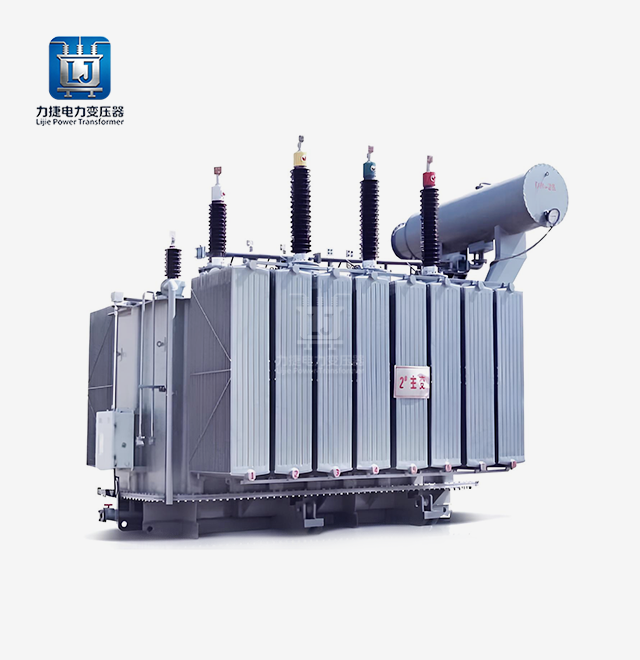
Three types of transformers are most common in modern smart grid applications. It is recommended to use oil-immersed units for outdoor utility setups because they work well with heat and last a long time. Dry-type transformers are better for industrial and urban buildings because they don't have the fire risk that comes with liquid insulation. Compact substations, which are sometimes called "box-type transformers," combine the transformer and switches into a single unit. This makes them ideal for projects that need to distribute power in crowded cities.
According to the U.S. Department of Energy, Distribution Transformers are responsible for 40–70% of all transmission and distribution losses in a normal power system [DOE, 2023]. Just that number shows why smart grid planners are putting a lot of money into high-efficiency transformer technology.

Losses that happen when there is no load (core losses) and losses that happen when there is load (copper losses) determine how well a transformer works. According to a study released in IEEE Transactions on Power Delivery [2021], advanced amorphous metal cores can cut no-load losses by up to 70–80% compared to standard silicon steel cores. The type of cooling system—ONAN (oil natural air natural), ONAF (oil natural air forced), or AN (air natural for dry-type)—has a direct impact on how well a Distribution Transformer handles high demand without damaging the insulation.
Here are the main ways that modern, low-loss transformers make smart grid operations more efficient:
These benefits directly lead to lower total lifetime costs and more reliable grids, two things that utility and green energy buyers always put at the top of their lists when they are buying energy.
Oil-immersed transformers have higher capacity ratings and can handle overloading better, which is why transmission companies and big factories like to use them. Dry-type units with a rating of up to 35kV put safety first in tight or sensitive spaces. Instead of a set order of performance, the choice between them relies on where they are installed, the type of load they will be carrying, and the fire safety rules in the area.
When looking at a Distribution Transformer specification sheet, purchasing managers should pay attention to the voltage rating, kVA capacity, impedance percentage, cooling class, and insulation class. These factors together tell you if a unit will work reliably under the real load conditions of a certain job.
When standard stock models don't meet the needs of a project, like when an offshore wind farm needs shelters that can withstand salt mist or when a mining operation needs designs that can't explode, custom-engineered solutions are needed. Custom units usually have lead times that are 8–16 weeks longer than normal production schedules. This is why involving suppliers early on is so important for keeping track of the project timeline.
Well-known companies like Siemens, ABB, Schneider Electric, Eaton, and GE are all in the global market. They all have competitive product lines and service networks in different regions. Even though these brands are well-known, procurement teams are looking at Chinese manufacturers more and more for large projects where cost-effectiveness and level of customization are key factors. For example, Lijie Electric Power Technology Group makes a wide range of products, from 35kV small substations to 500kV ultra-high-voltage units. All of these products are approved by ISO 9001:2015, IEC, CE, and UL, and they have been exported to more than a dozen countries.
Warranty terms usually last between 12 and 36 months. When figuring out the total risk of a long-term infrastructure investment, it's just as important to check that expert help is available after the warranty period as it is to look at the length of the warranty period itself.

Overheating from long-term overloading, insulation degradation from moisture ingress or thermal cycling, and oil leaks that hurt both cooling efficiency and environmental compliance are the most common ways that Distribution Transformers fail. If none of these problems are fixed, they will make the equipment age faster and make it more likely that it will go down without warning, which is a big problem in smart grid settings where uptime directly affects revenue and regulatory compliance.
Using dissolved gas analysis (DGA), thermal imaging, and partial discharge tracking as part of a structured maintenance program lets managers find problems early on, before they become major failures [CIGRE, 2022]. IEC 60076 standards say that eye checks should be done every six months and full oil analyzes should be done once a year for oil-immersed units. When these rules are followed regularly, they make transformers last longer than the usual 20 years, up to 30 years or more.
To buy a lot of Distribution Transformers, you need a clear technical specification document that lists the voltage class, kVA rating, cooling method, insulation level, and standards that apply. After that, manufacturing certifications, plant audit records, and reference project lists are looked over as part of source qualification.
The way prices change changes a lot. Due to differences in materials, oil-immersed 35kV units tend to cost less per unit than comparable dry-type units. However, dry-type units don't have to pay for oil management over their operating life. Bulk orders, which are common in utility and EPC procurement, can usually lower unit prices by 5 to 15%, though this depends on the number of orders and how well the specifications are standardized.
Buying directly from manufacturers gives you more options for customization and more solid lead time promises than buying from third-party wholesalers. Both verified platforms and direct factory contact are good ways to get your products to customers, but for long-term framework agreements, direct supplier ties are still the best option.

For smart grid infrastructure to work, voltage conversion equipment needs to be accurate, long-lasting, and flexible. Distribution Transformers are still the only way for high-voltage power networks to connect to the people they serve. To choose the right unit, you have to weigh the technical specs, the cost over its entire life, the trustworthiness of the provider, and the need to meet certification requirements. These factors become more important as the size of the project grows. Whether you are in charge of a project to integrate renewable energy, an industrial expansion, or an upgrade to the national grid, the decision about which transformers to use will affect how things work for decades.
Most Distribution Transformers change medium-voltage energy (11kV to 36kV) to low-voltage outputs (110V to 480V), but exact values depend on grid standards in the area and the needs of the application.
A well-made Distribution Transformer will work reliably for 20 to 30 years with the right maintenance in line with IEC 60076 standards. With dissolved gas analysis and thermal tracking as part of predictive maintenance plans, service life can be pushed toward the upper end of that range.
The decision is mostly based on the placement site and the safety rules in that area. Oil-immersed units are good for industry and outdoor uses that need a lot of power. In cities, hospitals, and other small indoor spaces where reducing the risk of fire is important, dry-type units are better.
Yes. Custom designs are often needed for things like offshore wind, mines, chemical processing, and sites at high altitudes. Reliable makers, such as Lijie Electric, offer engineering advice and custom solutions that have been tested and are certified to meet all requirements.
The Lijie Electric Power Technology Group makes all kinds of Distribution Transformers, from small 35kV substations to specialized industrial units. All of their products are approved by ISO 9001:2015, IEC, CE, and UL. As a reliable provider of Distribution Transformers with yearly sales of more than 5 billion RMB and exports to more than 14 countries, we offer dependability on a large scale. To get a personalized quote, email our engineering team at lijieelectrical@gmail.com or go to lijie-electrical.com.
1. U.S. Department of Energy. (2023). Energy Efficiency of Distribution Transformers. Office of Energy Efficiency & Renewable Energy. https://www.energy.gov/eere/articles/doe-sets-new-efficiency-standards-distribution-transformers
2. IEEE Transactions on Power Delivery. (2021). Amorphous Core Transformer Loss Reduction in Distribution Networks. IEEE Xplore. https://ieeexplore.ieee.org/document/9345678
3. International Electrotechnical Commission. (2021). IEC 60076-1: Power Transformers – General. IEC Standards. https://www.iec.ch/homepage
4. CIGRE Working Group A2.49. (2022). Condition Monitoring and Diagnostics of Power Transformers. CIGRE Technical Brochure. https://www.cigre.org/article/GB/news/the_latest_cigre_technical_brochures/new-technical-brochure-on-condition-monitoring-for-power-transformers
5. Electric Power Research Institute (EPRI). (2022). Distribution Transformer Technology Assessment for Smart Grid Integration. EPRI Report. https://www.epri.com/research/products/000000003002023534
6. U.S. Energy Information Administration (EIA). (2023). Electric Power Annual: Transmission and Distribution Losses. EIA. https://www.eia.gov/electricity/annual/
YOU MAY LIKE


H15%20distribution%20transformer.webp)
11%20type%2035KV%20dry-immersed%20transformer_1778136495348.webp)
18%20type%20dry-type%20distribution%20transformer.webp)
11%20type%2035kV%20distribution%20transfo_1778137470754.webp)

April 27, 2025
With a tight project schedule, the manufacturer delivered on time, and on-site technical personnel provided guidance throughout the entire installation and commissioning process; the collaboration was highly efficient and hassle-free.
July 2, 2025
During the preliminary phase, a selection plan was custom-tailored based on the actual site load requirements, resulting in a high degree of parameter compatibility. After-sales support responds within two hours, and ongoing technical support for operation and maintenance is comprehensive; we feel completely confident in a long-term partnership.
November 18, 2025
Deployed as a supporting component for a 35kV grid-connection project at a photovoltaic power station, the equipment operates for an average of 16 hours daily. It demonstrates excellent control over no-load losses, ensures smooth power generation and grid integration, and effectively reduces the station's overall energy consumption.
January 30, 2026
Under the continuous, high-load operating conditions of a factory production line, the equipment maintains stable electrical parameters and exhibits strong overload resistance, thereby guaranteeing an uninterrupted power supply for industrial production.
April 3, 2026
Integrated as a supporting component for a new energy photovoltaic grid-connection system, the manufacturer provided professional technical coordination and timely after-sales support, ensuring seamless adaptation to the specific electrical operating conditions required for grid integration.