April 27, 2025
With a tight project schedule, the manufacturer delivered on time, and on-site technical personnel provided guidance throughout the entire installation and commissioning process; the collaboration was highly efficient and hassle-free.
Sep 8, 2026
Oil-immersed transformers dominate high-power electrical infrastructure because transformer oil simultaneously handles two critical functions: insulation and heat dissipation. In high-capacity grids, industrial plants, and renewable energy installations, thermal accumulation poses the greatest threat to equipment longevity. Mineral or synthetic ester oil circulates around the core and windings, absorbing heat through natural convection or forced cooling, while its high dielectric strength suppresses partial discharge and voltage breakdown. This dual-action mechanism allows these units to operate continuously at ratings from 35kV to 500kV and beyond, making them the preferred choice wherever sustained, heavy-load power delivery is non-negotiable.

A liquid-filled power transformer has three main parts: a core made of laminated silicon steel, windings made of copper or aluminum, and a sealed tank of insulating oil. The voltage changes between the main and secondary windings because of electromagnetic induction. The oil around the unit keeps it fixed by conducting heat and electricity.
Natural oil-air cooling (ONAN) works because of currents that move through the oil tank and carry heat to the walls and cooling fins of the tank. For forced cooling setups like ONAF (oil natural, air forced) and OFAF (oil forced, air forced), pumps and fans are added to move heat around faster. IEC 60076-2 says that forced cooling can increase a transformer's rated capacity by 25–40% without making it bigger, which is very helpful in substations that don't have a lot of room.
Mineral oil is still the standard in the business. It has a flash point above 135°C and a dielectric strength of more than 30 kV/2.5 mm. Natural ester fluids, like FR3, have flash points above 300°C and break down naturally, which makes them more appealing for places that care about the environment. Both types of fluid have self-healing insulation properties. This means that the liquid fills in tiny holes that would otherwise cause arcing, which is something that solid insulation can't do.
The main reasons why these transformers are the best choice for tough power situations are listed below:
These benefits directly lead to less downtime, lower lifecycle costs, and more reliable grid performance. These are the exact measures that purchasing managers at power plants and heavy industrial sites look for when they set up long-term supply deals.

A structured repair schedule is needed for long-term dependability. Dissolved gas analysis (DGA) can find flaws like partial discharge, overheating, and arcing before they become failures. The oil itself is the most helpful diagnostic medium available. The IEC 60599 standard gives maintenance teams a way to figure out what DGA results mean by giving them a number-based reason for their decisions.
Every 12 to 24 months, the insulating oil in an Oil-Immersed Transformer is tested for dielectric strength, moisture content is measured (with a target below 20 ppm for 110 kV-class units), and the tank seals, Buchholz switches, and cooling fans are visually inspected. Real-time infrared thermography can also help identify hot spots that interior sensors might miss.
If oil contamination or moisture entry is found early, vacuum dehydration units can clean the oil on-site and restore dielectric strength without replacing the whole oil. This saves money, keeps the transformer's insulation paper from being damaged, and can be done in the field.
There are trade-offs in every procurement decision. Knowing when liquid-filled designs work best and when other options are better keeps specifications from being off and saves money on expensive repairs.
Oil-Immersed vs. Dry-Type: Cast resin transformers work best in hospitals and other high-rise buildings that need to be safe from fire. But their highest useful voltage class is 36kV, and when rated above 2.5 MVA, their cooling ability is much lower. Liquid-filled units give better performance for the money when used in outdoor substations, networks that collect green energy, or industrial sites that work above 10kV.
Oil-Immersed vs. Gas-Insulated: SF₆-insulated transformers are small, but they are subject to strict regulations because SF₆ has a global warming potential (GWP) of 23,500. An Oil-Immersed Transformer using natural ester oil offers similar dielectric performance with a GWP close to zero. This makes purchasing decisions more aligned with ESG reporting requirements that are becoming increasingly common in US infrastructure projects.
When judging providers, the following factors follow good business-to-business buying practices and protect the long-term success of projects:

The transformer business is about to go through a big period of technology change. Mineral oil is being replaced by natural and synthetic ester fluids in new installations where fire or environmental laws make it impossible to use mineral oil. Several US utilities have also promised to use ester-filled fleets for distribution-level assets. Adding smart tracking features like fiber optic temperature monitors, partial discharge detectors, and IoT-connected DGA modules is going from being a choice to being required in utility-grade procurement specs.
When it comes to materials, amorphous alloy cores cut no-load losses by up to 70% compared to regular silicon steel cores. This has direct effects on how grid upgrade projects figure out the total cost of ownership over time. Companies that invest in these technologies will be able to sell more of their goods as US grid regulators tighten efficiency rules under DOE 2016 standards and planned future changes.
Oil-Immersed Transformers are still the most important part of high-power electrical systems because no other technology can match their thermal management, insulation stability, voltage range, and cost-effectiveness over their entire lifetimes. From 35kV distribution networks to 500kV ultra-high-voltage transmission corridors, liquid-filled designs always work better than other options when the load conditions that industrial and grid applications need them to withstand last for a long time. As the chemistry of shielding fluids improves and smart diagnostics get better, these transformers will continue to change. But their main purpose of delivering stable power will not go away. When procurement teams understand the scientific details of this choice, they always build more reliable and cost-effective power grids.
At high voltage, the oil-paper hybrid insulation system has insulating strength that air- or resin-based systems can't match. The oil constantly fills in the gaps, stopping partial discharge from starting, which is the main way things go wrong at high voltage classes.
For distribution-class units, it is normal to test their dielectric strength and moisture level every 12 to 24 months. IEC 60599 guidelines say that dissolved gas analyzes should be done once a year on transmission-class assets (110kV and above).
Yes, setups for wind farms and solar farms need certain impedance profiles, harmonic tolerance, and sometimes dual-voltage tap switches. If a manufacturer has an in-house engineering team, they can set up units to fit the output features of the inverter and the needs of connecting to the grid.
Check for IEC 60076 type test reports, IEEE C57 compliance documentation, ISO 9001:2015 quality system certification, and UL or CSA listing for projects in the US. For locations in Europe, you need a CE certificate.
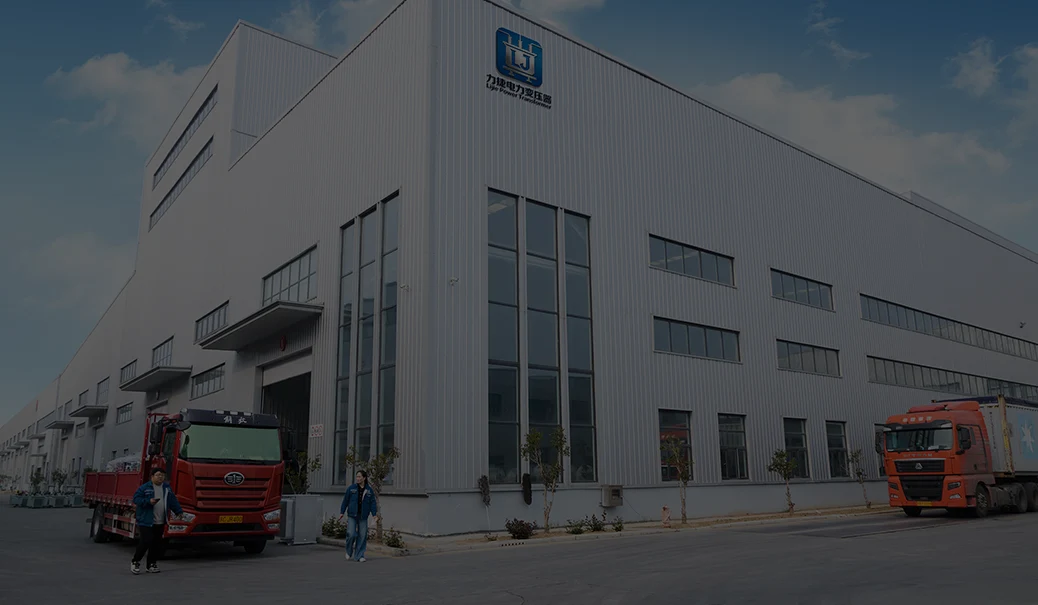
Lijie Electric Power Technology Group manufactures Oil-Immersed Transformers from 35kV through 500kV, certified under IEC, CE, UL, and ISO 9001:2015 — with over 160 doctoral and master-level engineers supporting customization for grid, industrial, and renewable energy projects. As a trusted oil-immersed transformer manufacturer with 2,000+ employees and 500,000 m² of production capacity, we deliver bulk orders on confirmed schedules. Contact us at lijieelectrical@gmail.com or visit lijie-electrical.com to request a technical consultation or project-specific quote.

1. International Electrotechnical Commission. IEC 60076-2: Power Transformers – Temperature Rise for Liquid-Immersed Transformers. Geneva: IEC, 2011. https://webstore.iec.ch/publication/592
2. International Electrotechnical Commission. IEC 60599: Mineral Oil-Filled Electrical Equipment – Interpretation of Dissolved and Free Gases Analysis. Geneva: IEC, 2022. https://webstore.iec.ch/publication/67026
3. IEEE. IEEE C57.12.00: IEEE Standard for General Requirements for Liquid-Immersed Distribution, Power, and Regulating Transformers. New York: IEEE, 2021. https://standards.ieee.org/ieee/C57.12.00/7069/
4. U.S. Department of Energy. Transformers: Basics, Maintenance, and Diagnostics. DOE/NV-11092-236. Washington, DC: DOE, 2005. https://www.osti.gov/servlets/purl/991860
5. U.S. Department of Energy. Energy Conservation Standards for Distribution Transformers: Final Rule. Federal Register, 2013. https://www.federalregister.gov/documents/2013/10/22/2013-24633/energy-conservation-standards-for-distribution-transformers
6. Cigré Working Group A2.35. Experiences in Service with New Insulating Liquids. Technical Brochure 436. Paris: Cigré, 2010. https://www.e-cigre.org/publications/detail/436-experiences-in-service-with-new-insulating-liquids.html
YOU MAY LIKE

11%20type%2035KV%20dry-immersed%20transformer_1778136495348.webp)
18%20type%20dry-type%20distribution%20transformer.webp)


H15%20distribution%20transformer.webp)

April 27, 2025
With a tight project schedule, the manufacturer delivered on time, and on-site technical personnel provided guidance throughout the entire installation and commissioning process; the collaboration was highly efficient and hassle-free.
July 2, 2025
During the preliminary phase, a selection plan was custom-tailored based on the actual site load requirements, resulting in a high degree of parameter compatibility. After-sales support responds within two hours, and ongoing technical support for operation and maintenance is comprehensive; we feel completely confident in a long-term partnership.
November 18, 2025
Deployed as a supporting component for a 35kV grid-connection project at a photovoltaic power station, the equipment operates for an average of 16 hours daily. It demonstrates excellent control over no-load losses, ensures smooth power generation and grid integration, and effectively reduces the station's overall energy consumption.
January 30, 2026
Under the continuous, high-load operating conditions of a factory production line, the equipment maintains stable electrical parameters and exhibits strong overload resistance, thereby guaranteeing an uninterrupted power supply for industrial production.
April 3, 2026
Integrated as a supporting component for a new energy photovoltaic grid-connection system, the manufacturer provided professional technical coordination and timely after-sales support, ensuring seamless adaptation to the specific electrical operating conditions required for grid integration.