April 27, 2025
With a tight project schedule, the manufacturer delivered on time, and on-site technical personnel provided guidance throughout the entire installation and commissioning process; the collaboration was highly efficient and hassle-free.
Sep 25, 2026
Data centers demand uninterrupted, precision-grade power — and the medium voltage transformer sits at the heart of that requirement. Operating within the 2.4 kV to 35 kV range, these devices bridge utility-level transmission lines and the sensitive IT loads inside modern server halls. A single voltage irregularity can cascade into equipment failure, data loss, and measurable revenue damage. According to the Uptime Institute's 2023 Global Data Center Survey, power-related incidents remain the leading cause of unplanned outages worldwide. Understanding how the right transformer selection, maintenance, and procurement strategy protects uptime is essential for any B2B engineering or procurement team.
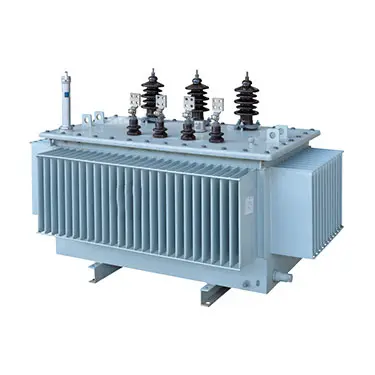
Megawatts of continuous load are drawn by modern data centers, and power feeds usually come at medium-voltage levels, such as 13.8 kV or 34.5 kV in North American infrastructure. A Medium Voltage Transformer lowers the supply voltage to usable voltages (480 V or 208 V) while providing galvanic isolation. This protects sensitive electronics further down the line from grid-borne transients.
Common-mode noise and fault currents can't get into server power sources because of galvanic separation. In places with a lot of non-linear switching power supplies that cause harmonic distortion, this protection is not an option; it is required by design. K-factor rated windings, which are usually K-13 or K-20, show how well a transformer can handle those harmonics without breaking down faster due to heat.
Along with being able to work alone, these Medium Voltage Transformer units can connect to UPS systems, automatic transfer switches, and generator feeds, giving Tier III and Tier IV data centers the layered safety they need. Scalability is also very important: as compute density rises, modular Medium Voltage Transformer installations let capacity be added gradually without having to redesign the whole infrastructure. This flexible approach allows a Medium Voltage Transformer system to support changing power requirements while maintaining reliable and efficient electrical distribution.
The choice of transformer design has a direct effect on its safety scores, installation space, upkeep cycles, and overall cost over its entire life. There are two main technologies used in data centers, and choosing between them should be based on a thorough technical analysis.
Dry-type (cast resin) transformers are the most common type used in data centers. Their epoxy-encased windings have a UL 94 fire resistance grade, do not contain any flammable fluids, and can work in temperatures ranging from -25°C to +40°C without the need for extra cooling systems. Vacuum-pressure impregnated (VPI) versions make them even more resistant to water, so they can be used in wet or coastal areas. Levels of partial discharge usually stay below 10 pC, which meets the strict standards of IEC 60076-11.
Oil-immersed transformers are better at getting rid of heat and are more cost-effective at higher kVA ratings. Mineral oil or natural ester (FR3) fluid units can be used when data centers are on campuses and have open equipment pads. Natural ester fluids made from vegetable oil raise the temperature above 300°C and are recyclable, which meets requirements for sustainability.
Here are the main things that make buying teams different:
Fire safety: Dry-type units meet the requirements of NFPA 70 Article 450 for transformer vaults, which lowers the cost of building inside.
These differences have a direct effect on the total cost of ownership. A hyperscale operator who picks the wrong insulation technology could end up with early winding failure, unplanned replacement, and high costs for downtime. All of these problems could have been avoided with clear upfront specification.
These distinctions directly influence total cost of ownership. A hyperscale operator choosing the wrong insulation technology can face premature winding failure, unplanned replacement, and substantial downtime costs — all avoidable with accurate upfront specification.
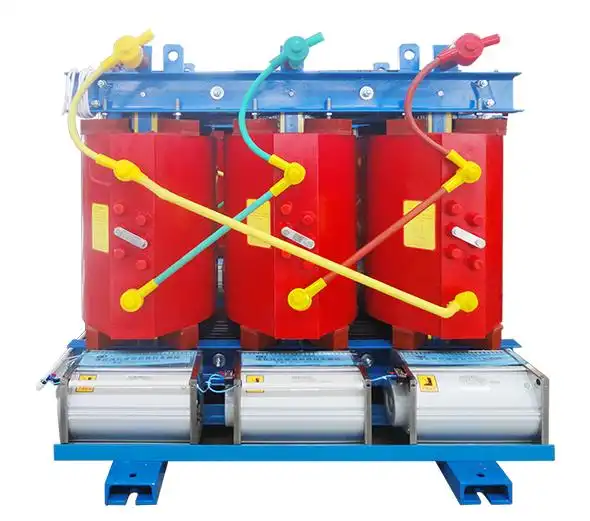
The operational practice that turns a well-specified transformer into an asset that lasts for decades is proactive upkeep. Both IEEE C57.104 and IEC 60422 set up systems for condition-based maintenance that can be used directly on data center transformers.
Using infrared thermography during planned shutdowns helps a Medium Voltage Transformer identify hot spots in windings and terminations before they cause insulation failure. For oil-filled Medium Voltage Transformer units, a dissolved gas analysis performed once a year can reveal faults that are already beginning to develop. For example, high amounts of acetylene can indicate internal arcing weeks before it becomes noticeable. Fiber-optic winding temperature sensors, which can now be installed at the factory, allow a Medium Voltage Transformer to send real-time thermal data to building management systems. This enables the systems to automatically reduce or disconnect power before thermal limits are reached, helping protect the Medium Voltage Transformer and maintain reliable operation.
The three most common service events in data center transformer populations are insulation loss from long-term harmonic loads, failed cooling fans in forced-air dry-type units, and busbar connections that are too loose. Most of these problems are caught early on by vibration signature analysis and partial discharge ultrasonic tests that are done as part of yearly checks. Workers who are certified under NFPA 70E and OSHA 29 CFR 1910.269 can safely service medium voltage equipment, which lowers the risk to people and the damage to the equipment.
At this level, buying decisions are based on more than just comparing prices per unit. Over the course of 25 to 30 years, an organized review method protects project schedules, lifetime budgets, and the reliability of operations.
When it comes to effective buying, these factors are looked at in order:
When you don't just focus on price optimization, but also take these other factors into account, you can find buying solutions that protect both project ROI and business continuity.
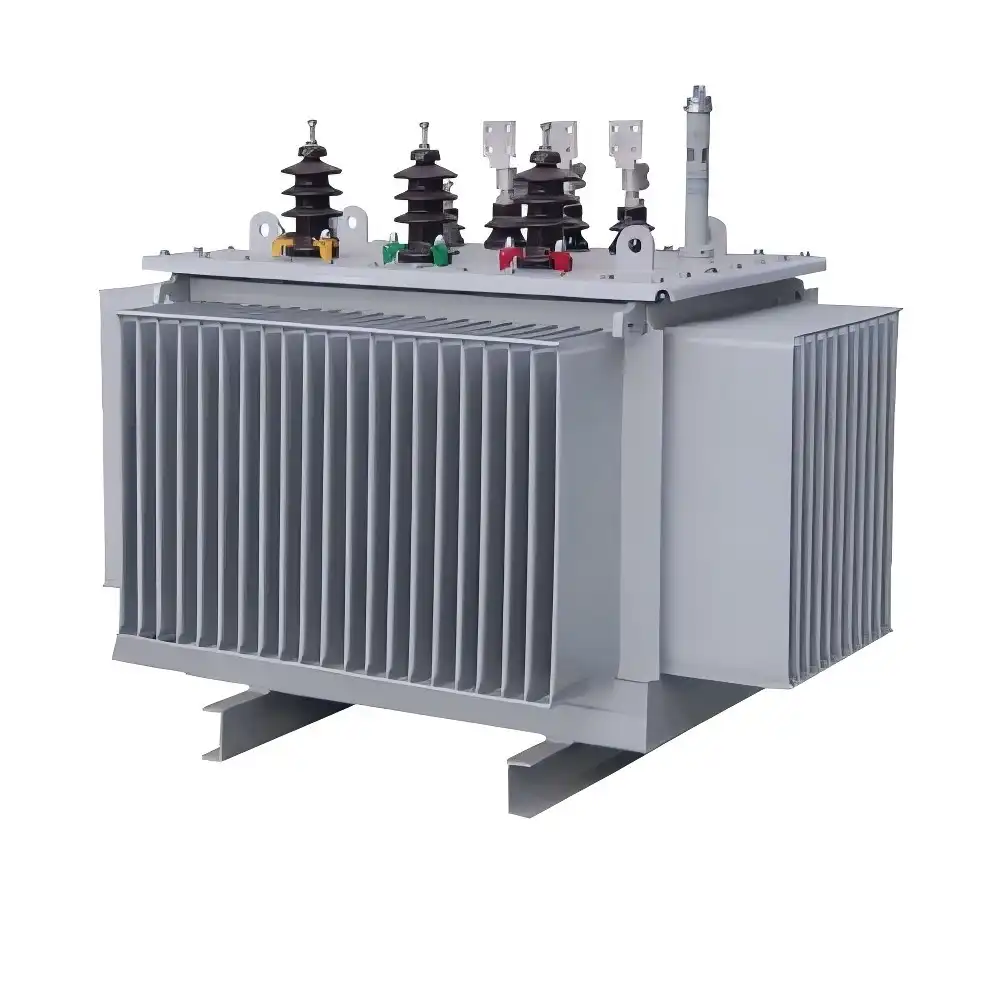
IoT-enabled monitoring is quickly becoming the norm for installing new Medium Voltage Transformer systems. Embedded sensors in a Medium Voltage Transformer send data about load, temperature, and partial discharge to cloud platforms in real time. This allows predictive maintenance programs to identify potential problems before they cause equipment failure. Digital nameplates, which are QR-coded asset records linked to full test documentation, are now available from a number of manufacturers. These tools make lifecycle management easier for large fleets of Medium Voltage Transformer units and provide maintenance teams with more detailed information for monitoring, inspection, and long-term asset management.
Another technology that is getting better is amorphous alloy cores. Their no-load losses are 70–80% lower than those of grain-oriented silicon steel. This is a measured improvement in efficiency for transformers that are always on and only partially loaded, which is how most data centers work. As the price of energy and the need to report carbon emissions go up, flexible core designs give buying teams a good reason to argue for efficiency in sustainability reviews.
Adaptive transformer designs that work with mixed grid sources, which combine electric power with solar or battery storage on-site, are now on the market. These designs keep the voltage stable even when the input profiles change. This makes them useful as data centers try to reach net-zero energy goals.
The transformer that connects the power grid to a data center's most important IT equipment is where power reliability starts. Three important parts of a good procurement strategy are choosing the right Medium Voltage Transformer design, keeping it up to known standards, and working with a manufacturer that can consistently deliver large quantities. A properly chosen Medium Voltage Transformer with K-factor ratings, high-efficiency cores, and certified insulation systems is a low-risk, long-lasting asset that keeps operations running reliably for decades. Selecting the right Medium Voltage Transformer also helps data centers maintain stable power distribution while supporting future capacity and operati
Dry-type cast resin units don't use flammable fluids, so they meet the standards of NFPA 70 vaults and make installation inside easier. At higher kVA ratings, oil-filled units perform better thermally and cost less, but they need containment sumps and stricter fire suppression rules.
For dry-type units, cleaning and infrared thermography once a year are standard. Dissolved gas analysis and fluid samples must be done on oil-immersed units once a year, and the units must be completely inspected every three to five years, based on the load history.
Test reports of type IEC 60076 or IEEE C57.12.00, UL listing (for installations in the U.S.), ISO 9001:2015 manufacturing certification, and CE marking for projects going abroad are the bare minimum. Energy-saving approval from a reputable third party gives you even more peace of mind.
Yes, K-13 or K-20 rated windings and electrostatic shielding between the primary and secondary coils are standard customizations that deal with the non-linear load profiles that are common in server environments.
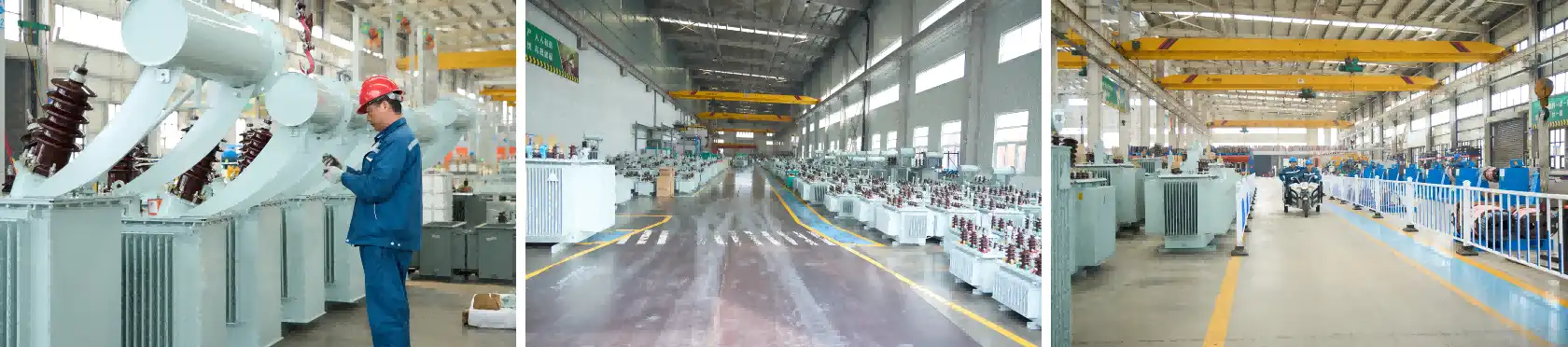
With ISO 9001:2015 quality management backing every production batch, Lijie Electric Power Technology Group designs and makes a wide range of dry-type and oil-immersed Medium Voltage Transformer products that meet IEC, UL, and CE standards. We are a reliable seller of Medium Voltage Transformers, and our annual sales exceed 5 billion RMB, and we ship to four countries. We can deliver on a large scale without sacrificing technical accuracy. To get a customized specification consultation, email our engineering team at lijieelectrical@gmail.com or go to lijie-electrical.com.
1. Uptime Institute — Global Data Center Survey Report, 2023.
2. IEEE Standards Association — IEEE C57.12.00: Standard for General Requirements for Liquid-Immersed Distribution, Power, and Regulating Transformers, 2021.
3. IEC — IEC 60076-11: Power Transformers — Part 11: Dry-Type Transformers, 2018.
4. U.S. Department of Energy — Energy Conservation Standards for Distribution Transformers, Federal Register, 2016.
5. NFPA — NFPA 70: National Electrical Code, Article 450 — Transformers and Transformer Vaults, 2023 Edition.
6. Lawrence Berkeley National Laboratory — United States Data Center Energy Usage Report, 2020.
YOU MAY LIKE
12%20type%2035KV%20dry-immersed%20transformer_1778136610496.webp)
10%20type%20epoxy%20resin%20cast%20transformer.webp)

13%20type%20epoxy%20resin%20cast%20transformer.webp)

%20Dry-type%20Distributing%20Transformer.webp)

April 27, 2025
With a tight project schedule, the manufacturer delivered on time, and on-site technical personnel provided guidance throughout the entire installation and commissioning process; the collaboration was highly efficient and hassle-free.
July 2, 2025
During the preliminary phase, a selection plan was custom-tailored based on the actual site load requirements, resulting in a high degree of parameter compatibility. After-sales support responds within two hours, and ongoing technical support for operation and maintenance is comprehensive; we feel completely confident in a long-term partnership.
November 18, 2025
Deployed as a supporting component for a 35kV grid-connection project at a photovoltaic power station, the equipment operates for an average of 16 hours daily. It demonstrates excellent control over no-load losses, ensures smooth power generation and grid integration, and effectively reduces the station's overall energy consumption.
January 30, 2026
Under the continuous, high-load operating conditions of a factory production line, the equipment maintains stable electrical parameters and exhibits strong overload resistance, thereby guaranteeing an uninterrupted power supply for industrial production.
April 3, 2026
Integrated as a supporting component for a new energy photovoltaic grid-connection system, the manufacturer provided professional technical coordination and timely after-sales support, ensuring seamless adaptation to the specific electrical operating conditions required for grid integration.