April 27, 2025
With a tight project schedule, the manufacturer delivered on time, and on-site technical personnel provided guidance throughout the entire installation and commissioning process; the collaboration was highly efficient and hassle-free.
Aug 27, 2026
Selecting the right Dry-type Transformer Factory demands careful evaluation of production capabilities, certifications, and long-term reliability. Unlike oil-filled counterparts, dry-type units use solid insulation materials like epoxy resin, eliminating fire hazards and environmental contamination risks. When choosing a manufacturing partner, assess their adherence to IEC 60076-11 standards, vacuum pressure impregnation technology mastery, and proven track record in delivering transformers rated from low voltage to 35kV for industrial, renewable energy, and infrastructure projects. The correct factory choice impacts not only upfront costs but also lifecycle expenses and operational uptime over decades of service.
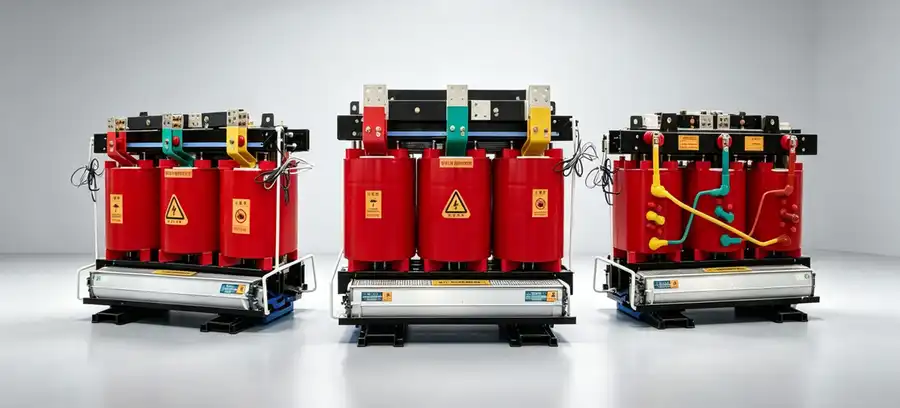
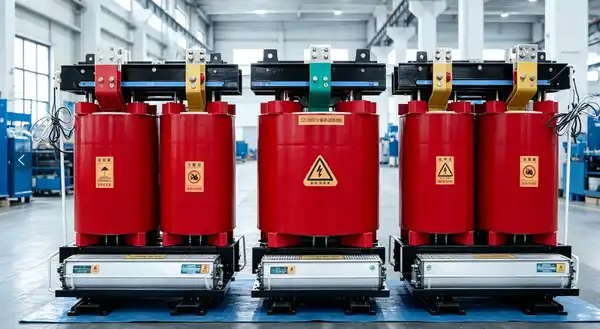
A specific Dry-type Transformer Factory designs transformers that use solid dielectrics instead of liquids to cool them down. The vacuum pressure impregnation (VPI) or vacuum cast resin (VCR) processes used in these facilities make sure that the materials are resistant to moisture and have high dielectric strength. There are high-tech wrapping tools, core lamination systems, and climate-controlled curing ovens in the production areas. Leading makers usually have factories that are bigger than 100,000 square meters and have dedicated research and development teams with advanced engineering degrees. This lets them make custom solutions for power utilities, green energy systems, and heavy industry uses.
The main difference between these two types of transformers is how they are made. For dielectric fluid tests, oil-filled units need tanks that can't leak, systems that clean the oil, and regular repair plans. In dry-type production, these steps are skipped, and the focus is instead on exact resin casting, heat curing processes, and encapsulation methods. This change makes it easier to follow environmental rules and lets them be installed in places that are prone to fire, like hospitals, data centers, and high-rise buildings. For procurement managers, dry-type factories can turn around custom orders faster because they don't need to change the conservator tank or process oil.
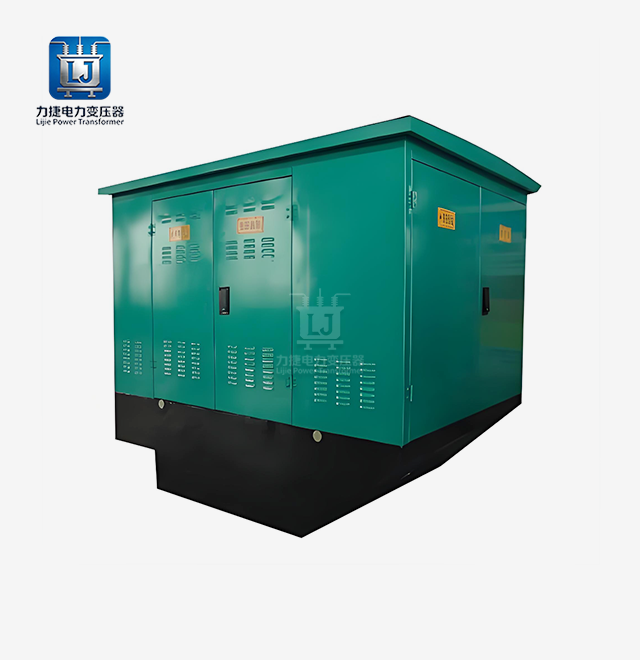
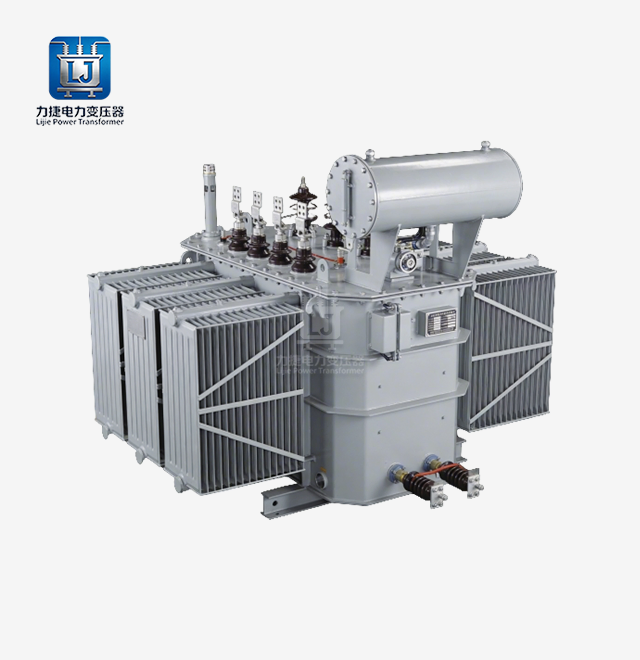
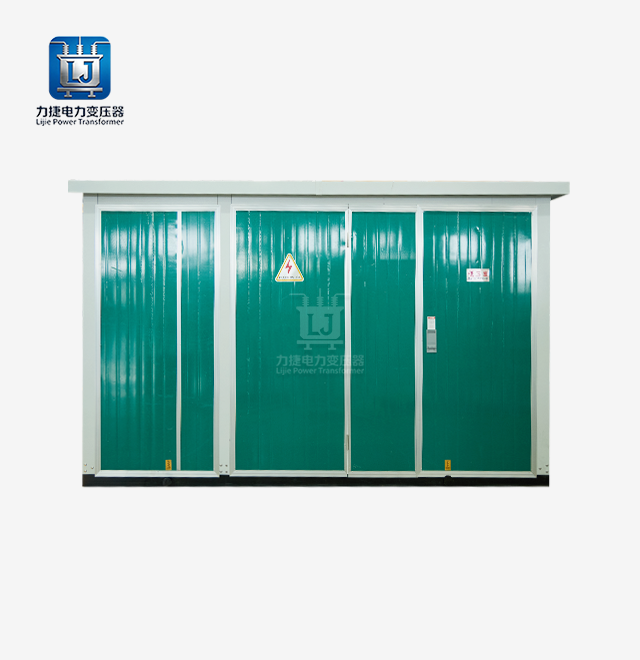
Transformers from reputable companies come in a wide range of shapes and sizes, with voltage levels from 6kV to 35kV and power ratings from 30kVA to 20MVA. Class F (155°C) and Class H (180°C) insulation systems can handle different thermal loads, and natural air (AN) or forced air (AF) cooling choices give installers who are limited on room more options. Compact substations are used for building projects and industrial parks. They have weatherproof shelters that hold dry-type transformers and circuits. Rectifier transformers made for electrochemical processes and mining transformers with better short-circuit resistance show how flexible the factory is. Knowing the range of products available helps the firm match its skills to your unique business needs.
Different industries have different requirements for transformer performance, and an experienced Dry-type Transformer Factory can help customers select suitable designs for each application. Power utilities may require low partial discharge levels, often below 10 pC, along with operating lifespans of more than 30 years. Renewable energy projects may need dry-type transformers that can handle harmonic distortion generated by inverter systems, requiring cores made from high-permeability cold-rolled grain-oriented silicon steel. Heavy industries such as steel mills may require electric furnace transformers capable of handling overloads and rapid temperature changes. A qualified Dry-type Transformer Factory can recommend appropriate core-coil configurations and insulation classes when customers clearly provide their voltage class, capacity range, ambient temperature extremes, and altitude requirements. Working with a capable Dry-type Transformer Factory during the initial consultation can help ensure that transformer specifications are properly matched to actual operating conditions. An experienced Dry-type Transformer Factory can also support customized designs for demanding industrial and renewable energy applications.
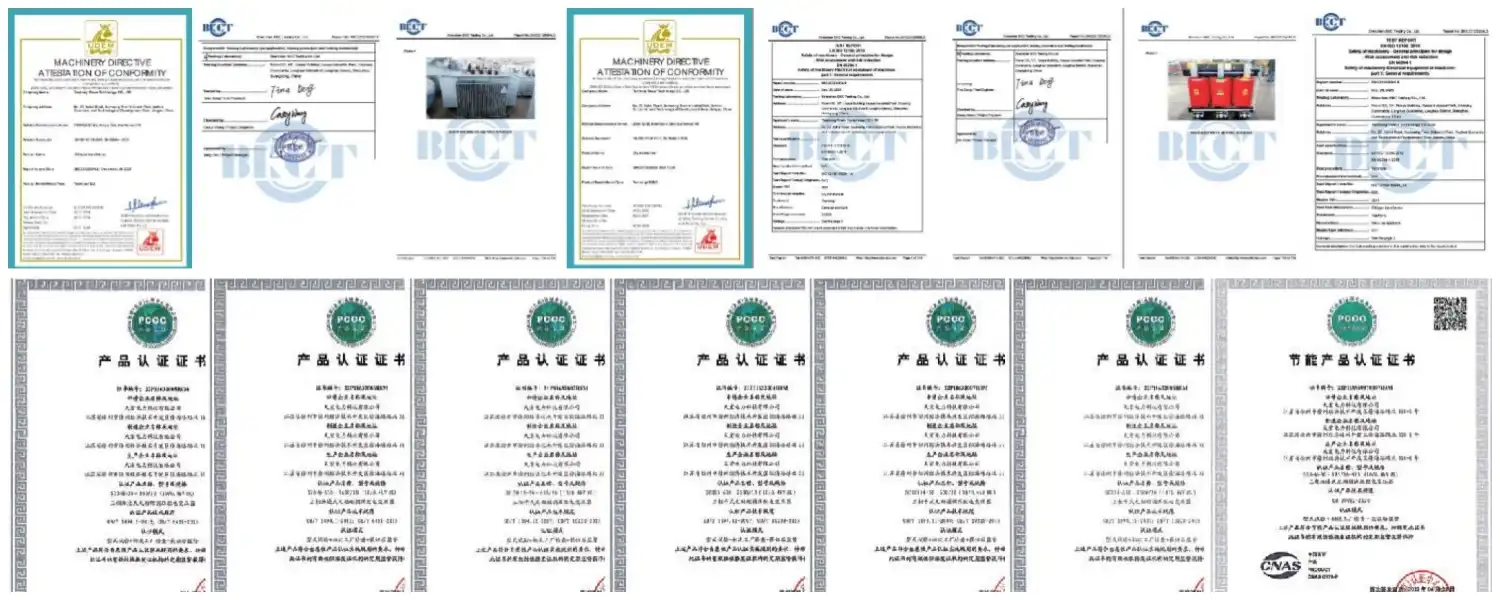
Quality badges help buyers decide which suppliers to work with. ISO 9001:2015 shows that you manage quality in a planned way, and ISO 14001 shows that you care about the environment. Technical conformity is proven by certifications that are specific to the product, such as IEC 60076-11 compliance, CE marking for European markets, and UL listing for installations in North America. Factories should make type test results from approved labs that cover impulse voltage resistance, temperature rise, and short-circuit strength easy for anyone to see. The National Transformer Quality Supervision and Inspection Center and the Wuhan High Voltage Research Institute are trustworthy testing groups whose approvals are taken very seriously. Asking for copies of these papers during the initial talks helps check what the factory says and lowers the risk of buying something.
Lifecycle cost analysis looks at more than just the original purchase price. It also looks at no-load losses, load losses, and upkeep needs over the next 20 to 30 years. When factories use amorphous metal cores instead of regular silicon steel, they cut no-load losses by 70%, which saves a lot of energy even though it costs more up front. Lead times depend on how customized the product is. Standard designs usually ship within 8 to 12 weeks, while engineered solutions can take up to 20 weeks. The terms of payment, like a letter of credit, a series of payments for reaching milestones, or a framework agreement, should match the cash flow patterns of the project. A warranty that lasts 18 to 24 months from the date of completion, along with clear promises that spare parts will be available, guards against failures that happen during crucial project stages.
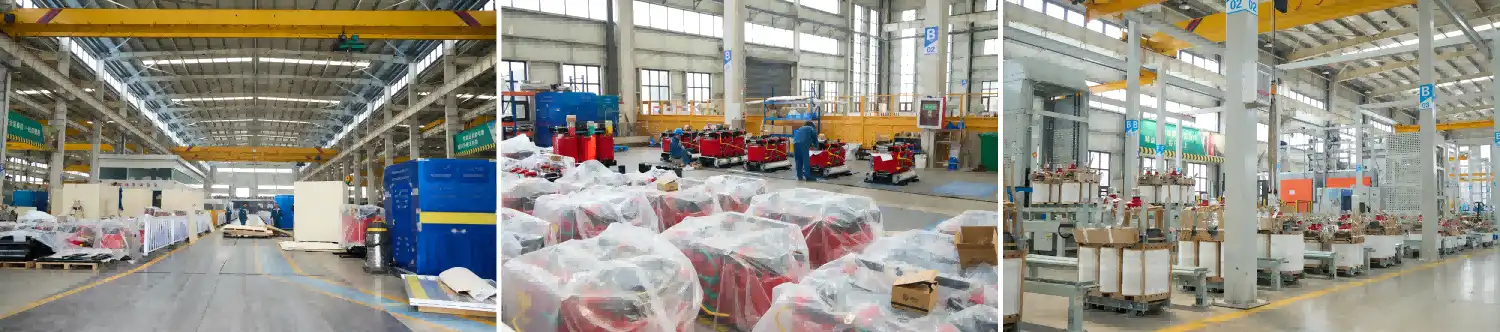
Verification of an authentic supplier goes beyond what a website says. Ask for applications for manufacturing licenses, business operation certificates, and intellectual property portfolios that show you can come up with new ideas. Social proof comes from customer reviews from well-known companies in your field, and practical knowledge comes from case studies that describe similar voltage classes and uses. Site visits to production sites, whether they are real or virtual, show how clean the factories are, how new the equipment is, and how skilled the workers are. Check to see if computer-controlled tensioning is used during winding, if tight tolerances are maintained during core stacking, and if the testing bays have up-to-date equipment for finding partial discharge that meets international standards.
Electrical performance parameters need to be compared very carefully. Measurements of temperature rise at full load should match insulation class ratings. Data on sound level (usually 55–65dBA at one meter) must meet NEMA ST-20 guidelines for indoor installations. The thermal performance depends on the design of the cooling ducts and the size of the conductors. Factories that use computational fluid dynamics (CFD) simulations during the design phase show that they are very good at engineering. When non-standard frequencies, seismic strengthening, or interaction with building control systems are needed, the ability to customize becomes very important. Check to see if companies have their own design centers with electrical engineers who can do finite element analysis and harmonic modeling. If they do, it means they're ready to take on complicated requirements.
Long-term satisfaction depends heavily on reliable support after delivery, and a qualified Dry-type Transformer Factory can provide comprehensive services throughout the equipment lifecycle. Full commissioning assistance helps ensure that installation is completed correctly, reducing the risk of premature failures caused by moisture ingress or insufficient ventilation. A professional Dry-type Transformer Factory can also provide maintenance training that teaches technicians how to perform thermographic inspections, check connection torque, and determine when air filters require cleaning. During an unexpected outage, a Dry-type Transformer Factory with regional service centers or authorized service partner networks can respond more quickly and help restore equipment operation. Leading Chinese manufacturers may also establish formal procedures for technical support, spare-parts logistics, and emergency dispatch in accordance with applicable after-sales service requirements. Before signing a contract, buyers should clarify response-time commitments and escalation procedures with the Dry-type Transformer Factory to reduce potential disagreements when urgent assistance is required. Choosing a dependable Dry-type Transformer Factory with strong after-sales capabilities can therefore improve maintenance efficiency, service responsiveness, and long-term transformer reliability.
There are many benefits to skipping distribution layers. When you buy directly from the factory, you don't have to pay markups to middlemen. This can cut your total costs by 15 to 25 percent on big orders. When you commit to a certain amount of work, you can get better prices and faster scheduling for production, which is very important when you have to meet regulatory dates for a project. Factory-direct ties make it easier for your engineering team and the manufacturer's design staff to talk about technical issues. This lets you optimize specifications in a way that middlemen can't. Access to all production records, such as material approvals, process control records, and dimensional inspection reports, makes it easier to do thorough quality checks. Experienced freight forwarders handle international logistics for factories, making sure that the right packaging, container loading, and customs paperwork are done. This lowers the risk of damage during transoceanic shipping.
Project delays can be avoided by setting realistic lead times. Standard stock items usually take 10 to 14 weeks from the time they are ordered until they are available ex-works. This time includes getting the materials, winding, drying, and testing. For engineering and tooling preparation, customized designs take an extra 4 to 6 weeks. Setting up staged payments, like a 30% down payment, 60% when production is done, and 10% retention after successful commissioning, aligns the project's financial risks with its goals. The terms of a letter of credit should give enough time for inspection before the paper is released. For projects with more than one unit, setting up a framework that deals with agreed-upon prices, technical details, and delivery dates for the next 12 to 24 months makes budget planning more reliable and gets rid of the need to negotiate over and over again.
Long-term relationships offer chances to keep getting better. Every year, business leaders meet to talk about performance trends, deal with problems that keep coming up, and look for ways to make products better. Collaborative development programs fund research into new insulation materials or ways to make buildings use less energy, which gives them a competitive edge. Clear communication about demand predictions helps factories figure out the best amount of inventory and staffing, which makes them more responsive when demand goes up. Sharing practical feedback, like failure analysis in the field or data on how well the product performs in the environment, helps companies make ideas and production methods better. These relationships, which are based on mutual respect and shared goals, turn suppliers into strategic assets that help your company reach its growth and business success goals.
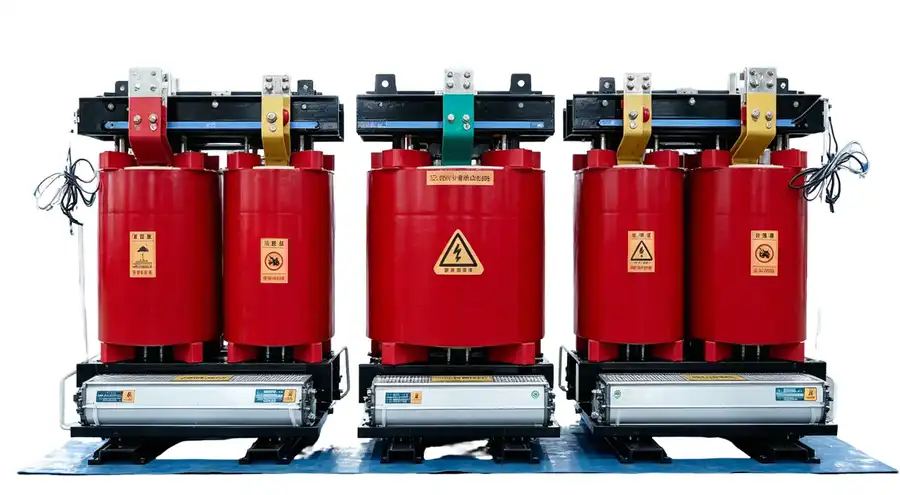
A regional power company in the southeastern United States needed 50 units of 2500 kVA, 13.8 kV/480 V transformers to modernize its distribution network. After evaluating five manufacturers, the company gave the greatest weight to UL listing, seismic certification, and performance in humid coastal climates. The selected Dry-type Transformer Factory demonstrated IP54-rated enclosures, provided salt spray test results, and maintained a service center within 200 miles. Post-installation monitoring over three years recorded 99.7% uptime, supporting the effectiveness of the selection criteria. In another project, a renewable energy company needed transformers for a 100 MW solar farm within a short schedule. By working with an experienced Dry-type Transformer Factory that maintained common core-coil assemblies in stock and held the required certifications for photovoltaic applications, the company reduced delivery time from the usual fourteen weeks to eight weeks. The selected Dry-type Transformer Factory helped the project avoid costly delays while providing equipment suited to the project's technical requirements. For large-scale utility and renewable energy projects, choosing a capable Dry-type Transformer Factory with appropriate certifications, inventory, testing capabilities, and service support can significantly improve procurement efficiency. A reliable Dry-type Transformer Factory can therefore provide both technical confidence and practical delivery advantages for demanding transformer projects.
Legal and insurance problems can happen if you don't verify your certifications. Companies that rely on self-declarations from manufacturers instead of third-party test reports may end up with equipment that doesn't follow the rules and fails utility interconnection inspections. If you don't think about how complicated the customization will be, you'll end up with change orders and higher costs. To avoid this, have factory engineering look over detailed specification papers during the quote process. If you only look at the starting price without considering energy losses, you will end up with higher lifetime costs. For example, a transformer that saves $10,000 up front but loses $3,000 a year in energy becomes unprofitable within five years. When technical problems happen, organizations are left without help if they don't have maintenance support clauses in their contracts. Full service agreements that are written down during procurement give organizations options and hold them accountable.
Before finalizing supplier selection, confirm these essential elements: verified ISO 9001 and relevant product certifications from accredited bodies; factory production capacity exceeding 150% of your order volume to ensure priority allocation; engineering team credentials including licensed professional engineers and published technical papers; minimum ten-year operational history with audited financial statements demonstrating stability; existing customer base in your geographic region for reference checking; documented quality control procedures covering incoming material inspection, in-process monitoring, and final testing protocols; clear warranty terms specifying coverage duration, exclusions, and remedy procedures; logistics capabilities including export licensing, marine insurance, and destination port handling; after-sales infrastructure with defined response times and spare parts availability commitments; contractual provisions addressing design changes, delivery penalties, and dispute resolution mechanisms.
To find a good Dry-type Transformer Factory, you need to find a balance between technical know-how, production volume, and service commitment. Give priority to factories that have internationally recognized certifications, clear manufacturing processes, and a history of success in industries like the one you're looking for. Check the level of customization through in-depth technical talks, make sure the quality claims are true with third-party test reports, and make sure the agreements you sign protect your delivery dates and cost goals. The right factory relationship gives you reliable equipment that can meet the needs of your business for decades while also giving you quick help throughout the lifecycle of the transformer. Doing your research before choosing a provider is very important because it leads to less downtime, better energy efficiency, and long-term buying relationships that are in line with strategy infrastructure goals.
The ISO 9001:2015 quality management certification sets the minimum level of skill for a company, and the ISO 14001 environmental management certification shows that responsible manufacturing practices are used. Some of the certificates that are specific to a product are IEC 60076-11 compliance checked by recognized labs, CE marking for sales in the European Economic Area, and UL listing for sales in North America. Performance claims are backed up by energy efficiency certifications from groups such as the China Quality Certification Center (CQC) and the National Electric Power Certification Center (PCCC). Type test reports from organizations like the National Transformer Quality Supervision and Inspection Center should be provided by factories that work with the utility sector. These reports should include measurements of impulse voltage withstand, partial discharge levels, and temperature rise. All of these references show that the company can make the product and that it meets foreign standards.
Trustworthy makers have design centers with electrical engineers who can change specs to fit specific needs. Customization includes changing the voltage ratio, the layout of the tap changer, choosing the insulation class, the IP rating of the enclosure, and making it stronger against earthquakes. For example, rectifier transformers with phase-shifting windings are used in electrochemical processes, mine transformers with increased mechanical strength are used for installations underground, and harmonic-mitigating units are used to integrate green energy. Customization depth is based on how well the firm can do finite element analysis, computational fluid dynamics models, and prototype testing. During the initial consultations, talking about specific needs shows if the factory has the right skills and is willing to work with non-standard designs that aren't in the catalog.
Vacuum pressure impregnation (VPI) processes get rid of empty spaces in winding insulation. This stops partial discharge sites that weaken dielectric strength over time. The quality of the core lamination, which includes getting rid of burrs and heating, lowers eddy current losses and noise. Controlled resin curing processes make sure that the polymerization is regular, which keeps the structure's strength even when the temperature changes. Stray losses and hot spots are cut down with precise winding tension and conductor transposition. Post-assembly testing procedures, such as measuring the partial discharge at 1.5 times the maximum voltage and checking the temperature rise under full load, confirm the quality of the manufacturing process. When factories use statistical process control and automated inspection technologies, the performance of each unit is the same. This is very important for large batch orders where differences can throw off project commissioning schedules.
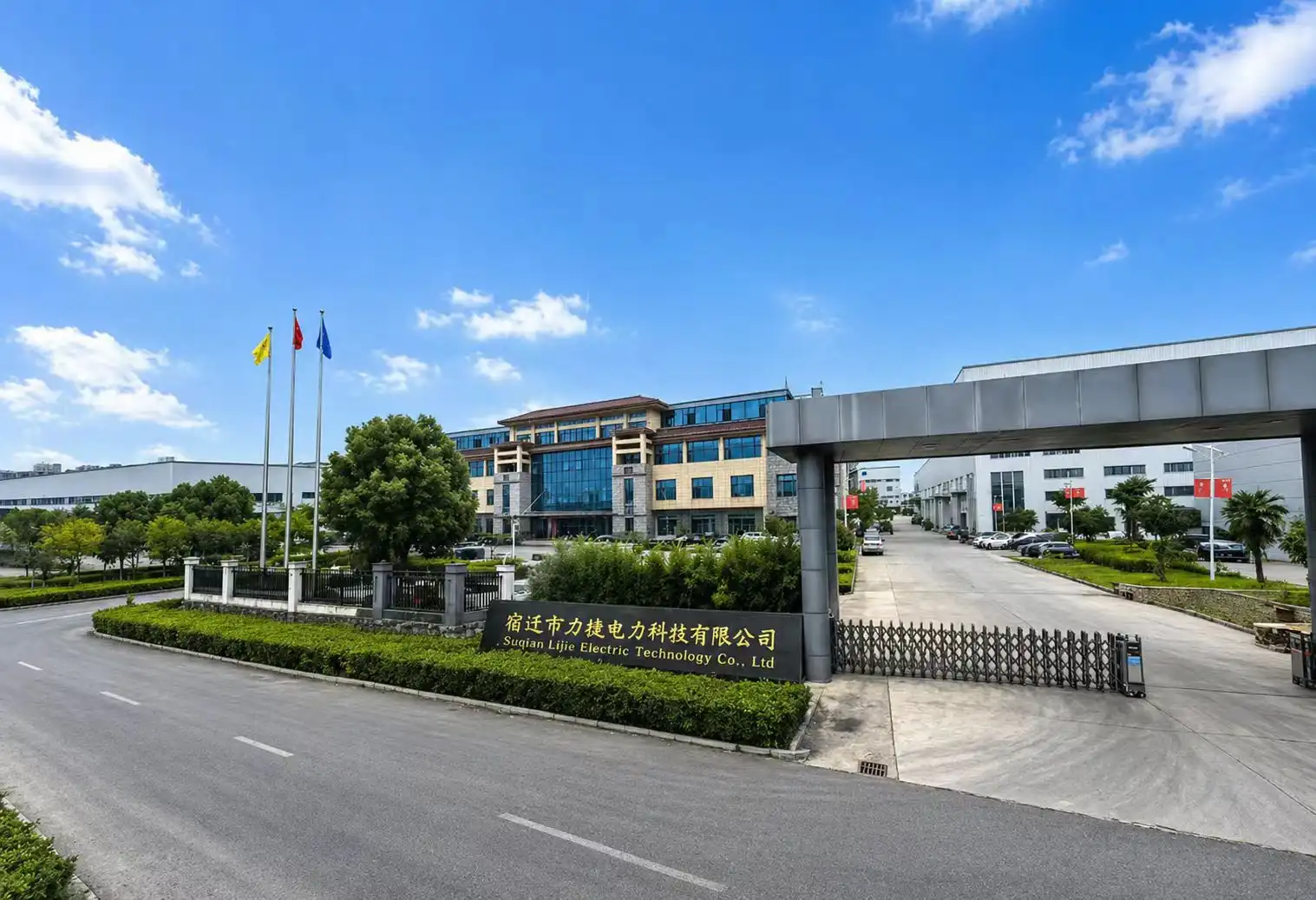
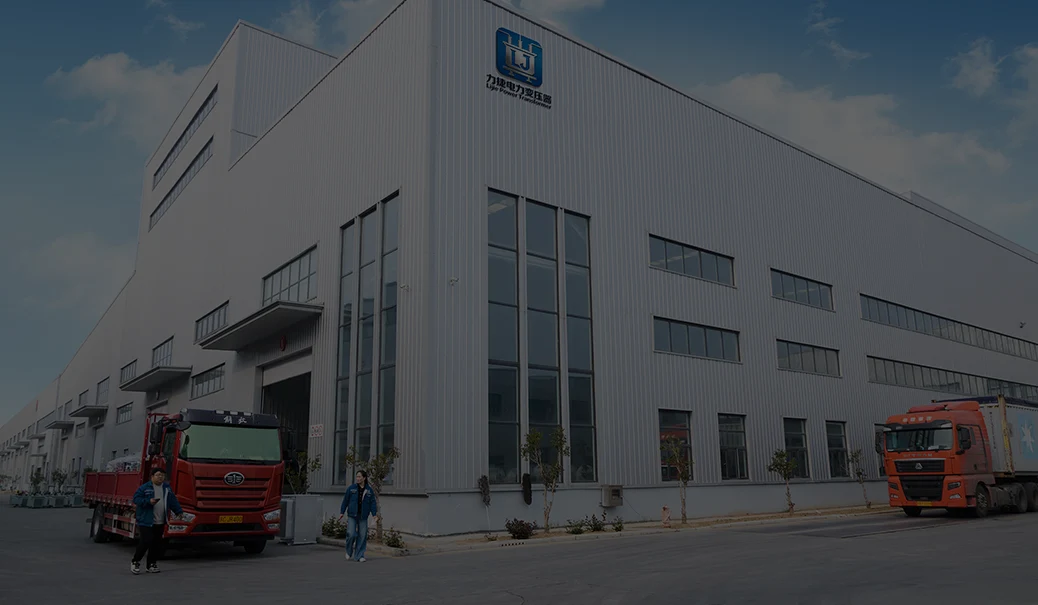
Lijie Electric Power Technology Group is ready to help you with your industrial transformer needs thanks to our vast manufacturing skills and years of experience. Our team of more than 160 engineers makes transformers that meet IEC, CE, and UL standards for use all over the world. They work out of two modern production bases that cover 500,000 square meters each in Xuzhou and Nantong. We sell dry-type transformers with voltages below 35kV, specialized rectifiers and mining units, and prefabricated substations. Our products are backed by ISO 9001:2015 certification and full after-sales service according to GB/T 27922-2021 standards. As a reliable Dry-type Transformer Factory seller, we work with power companies, green energy developers, and industrial makers in 15 countries. We offer low factory-direct prices, technical customization, and on-time delivery. Email our engineering team at lijieelectrical@gmail.com to talk about the details of your project, get detailed technical documentation, or set up a virtual tour of our facility. Check out how our 5-billion-RMB-a-year production capacity and decades of experience specializing in transformers can help your building projects with safe, efficient, and legal electricity solutions. You can look at all of our products at lijie-electrical.com.
1. International Electrotechnical Commission. (2019). Power Transformers – Part 11: Dry-type Transformers (IEC 60076-11). Geneva: IEC Central Office.
2. IEEE Standards Association. (2015). IEEE Standard for General Requirements for Dry-Type Distribution and Power Transformers (IEEE C57.12.01). New York: Institute of Electrical and Electronics Engineers.
3. National Electrical Manufacturers Association. (2018). Dry-Type Transformers for General Applications (NEMA ST-20). Rosslyn: NEMA Publications.
4. Harlow, J. H. (Ed.). (2012). Electric Power Transformer Engineering (3rd ed.). Boca Raton: CRC Press.
5. McNutt, W. J., & Kaufmann, R. H. (2020). Transformer Manufacturing: Processes, Materials, and Quality Control. London: Technical Publishing International.
6. Zhang, L., & Wang, Q. (2021). Modern Dry-type Transformer Technology: Design, Production, and Application. Beijing: China Electric Power Press.
YOU MAY LIKE


10%20type%2035kV%20transformer.webp)

April 27, 2025
With a tight project schedule, the manufacturer delivered on time, and on-site technical personnel provided guidance throughout the entire installation and commissioning process; the collaboration was highly efficient and hassle-free.
July 2, 2025
During the preliminary phase, a selection plan was custom-tailored based on the actual site load requirements, resulting in a high degree of parameter compatibility. After-sales support responds within two hours, and ongoing technical support for operation and maintenance is comprehensive; we feel completely confident in a long-term partnership.
November 18, 2025
Deployed as a supporting component for a 35kV grid-connection project at a photovoltaic power station, the equipment operates for an average of 16 hours daily. It demonstrates excellent control over no-load losses, ensures smooth power generation and grid integration, and effectively reduces the station's overall energy consumption.
January 30, 2026
Under the continuous, high-load operating conditions of a factory production line, the equipment maintains stable electrical parameters and exhibits strong overload resistance, thereby guaranteeing an uninterrupted power supply for industrial production.
April 3, 2026
Integrated as a supporting component for a new energy photovoltaic grid-connection system, the manufacturer provided professional technical coordination and timely after-sales support, ensuring seamless adaptation to the specific electrical operating conditions required for grid integration.