April 27, 2025
With a tight project schedule, the manufacturer delivered on time, and on-site technical personnel provided guidance throughout the entire installation and commissioning process; the collaboration was highly efficient and hassle-free.
Sep 20, 2026
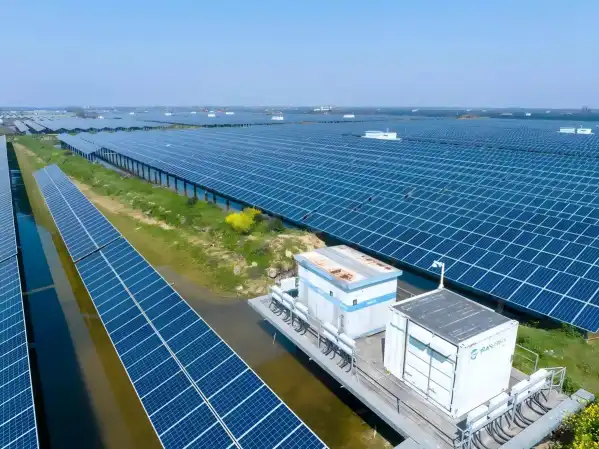
A step-up transformer connects solar power to the grid by raising the low AC voltage produced after inverters convert DC from solar panels into a higher voltage level—typically between 11kV and 33kV—suitable for transmission across utility lines. Operating on Faraday's Law of Electromagnetic Induction, the transformer uses a secondary winding with more turns than the primary to proportionally increase voltage while reducing current. This process minimizes I²R transmission losses and ensures the generated power synchronizes safely with grid frequency and voltage standards, enabling large-scale solar farms to deliver clean energy reliably and efficiently.
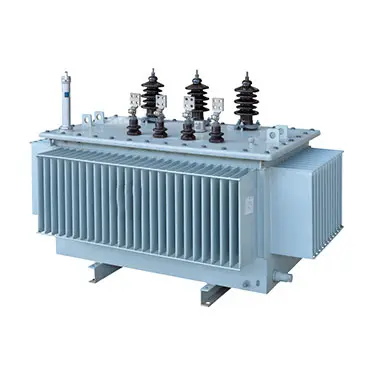
Inverters change the DC power that solar panels make into low-voltage AC power, which is usually between 400V and 690V. That energy level is way too low to send power over long distances. This hole is filled by a power Step-up Transformer, which raises the output to a level where utilities can accept and send it.
To meet the needs of solar systems, the construction inside these units is specially designed. Here are the main parts of their structure that determine how long they last:
When it comes to large-scale deployments, procurement engineers and project managers put a lot of weight on dependability. These design choices directly meet those needs. In addition to hardware, voltage synchronization with local grid codes, such as IEEE C57.12.00 and IEC 60076 compliance, ensures that connections work smoothly without setting off protection relays or affecting power quality.
Picking the correct voltage-boosting transformer is a purchase choice that will have long-lasting financial effects. The U.S. Department of Energy says that transmission line losses in the American grid are about 5% on average. Choosing a high-efficiency transformer at the point of production cuts that number by a large amount.
In the US, most solar grid uses step voltage from the inverter output up to 11kV, 22kV, or 33kV, based on the agreement between the utility and the solar system. The transformer's no-load losses and load losses become the main cost drivers over its entire life in these ranges. When procurement teams look at the total cost of ownership, they should look at both numbers, not just the unit price.
Long-term ROI is also affected by how well care is done. A dissolved gas analysis (DGA) that is done once a year can find insulation breakdown before it gets so bad that it fails. Every year, industrial-grade units that work in solar farms are required to have oil breakdown voltage (BDV) checks and winding resistance tests. These preventative protocols help project managers make sure that systems will be up and running for decades to come.
Autotransformers or booster transformers are sometimes looked at as cheaper alternatives by people who work in procurement. Before committing to a specification, it's important to know where each technology fits in and where it falls short.
Autotransformers share some of their winding between their primary and secondary circuits. This saves money on materials but gets rid of the ability to separate the two voltages. If you don't isolate solar uses that are sensitive to grid disturbances and harmonic noise, you run the risk of problems. Booster transformers can fix voltage problems in certain areas, but they aren't made to keep the voltage high for a long time, which is what a utility link needs.
While voltage regulators and inverters do similar things—they control waveform quality and convert DC to AC—they are not the same. A specialized grid-tie transformer can provide steady high-voltage output. A custom-built solar Step-up Transformer is the best choice for large-scale projects because it is reliable, can be expanded, and meets strict standards. When working on big solar farms, EPC companies always choose these units because they meet the technical needs of grid operators without requiring any engineering solutions.
Finding a solar Step-up Transformer is more complicated than just making sure the power ratio is right. During the specification process, a number of parameters that affect both compliance and long-term performance should be taken into account.
The main technical and business factors that a good procurement team should look at are these:
Based on these factors, a transformer will either provide value over its entire useful life or become a constant maintenance burden. When purchasing in bulk, purchasing managers should also check to see if the maker can deliver in batches and keep the quality consistent, since big solar projects need a steady supply throughout multiple contract phases.
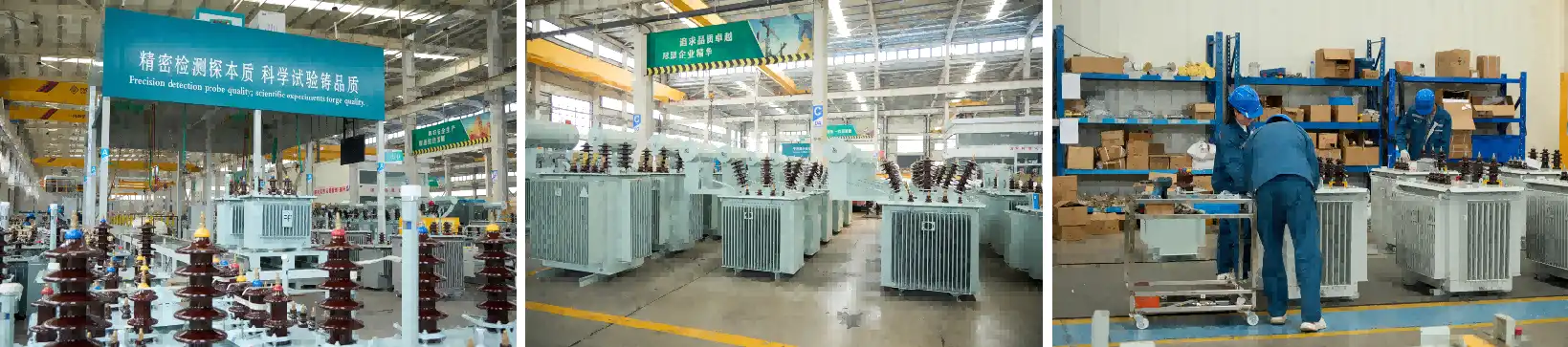
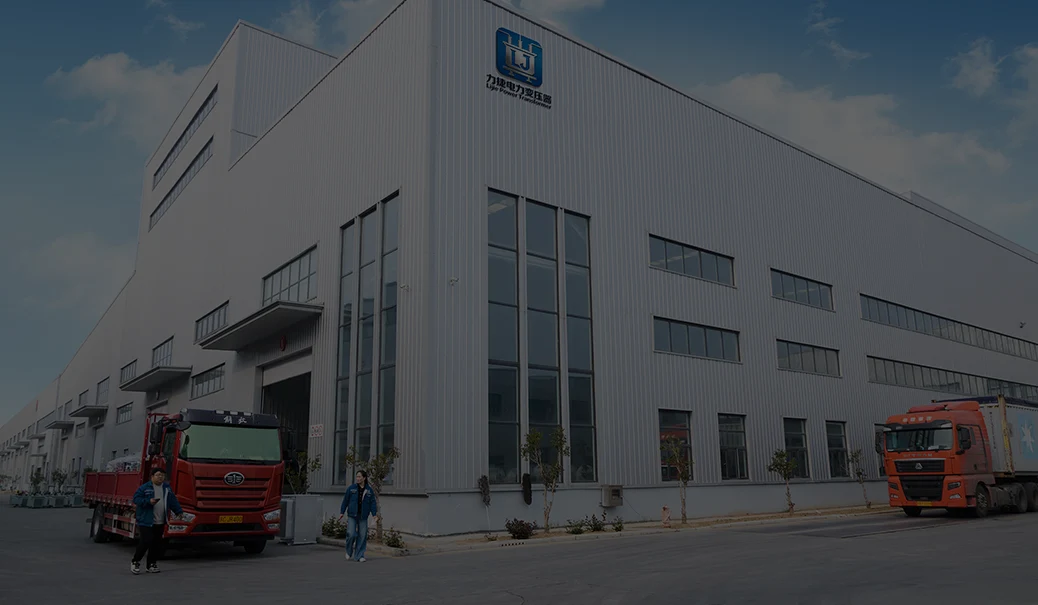
Lijie Electric has IEC, CE, and UL-certified oil-immersed transformers, dry-type transformers, and prefabricated substation solutions that can handle up to 500kV. Lijie Electric can handle large orders and make sure the quality is always the same during every delivery cycle. Their factories cover 500,000 square meters, and they make more than 5 billion RMB a year.
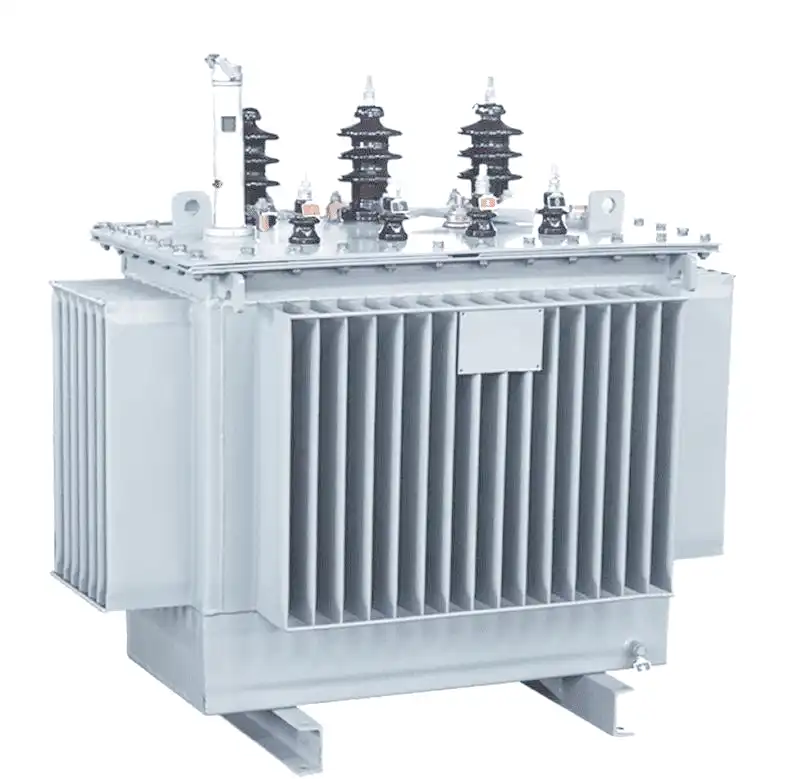
The usefulness of purpose-built solar Step-up Transformers has been proven by documented deployments. In utility-scale installations in Southeast Asia and Central Asia—markets where Lijie Electric sells equipment—projects that used properly rated grid-tie transformers saw less harmonic distortion and more stable power at the point of connection.
Dealing with power changes caused by occasional cloud cover is a problem that comes up a lot in solar integration. Transformers that can use OLTC instantly change the turns ratio when the output changes. This keeps the grid voltage fixed without the need for any human work. Smart monitoring technology, which is being built into more and more current units, lets operations teams keep an eye on DGA tracking and heat performance from afar, which helps them spot problems early on.
New transformer design trends are becoming more popular in places where energy efficiency is a must. For example, amorphous metal cores can cut no-load losses by up to 70% compared to silicon steel cores. This need is immediately met by Lijie Electric's amorphous alloy transformer range, which gives solar makers who have to meet strict carbon reduction goals measurable efficiency gains.
You can't just plug solar power into the grid and start using it. A correctly specified Step-up Transformer is the most important part of utility-scale solar that makes it safe, legal, and able to work. Every design choice has an impact on the cost and efficiency of the system, from choosing the core material to setting up the vector groups and performing upkeep throughout the system's life. When procurement teams and electrical experts take the time to do proper technical evaluation during the sourcing stage, projects always turn out better, with smaller losses, longer equipment life, and easier acceptance by the utility.
Match the MVA rating to the highest level of AC output from your inverter. Then, use a site-specific derating factor to account for temperature. The required secondary voltage, which determines the turns ratio, is usually written into utility interconnection agreements. By oversizing by 10–15%, you can add more power in the future.
Yes. Modern units made for green uses have Class F or H insulation and OLTC options that let the output change without putting too much thermal stress on the unit. The Step-up Transformer is made so that it can work with a partial load during the whole daily generation cycle.
For oil-immersed units, it is normal to test the DGA once a year, check the oil BDV, and measure the turning resistance. For dry-type transformers, the resin surfaces need to be checked and the link force needs to be confirmed on a regular basis. During times of high demand, infrared thermography can help find hot spots before they get worse.
The vector group controls the phase shift between the main and secondary windings. If you make the wrong choice during grid synchronization or parallel operation, circulating currents and harmonic amplification can happen. These can damage equipment and set off utility protection systems.
IEC, CE, and UL-compliant solutions are made by Lijie Electric, a qualified Step-up Transformer maker that works with solar developers, EPC firms, and utilities in more than 15 countries. Our engineering team can make specifications just the way you want them, help with bulk deliveries, and provide full service after the sale. Get in touch with us right away to talk about your project needs and get a competitive quote. You can email our team at lijieelectrical@gmail.com or go to lijie-electrical.com to see all of our products.
1. U.S. Department of Energy — Transformers and the Electric Grid, 2022.
2. IEEE Standards Association — IEEE C57.12.00: Standard for General Requirements for Liquid-Immersed Distribution, Power, and Regulating Transformers, 2021.
3. International Electrotechnical Commission — IEC 60076-1: Power Transformers – General, 2011.
4. National Renewable Energy Laboratory (NREL) — Grid Integration of Large-Scale Variable Generation, 2020.
5. Electric Power Research Institute (EPRI) — Transformer Life Management: Maintenance Practices and Monitoring Technologies, 2019.
6. Wood Mackenzie Power & Renewables — U.S. Solar Market Insight Report, 2023.
April 27, 2025
With a tight project schedule, the manufacturer delivered on time, and on-site technical personnel provided guidance throughout the entire installation and commissioning process; the collaboration was highly efficient and hassle-free.
July 2, 2025
During the preliminary phase, a selection plan was custom-tailored based on the actual site load requirements, resulting in a high degree of parameter compatibility. After-sales support responds within two hours, and ongoing technical support for operation and maintenance is comprehensive; we feel completely confident in a long-term partnership.
November 18, 2025
Deployed as a supporting component for a 35kV grid-connection project at a photovoltaic power station, the equipment operates for an average of 16 hours daily. It demonstrates excellent control over no-load losses, ensures smooth power generation and grid integration, and effectively reduces the station's overall energy consumption.
January 30, 2026
Under the continuous, high-load operating conditions of a factory production line, the equipment maintains stable electrical parameters and exhibits strong overload resistance, thereby guaranteeing an uninterrupted power supply for industrial production.
April 3, 2026
Integrated as a supporting component for a new energy photovoltaic grid-connection system, the manufacturer provided professional technical coordination and timely after-sales support, ensuring seamless adaptation to the specific electrical operating conditions required for grid integration.