April 27, 2025
With a tight project schedule, the manufacturer delivered on time, and on-site technical personnel provided guidance throughout the entire installation and commissioning process; the collaboration was highly efficient and hassle-free.
Sep 19, 2026
MV transformers play a decisive role in modern data center power systems. As digital infrastructure scales rapidly, reliable medium-voltage power distribution has become non-negotiable. An MV transformer steps down utility-supplied voltages—typically between 11 kV and 35 kV—to levels that servers, cooling systems, and UPS equipment can safely use. Beyond voltage conversion, these transformers provide galvanic isolation, suppress harmonic distortion from IT loads, and enable redundant power architectures. For procurement engineers and project managers sourcing equipment for mission-critical facilities, understanding how medium voltage transformers integrate into data center design is essential to making sound, long-term investment decisions.
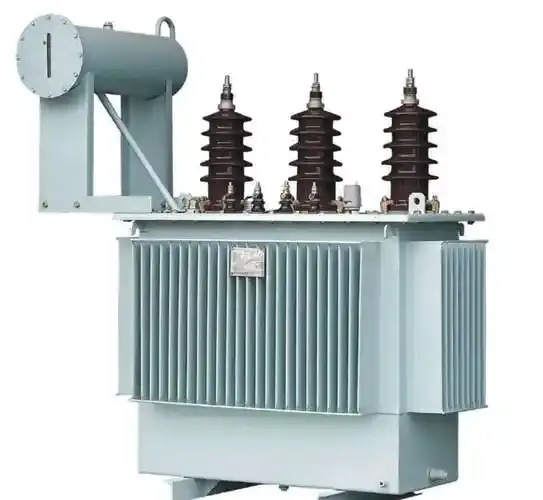
Medium-voltage power comes from utility lines into data centers. This power has to be conditioned, stepped down, and consistently distributed before it gets to any rack. It is the MV Transformer that is at the center of this transfer chain.
Power can come into a normal data center substation at 11 kV, 13.8 kV, 22 kV, or 33 kV, depending on the utility and the grid in the area. This is stepped down by the transformer to 480V or 400V so that power distribution units and UPS systems can use it. In addition to changing the voltage, the unit has to keep the voltage stable, usually within ±5%, so that sensitive computer equipment doesn't get damaged by changes.
For most data center setups inside, cast resin dry-type transformers are the best option. They don't carry any flammable liquids, follow fire safety rules for occupied buildings, and make less noise when they're working, which is important in places where people work all the time. Oil-immersed transformers have better thermal dissipation for very high kVA ratings and lower no-load losses, but they need safety bunds and fire control systems, which makes them harder to put indoors. IEC 60076-11 says that cast resin transformers with a class rating of E2/C2/F1 are made for harsh indoor environments, which makes them a natural choice for data centers.
Not all transformers can be used with other ones. Knowing where MV Transformers fit in the larger transformer hierarchy helps procurement teams choose the right equipment for each part of the power chain.
Low voltage transformers work below 1 kV and handle the last stage of distribution in switchboards or PDUs. Medium voltage transformers connect the utility line to the building's own low voltage network. Using an LV transformer when an MV unit is needed leads to dangerous undersizing and losses that can't be sustained. It is not possible for a hyperscale data center that uses 50 MW or more to be fed by low-voltage equipment alone because of the size of the conductors and the amount of energy that is lost.
Here is a straight comparison of the two systems based on the factors that matter most for buying a data center:
Both types can meet DOE 2016 efficiency benchmarks and IEC 60076 dielectric resistance standards if they come from a certified MV Transformer maker like Lijie Electric. This means they will work well for 25 to 30 years.
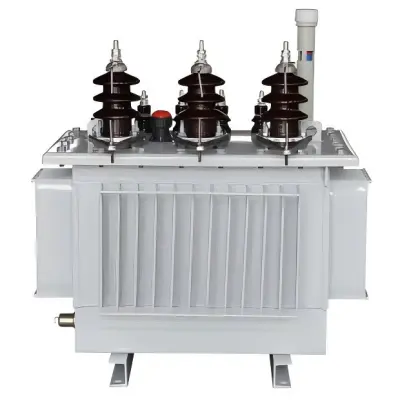
When choosing an MV Transformer for a data center, you have to weigh technical needs against practical concerns. If this choice is wrong, it will cost a lot in the future.
Every choice about buying should be based on the following factors:
With these factors in mind, you can tell if a transformer is worth buying throughout its useful life, not just when you buy it. It's just as important for the unit specification to have a supplier who can deliver in batches and offer long-term technical support.
In a live data center, a broken transformer is not just a technical problem; it's a business disaster. According to data from the Uptime Institute, hyperscale providers can lose more than $300,000 per hour in downtime costs. The only sensible thing to do is preventative maintenance for MV Transformers.
The following should be part of maintenance plans for medium voltage transformers in data centers:
In addition to regular checks, the building management system should be able to use integrated PT100 sensors and warning relays to track temperature in real time. If the winding temperature stays above the rated class limit for a long time, automatic load shedding protocols are set off. U.S. data center operators should make sure to follow the maintenance standards set by NFPA 70B and NETA for electrical equipment.
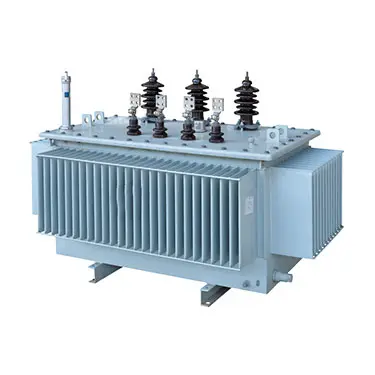
In five years, engineers will have very different ideas about what a generator in a data center base should look like than it does now. Several forces coming together are changing the design of MV Transformers.
With embedded IoT sensor arrays, you can now check the temperature of the windings, the load current, the harmonic content, and the partial discharge activity all in real time. This information is sent to cloud-based asset management platforms. Predictive maintenance algorithms look at these data streams and find problems weeks before they happen. This cuts down on unplanned outages by a large amount. To meet the rising demand in the market, Lijie Electric's engineering team actively builds clever monitoring compatibility into the designs of transformers.
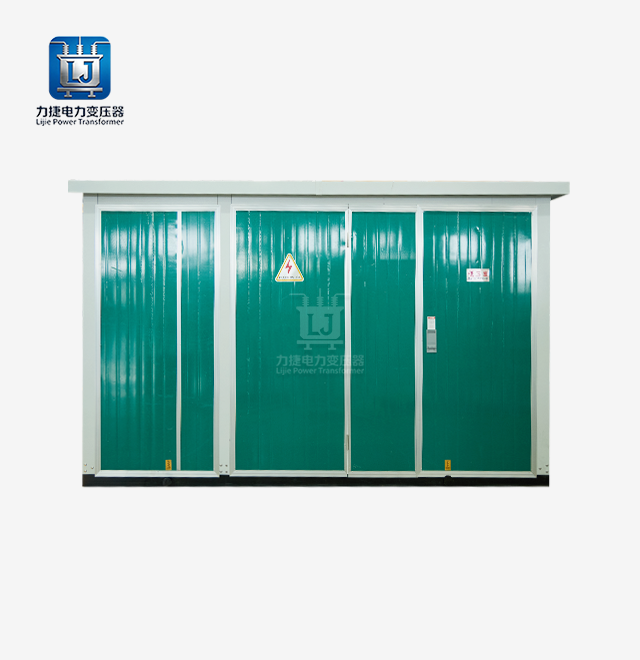
Also becoming more popular are modular switcher designs. As hyperscale companies set up rapid-build data center campuses, premade substation units, which include medium voltage switchgear, transformers, and LV distribution in a single factory-assembled box, cut the time it takes to build from months to weeks. This need is immediately met by Lijie Electric's small substation (box-type transformer) product line. At the same time, stricter rules in both the US and EU are speeding up the use of biodegradable ester fluid-filled transformers and amorphous alloy core designs, which both have a much smaller carbon footprint over their entire lifetime.
To keep the power in a data center reliable, MV Transformers are essential. The design, purchase, and upkeep of these units directly affect how well a facility meets its uptime obligations. This includes everything from the original utility interface to the multiple distribution architecture. For safety and compliance reasons, dry-type cast resin designs are most common indoors. Smart monitoring and modular substation solutions are setting the tone for future deployments. Partnering with a manufacturer that has verified certifications, can show that they can do batch production, and offers real technical support is the most solid way to buy something.
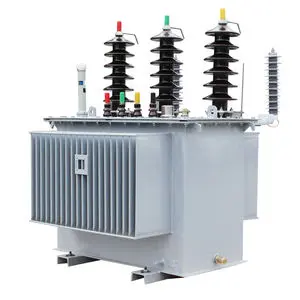
A lot of data centers get power from the utility company at 11 kV, 13.8 kV, or 33 kV and step it down to 480V or 400V so that it can be distributed inside the building. For each place, the main voltage is different because it depends on the local utility and grid standards.
A good standard program includes testing the insulation's resistance once a year, taking pictures of it every six months, and checking the temperature in real time using sensors that are built in. According to IEC 60270, full dielectric and partial discharge testing should be done every three to five years, depending on how much load there is.
Cast resin dry-type units use self-extinguishing epoxy insulation, which eliminates the risk of flammable fluids. They meet indoor fire safety standards, don't need any oil sampling or containment infrastructure, and make less noise, which are all very important in occupied, enclosed data centers.
At the very least, make sure the product has IEC 60076, IEEE C57.12.00, ISO 9001:2015, CE, and UL certifications. These make sure that design standards, quality control systems for manufacturing, and following both international and U.S. market rules are met.
Lijie Electric is a reliable MV Transformer seller with more than 160 graduate- and master's-level engineers, over 5 billion RMB in yearly sales, and approved goods that include dry-type, oil-immersed, and prefabricated substation solutions. The transformers we sell are certified by ISO 9001:2015, IEC, CE, and UL, and they are designed to work in mission-critical data centers. Our team can get you what you need, whether it's a single unit or supplies for a big project. To get a personalized price, email us at lijieelectrical@gmail.com or go to lijie-electrical.com right now.
1. Uptime Institute — Annual Data Center Survey Report, 2023.
2. International Electrotechnical Commission — IEC 60076-11: Power Transformers — Dry-Type Transformers, 2018.
3. IEEE — C57.12.00: IEEE Standard for General Requirements for Liquid-Immersed Distribution, Power, and Regulating Transformers, 2021.
4. U.S. Department of Energy — Distribution Transformer Energy Efficiency Standards (DOE 2016 Rule), 2016.
5. NFPA — NFPA 70B: Recommended Practice for Electrical Equipment Maintenance, 2023.
6. Lawrence Berkeley National Laboratory — Data Center Power and Energy Efficiency Research Report, 2020.
YOU MAY LIKE


12%20type%20epoxy%20resin%20cast%20transformer.webp)
%20Dry-type%20Distributing%20Transformer.webp)
H15%20type%20three-phase%20fully%20sealed%20distribution%20transformer.webp)

April 27, 2025
With a tight project schedule, the manufacturer delivered on time, and on-site technical personnel provided guidance throughout the entire installation and commissioning process; the collaboration was highly efficient and hassle-free.
July 2, 2025
During the preliminary phase, a selection plan was custom-tailored based on the actual site load requirements, resulting in a high degree of parameter compatibility. After-sales support responds within two hours, and ongoing technical support for operation and maintenance is comprehensive; we feel completely confident in a long-term partnership.
November 18, 2025
Deployed as a supporting component for a 35kV grid-connection project at a photovoltaic power station, the equipment operates for an average of 16 hours daily. It demonstrates excellent control over no-load losses, ensures smooth power generation and grid integration, and effectively reduces the station's overall energy consumption.
January 30, 2026
Under the continuous, high-load operating conditions of a factory production line, the equipment maintains stable electrical parameters and exhibits strong overload resistance, thereby guaranteeing an uninterrupted power supply for industrial production.
April 3, 2026
Integrated as a supporting component for a new energy photovoltaic grid-connection system, the manufacturer provided professional technical coordination and timely after-sales support, ensuring seamless adaptation to the specific electrical operating conditions required for grid integration.