April 27, 2025
With a tight project schedule, the manufacturer delivered on time, and on-site technical personnel provided guidance throughout the entire installation and commissioning process; the collaboration was highly efficient and hassle-free.
Sep 18, 2026
Modern power infrastructure demands equipment that balances performance, safety, and long-term cost efficiency. A dry-type transformer meets all three requirements by eliminating insulating oil entirely and relying on air convection or solid epoxy encapsulation to manage heat. Compared to conventional oil-filled units, these transformers significantly reduce fire risk, remove environmental liability from dielectric fluid leakage, and cut total cost of ownership by minimizing specialized suppression systems and maintenance intervals. For procurement teams managing large-scale industrial, renewable energy, or infrastructure projects, understanding how this technology works is the logical starting point.
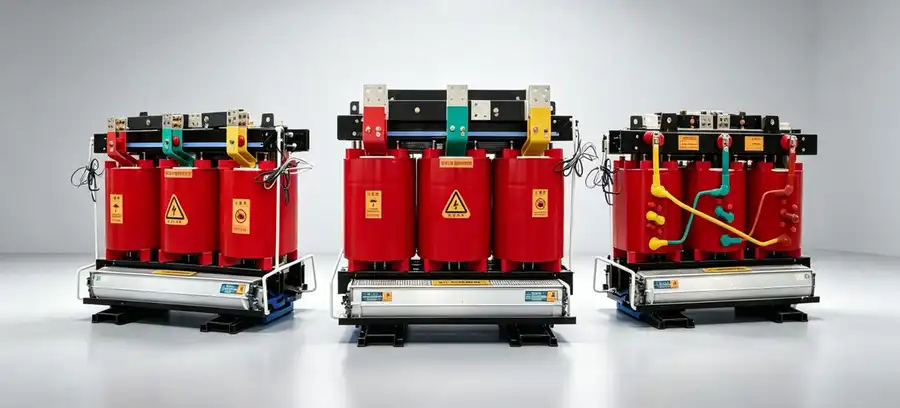
An electromagnetic induction system works at the core of a Dry-type Transformer. An alternating current in the primary winding forms a magnetic flux through the layered silicon steel core, which causes a proportional voltage in the secondary winding. There is no liquid involved.
In this group, there are two main types of cooling design. Copper or metal windings are surrounded by vacuum-processed epoxy resin in Cast Resin Transformers, which meet the insulation class F (155°C) or H (180°C) requirements of IEC 60076-11. Ventilated air-cooled systems use forced air fans or natural airflow to get rid of heat. Cast resin models usually have partial discharge levels below 10 pC, which makes them great for places like hospitals, data centers, underground substations, and others where contamination or moisture could be a problem. Ventilated models are often cheaper for industrial installations that are outside where the humidity is lower.
Both types comply with IEEE C57.12.01 and IEC 60076-11, the two principal standards governing Dry-type Transformer design and performance globally.
When power is distributed, Dry-Type Transformer efficiency is evaluated based on no-load losses (core losses) and load losses (copper losses). Data from the U.S. Department of Energy shows that cast resin units with amorphous metal cores can cut no-load losses by as much as 70% compared to designs with silicon steel cores.
Here are the core performance advantages that make these units compelling for B2B procurement:
These advantages directly address the two most common procurement pain points in infrastructure and energy projects: total lifecycle cost and regulatory compliance. Facilities that switch from oil-filled to epoxy-encapsulated units routinely report measurable reductions in both insurance premiums and scheduled downtime.
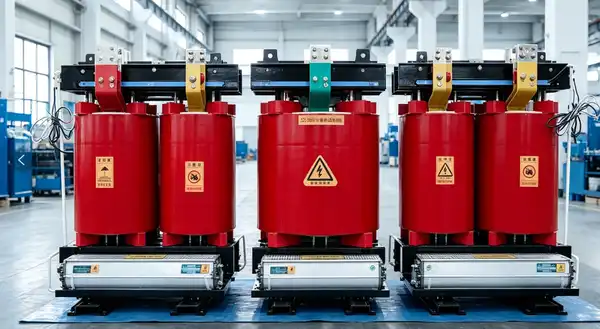
Procurement engineers frequently evaluate three product families side by side. The table below summarizes the critical trade-offs:
| Parameter | Dry-Type (Air-Cooled) | Cast Resin | Oil-Filled |
|---|---|---|---|
| Fire risk | Low | Very low | High |
| Maintenance frequency | Low | Very low | High |
| Footprint | Compact | Compact | Larger |
| Indoor suitability | Good | Excellent | Limited |
| Upfront cost | Moderate | Higher | Lower |
| Lifecycle cost | Competitive | Competitive | Higher |
| Environmental risk | None | None | Significant |
Oil-filled transformers still offer advantages in ultra-high voltage applications above 500 kV, where liquid cooling provides superior thermal capacity. However, for voltage levels at or below 35 kV — the dominant range in commercial buildings, renewable energy integration points, and industrial distribution networks — cast resin and ventilated Dry-type Transformers deliver a more favorable combination of safety, compliance, and operating economics.
Selecting the right unit requires matching five technical variables to your facility's actual load profile and environment.
The power level and voltage class are the starting points. Most business and factory buildings use power between 630 kVA and 2,500 kVA and have voltages between 10 kV and 35 kV. Make sure that the unit's kVA number gives you at least 20% more power than you need at peak demand to avoid heat stress when the load goes up.
Insulation class selection depends on the weather and job cycle. Class F works well in most normal workplaces. Class H is good for heavy-duty uses that run all the time, like auxiliary systems in steel plants, mining operations, or EPC project sites in hot areas.
The installation environment dictates the type of container. IP23 enclosures can handle some dust and water splashes, while IP44 enclosures are best for outdoor or chemically harsh settings.
When shortlisting Dry-type Transformer suppliers, verify these certifications as non-negotiable baseline requirements: ISO 9001:2015, IEC 60076-11, and — for U.S. projects — UL and NEMA compliance. CE marking is required for European export projects. Suppliers with active CQC energy efficiency certification and documented type-test records from accredited laboratories demonstrate measurable quality consistency.
Lead time for custom-rated units typically ranges from 8 to 14 weeks depending on order volume and winding material. Frame agreements with manufacturers holding dedicated production capacity reduce this risk significantly for project-based buyers.
IEC rules say that air-cooled units must have a ventilation space of at least 300 mm on all sides in order to work at their rated thermal performance. To keep core vibrations from going off track, the installation surface must be level to within 1 mm/m. Check the insulation resistance at 1,000 V DC and confirm all grounding connections meet local NEC (National Electrical Code) requirements before turning it on.
During initial operation, monitor winding temperature indicators (WTI) continuously for the first 72 hours to establish a baseline thermal profile. Any temperature rise over 10°C above the rated temperature class at no load needs to be looked into right away.
Preventive maintenance on Dry-type units is easy: just look at the windings once a year for dust buildup, make sure the terminal torque settings are correct, and clean the ventilation openings every six months. This plan usually only needs about 8 hours of technician time a year — a substantial reduction compared to the oil sampling and DGA analysis cycles that oil-filled units demand every 6 to 12 months.
Dry-type Transformers have become the preferred choice for energy-conscious facilities across power utilities, renewable energy projects, industrial manufacturing, and urban infrastructure. Their combination of low fire risk, reduced maintenance requirements, compliance with IEC and UL standards, and measurable energy savings makes them technically and economically superior to oil-filled alternatives for most sub-35 kV applications. As energy efficiency regulations tighten across the U.S. and globally, specifying the right distribution transformer is no longer a secondary procurement decision — it shapes a facility's operational cost structure for decades.
These units work best inside places that care about fire safety and protecting the environment, like data centers, hospitals, business high-rises, tunnels, offshore platforms, and substations for green energy. Enclosure ratings (IP23 to IP44) make them work better in dusty or humid weather situations.
A 1,000 kVA transformer that works at 70% load for 8,760 hours a year and has a 0.5% no-load loss loses about 43,800 kWh a year just in core losses. If you choose a unit with 30% smaller no-load losses, you'll save about 13,000 kWh a year, which is a big difference for a building with multiple transformers.
Yes. Manufacturers with strong R&D capability can change voltage ratios, winding impedance, enclosure type, insulation class, and tapping arrangements to fit specific loads, like electric furnace accessories, rectifier systems, and renewable energy inverter interfaces. Confirm customization capability and lead time during the RFQ stage.
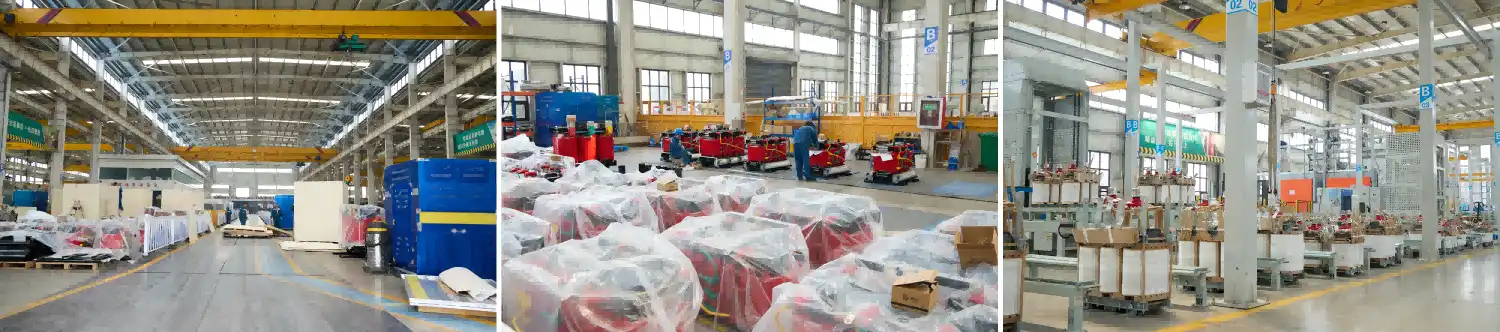
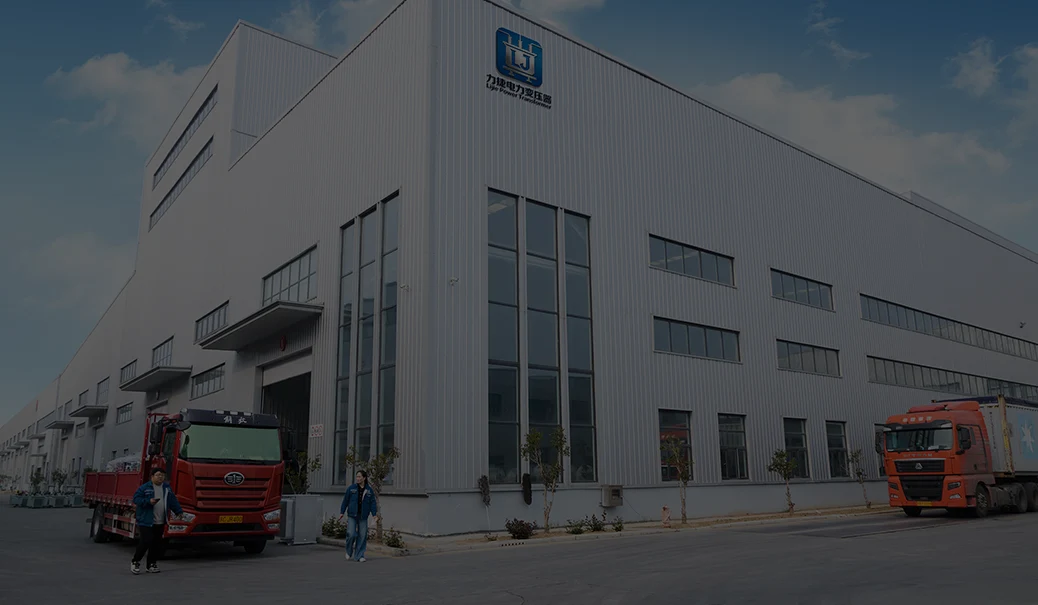
The Lijie Electric Power Technology Group designs and makes a full range of Dry-type Transformers with ratings of up to 35 kV, certified to ISO 9001:2015, IEC 60076-11, CE, and UL standards. With 500,000 m² of production capacity and over 160 technical professionals, we support large-volume project orders, custom specifications, and long-term supply agreements for customers across the U.S. and globally. Contact our engineering team today at lijieelectrical@gmail.com or visit lijie-electrical.com to request a quote or technical consultation.
1. IEEE Std C57.12.01-2015 — IEEE Standard General Requirements for Dry-Type Distribution and Power Transformers. IEEE, 2015. https://standards.ieee.org/ieee/C57.12.01/3917/
2. U.S. Department of Energy — Energy Conservation Standards for Distribution Transformers. DOE, 2016. https://www.energy.gov/eere/buildings/distribution-transformer-efficiency
3. NEMA — NEMA TP-1: Guide for Determining Energy Efficiency for Distribution Transformers. NEMA, 2002. https://www.nema.org/standards/view/guide-for-determining-energy-efficiency-for-distribution-transformers
4. IEC 60076-11:2018 — Power Transformers – Part 11: Dry-Type Transformers. IEC, 2018. https://webstore.iec.ch/publication/59479
5. U.S. EPA — SPCC Guidance for Regional Inspectors: Oil Spill Prevention, Control, and Countermeasure Rule. EPA, 2013. https://www.epa.gov/oil-spills-prevention-and-preparedness-regulations/spill-prevention-control-and-countermeasure-spcc
6. NFPA 70: National Electrical Code (NEC) 2023 Edition. National Fire Protection Association, 2023. https://www.nfpa.org/codes-and-standards/nfpa-70-standard-development/70
April 27, 2025
With a tight project schedule, the manufacturer delivered on time, and on-site technical personnel provided guidance throughout the entire installation and commissioning process; the collaboration was highly efficient and hassle-free.
July 2, 2025
During the preliminary phase, a selection plan was custom-tailored based on the actual site load requirements, resulting in a high degree of parameter compatibility. After-sales support responds within two hours, and ongoing technical support for operation and maintenance is comprehensive; we feel completely confident in a long-term partnership.
November 18, 2025
Deployed as a supporting component for a 35kV grid-connection project at a photovoltaic power station, the equipment operates for an average of 16 hours daily. It demonstrates excellent control over no-load losses, ensures smooth power generation and grid integration, and effectively reduces the station's overall energy consumption.
January 30, 2026
Under the continuous, high-load operating conditions of a factory production line, the equipment maintains stable electrical parameters and exhibits strong overload resistance, thereby guaranteeing an uninterrupted power supply for industrial production.
April 3, 2026
Integrated as a supporting component for a new energy photovoltaic grid-connection system, the manufacturer provided professional technical coordination and timely after-sales support, ensuring seamless adaptation to the specific electrical operating conditions required for grid integration.