April 27, 2025
With a tight project schedule, the manufacturer delivered on time, and on-site technical personnel provided guidance throughout the entire installation and commissioning process; the collaboration was highly efficient and hassle-free.
Sep 17, 2026
When a wind turbine generates electricity, its output voltage is typically too low for efficient transmission over long-distance power lines. A Step-up Transformer bridges this gap by converting the turbine's lower-voltage AC output into higher-voltage power suitable for grid injection. By increasing the transmission voltage, a properly selected Step-up Transformer helps reduce current and minimize I²R losses before electricity reaches end users. Whether you're an EPC contractor specifying equipment for a 200 MW wind project or an electrical engineer reviewing grid interconnection compliance, understanding how a Step-up Transformer works in this application is essential for making sound procurement decisions. Selecting the right Step-up Transformer also helps ensure that the wind farm's electrical system can deliver generated power to the grid efficiently and reliably.
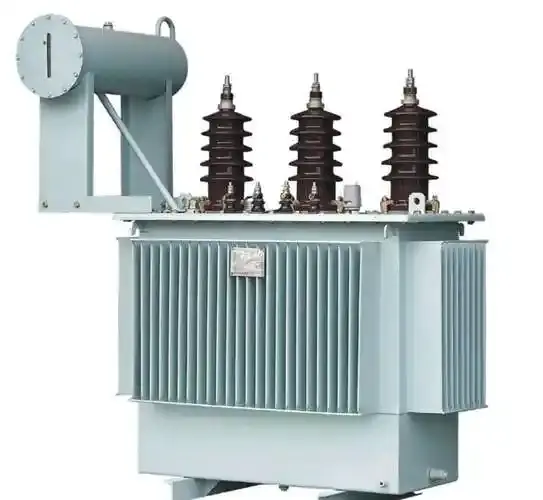
Faraday's Law of Electromagnetic Induction tells us how a step-up transformer works. Its secondary winding has more turns than its primary winding, which makes the output voltage higher while the current goes down. When used in wind farms, turbine power is usually between 690V and 1,000V. Before connecting to the local grid, this voltage needs to be raised to 33kV, 66kV, or even 110kV. Cores made of high-permeability CRGO (cold-rolled grain-oriented) silicon steel reduce hysteresis and eddy current losses, keeping efficiency at or above 98.5%, which is a clear long-term energy cost benefit.
Because wind turbine rotor speeds change, wind turbines can produce electricity at varying frequencies. Before the power reaches the Step-up Transformer, modern grid-connected turbines use power converters to stabilize the output at 50 or 60 Hz. Transformer designs for wind farms therefore need to handle converter-generated waveforms that may contain harmonic distortion. A properly designed Step-up Transformer can maintain reliable insulation and thermal performance under these non-ideal input conditions. When a Step-up Transformer is manufactured according to applicable requirements such as IEC 60076 and IEEE C57.12.00, project teams can have greater confidence in its electrical and thermal performance. Selecting the right Step-up Transformer is therefore an important part of ensuring stable and reliable wind farm power transmission.
The same technology doesn't help every project. When looking at options for connecting wind farms to the power grid, procurement teams should know how standard transformers stack up against other options.
Here's a useful review of the most popular choices:
At the procurement stage, these differences are very important. If the engineering team chooses the wrong layout, they might have trouble with grid compliance or have to pay more than planned for activation. Two-winding oil-immersed transformers with ONAN or ONAF cooling are still the most popular choice for connecting utility-scale wind farms to the power grid around the world. Developers and EPC contractors in North America, Europe, and Asia all use them.
Models that have been used in similar applications are made by major companies such as ABB, Siemens, and GE. However, project deadlines, customization requirements, and total lifecycle costs often lead procurement teams to consider manufacturers with specialized expertise and flexible production capacity for their Step-up Transformer requirements. For wind power projects, selecting the right Step-up Transformer supplier can help ensure that equipment specifications align with project needs and delivery schedules. Lijie Electric has a strong track record in this area, providing procurement teams with another option when sourcing a Step-up Transformer for demanding renewable energy projects.
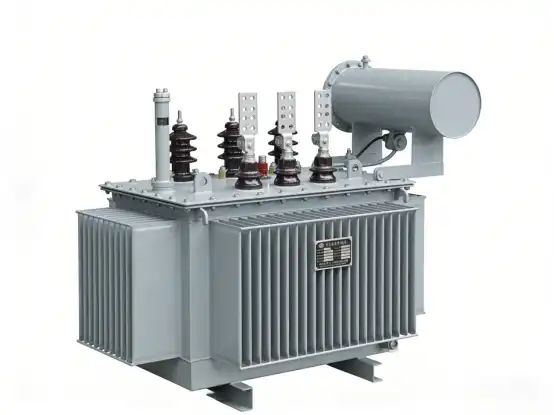
How you choose the step-up transformer manufacturer is just as important as how you choose the transformer itself. The most important technical factors that procurement teams must look at are
Certification: Most projects in the US and other countries need to meet the basic standards of IEC 60076, CE, UL, and ISO 9001.
The most common ways to install a Step-up Transformer in wind farms are on open concrete pads or inside dedicated containers. During commissioning, Megger insulation-resistance testing and breakdown voltage (BDV) testing of the insulating oil can help confirm that the Step-up Transformer remains in good condition after transportation and installation. Before parallel operation or grid synchronization, vector group verification is also essential. For example, a Dyn11 configuration creates a 30° phase displacement, which must be considered when setting protection relays. Proper commissioning of each Step-up Transformer helps verify electrical performance and supports safe, reliable connection to the grid.
The main reason transformers fail in wind farms is that their insulation breaks down due to moisture getting in and temperature changes. A dissolved gas analysis (DGA) done once a year can find small problems before they get worse. Other problems include loose contacts on the tap changer, clogged bushings, and clogs in the cooling system. Monitoring ahead of time with temperature sensors and measurements of winding resistance cuts down on unplanned power outages and makes the service life much longer than 25 years.
Modern wind farm managers are putting smart grid monitoring tools right into the control of transformers. Real-time SCADA connection lets you keep an eye on the temperature of the windings, the load factor, and the state of the oil. This lets you do preventative maintenance instead of reactive repairs.
In terms of materials, amorphous alloy core technology is up to 70% better than silicon steel cores at lowering no-load loss. For wind farms that have variable production profiles, meaning they work below their stated capacity for long periods of time, this means they save a lot of money on baseline losses. Lijie Electric makes both amorphous metal transformers and traditional oil-immersed units. This gives purchasing teams choices that meet their goals for both cost and effectiveness.
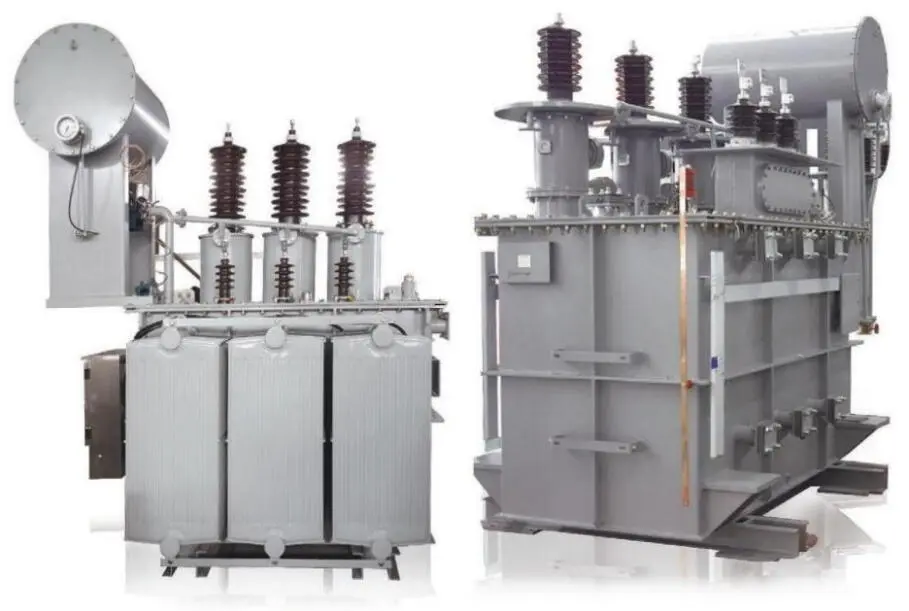
Step-up Transformer units are an essential part of any plan for connecting a wind farm to the power grid. Choosing the right Step-up Transformer for the project's power requirements, environmental conditions, and timeline can directly affect energy output, system reliability, and long-term return on investment. Lijie Electric offers solutions designed to meet the requirements of modern wind energy infrastructure, with proven designs, IEC and UL certifications, and flexible manufacturing options to fit specific project needs. By selecting a Step-up Transformer supplier with both strong technical expertise and a stable supply chain, project developers can establish a reliable foundation for wind power infrastructure designed to operate efficiently for decades.
Most wind turbines output 690V to 1,000V. A step-up transformer used in the collector system elevates this to 33kV or 66kV. A second-stage transformer may further boost to 110kV or 220kV for transmission grid interconnection, depending on project scale and grid operator requirements.
Standard units work well for conventional voltage ratios and common MVA ratings. Custom transformers become necessary when the site has unusual voltage requirements, extreme ambient temperatures, high altitude, or specific grid protection configurations. A manufacturer with in-house engineering capability can assess your specifications and recommend the optimal solution.
Annual DGA testing and insulation resistance checks are the minimum standard for outdoor wind farm units. In corrosive coastal environments or high-humidity regions, oil BDV testing and bushing inspection should be conducted every six months. Consistent maintenance intervals extend service life and help avoid costly emergency replacements.
Yes. Lijie Electric holds CE and UL certifications and manufactures units compliant with IEC 60076 and ISO 9001:2015. Products have passed testing at the National Transformer Quality Supervision and Inspection Center and the Wuhan High Voltage Research Institute.
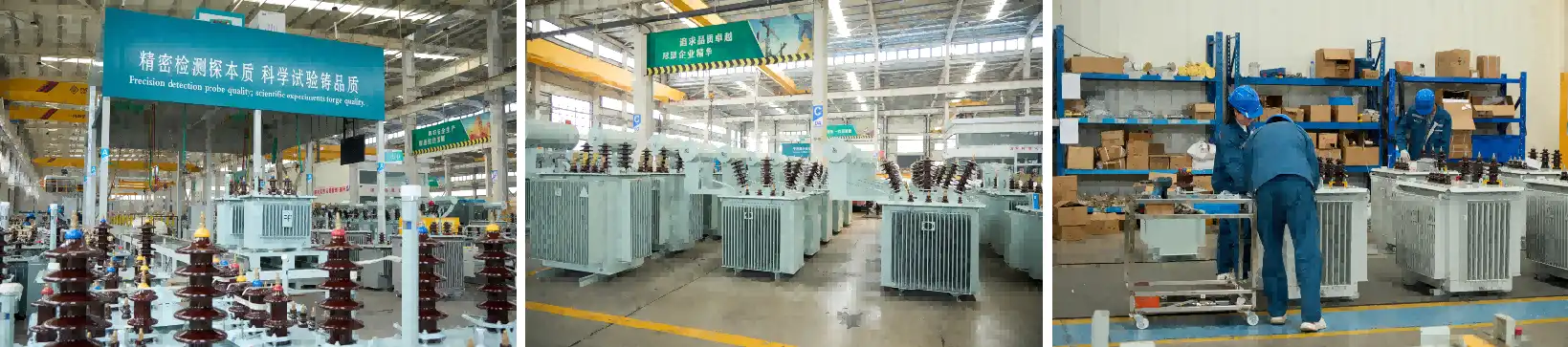
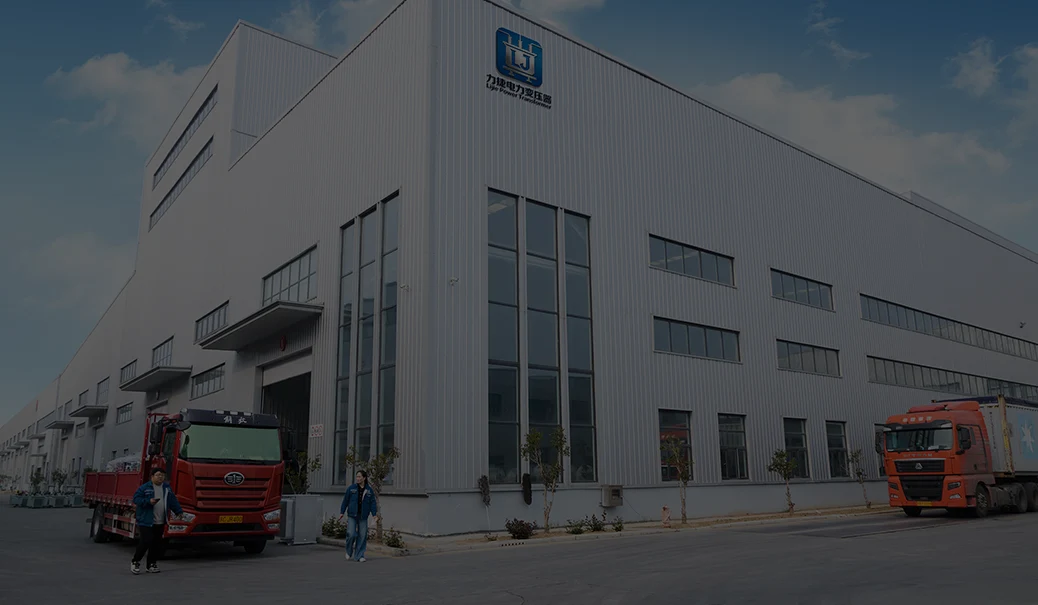
Lijie Electric is one of the most dependable companies that makes step-up transformers for green energy projects around the world. We can make things on a large scale without sacrificing quality. Our factory covers 500,000 m²; we have more than 160 engineers working for us, and we make more than 5 billion RMB a year. Get in touch with our technical team right away to talk about the details of your wind farm, get cheap quotes, or look into custom plans. You can email us at lijieelectrical@gmail.com or go to lijie-electrical.com.
1. IEC 60076-1: Power Transformers – General — International Electrotechnical Commission, 2011
2. IEEE C57.12.00: Standard for General Requirements for Liquid-Immersed Distribution, Power, and Regulating Transformers — IEEE, 2015
3. Wind Energy in America: A Century of Progress — American Wind Energy Association (AWEA), 2019
4. Transformer Design and Technology Handbook — Kulkarni, S.V. & Khaparde, S.A., McGraw-Hill, 2004
5. Dissolved Gas Analysis of Transformer Oil: A Review — IEEE Transactions on Dielectrics and Electrical Insulation, 2018
6. Renewable Energy Integration: Practical Management of Variability, Uncertainty and Flexibility in Power Grids — Jones, Lawrence E., Academic Press, 2017
April 27, 2025
With a tight project schedule, the manufacturer delivered on time, and on-site technical personnel provided guidance throughout the entire installation and commissioning process; the collaboration was highly efficient and hassle-free.
July 2, 2025
During the preliminary phase, a selection plan was custom-tailored based on the actual site load requirements, resulting in a high degree of parameter compatibility. After-sales support responds within two hours, and ongoing technical support for operation and maintenance is comprehensive; we feel completely confident in a long-term partnership.
November 18, 2025
Deployed as a supporting component for a 35kV grid-connection project at a photovoltaic power station, the equipment operates for an average of 16 hours daily. It demonstrates excellent control over no-load losses, ensures smooth power generation and grid integration, and effectively reduces the station's overall energy consumption.
January 30, 2026
Under the continuous, high-load operating conditions of a factory production line, the equipment maintains stable electrical parameters and exhibits strong overload resistance, thereby guaranteeing an uninterrupted power supply for industrial production.
April 3, 2026
Integrated as a supporting component for a new energy photovoltaic grid-connection system, the manufacturer provided professional technical coordination and timely after-sales support, ensuring seamless adaptation to the specific electrical operating conditions required for grid integration.