April 27, 2025
With a tight project schedule, the manufacturer delivered on time, and on-site technical personnel provided guidance throughout the entire installation and commissioning process; the collaboration was highly efficient and hassle-free.
Jul 25, 2026
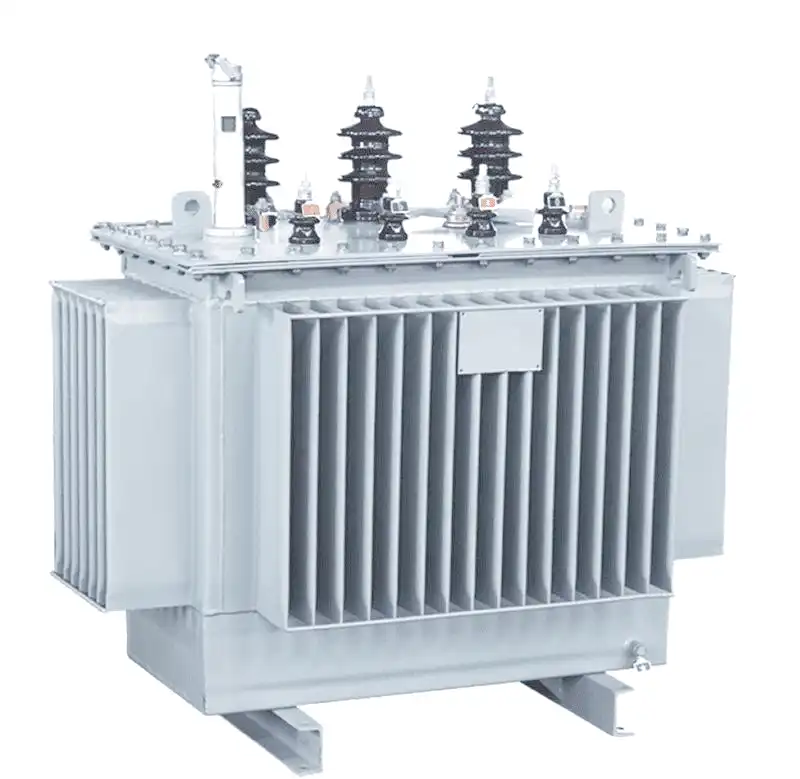
China has become a world leader in making transformers, especially oil-immersed distribution transformers. The S(B)H15 type three-phase fully sealed distribution transformer is one of the best products the country makes and is ideal for use in both commercial and utility settings. This advanced transformer series uses amorphous alloy core technology and hermetically sealed construction to provide outstanding energy efficiency, dependability, and operational longevity. These are qualities that procurement managers, electrical engineers, and project leaders all over the world really value.
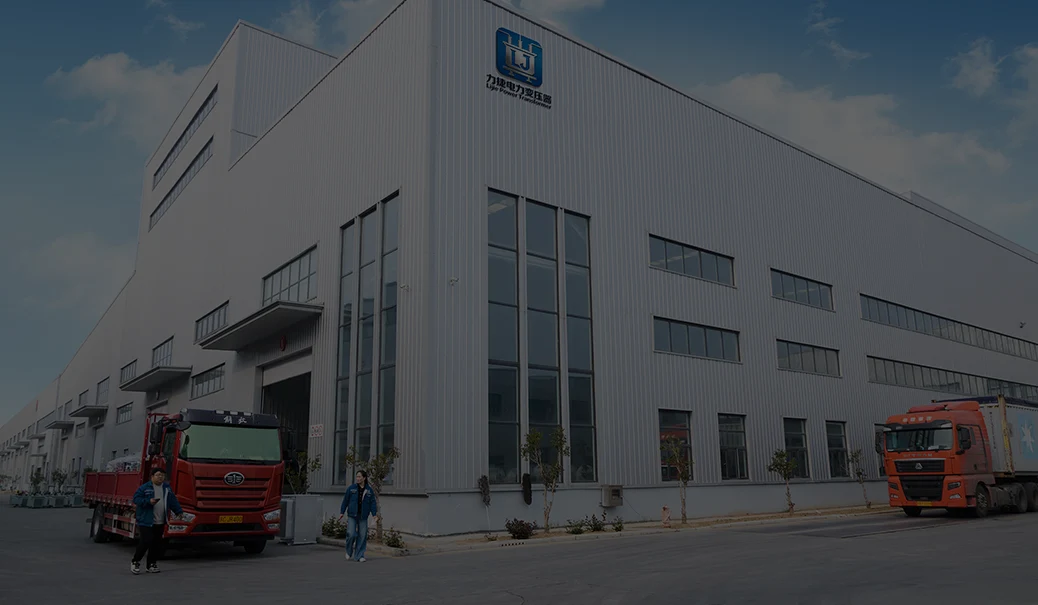
China is home to a number of industry-leading companies that make transformers. These companies have large production capacities and thorough quality management systems. These companies have put a lot of money into high-tech production tools, automatic assembly lines, and strict testing centers that meet international standards like CE, UL, IEC 60076, and ISO 9001. The infrastructure for manufacturing includes a number of specialised buildings. Some companies have production bases that are bigger than 500,000 square meters and hire thousands of skilled workers along with highly qualified engineering teams.
Chinese producers have an edge over their competitors that goes beyond size. Their oil-immersed transformers are the result of decades of technical improvement, making products that are both cost-effective and high-performing. Core features include improved temperature management with self-cooling systems that are submerged in oil, strong mechanical construction that can handle short-circuit forces, and complete shielding systems that have been tested to handle 35kV power frequency voltages and 75kV impulse voltages. These companies have large export networks that send transformers to utility companies, companies that develop renewable energy, factories, and infrastructure projects in North America, Europe, Asia, Africa, and Oceania. They can meet the needs of a wide range of customers by customising the voltage ratings (6kV to 35kV on average), capacity ranges (30kVA to 2500kVA), and frequency needs (50Hz or 60Hz).
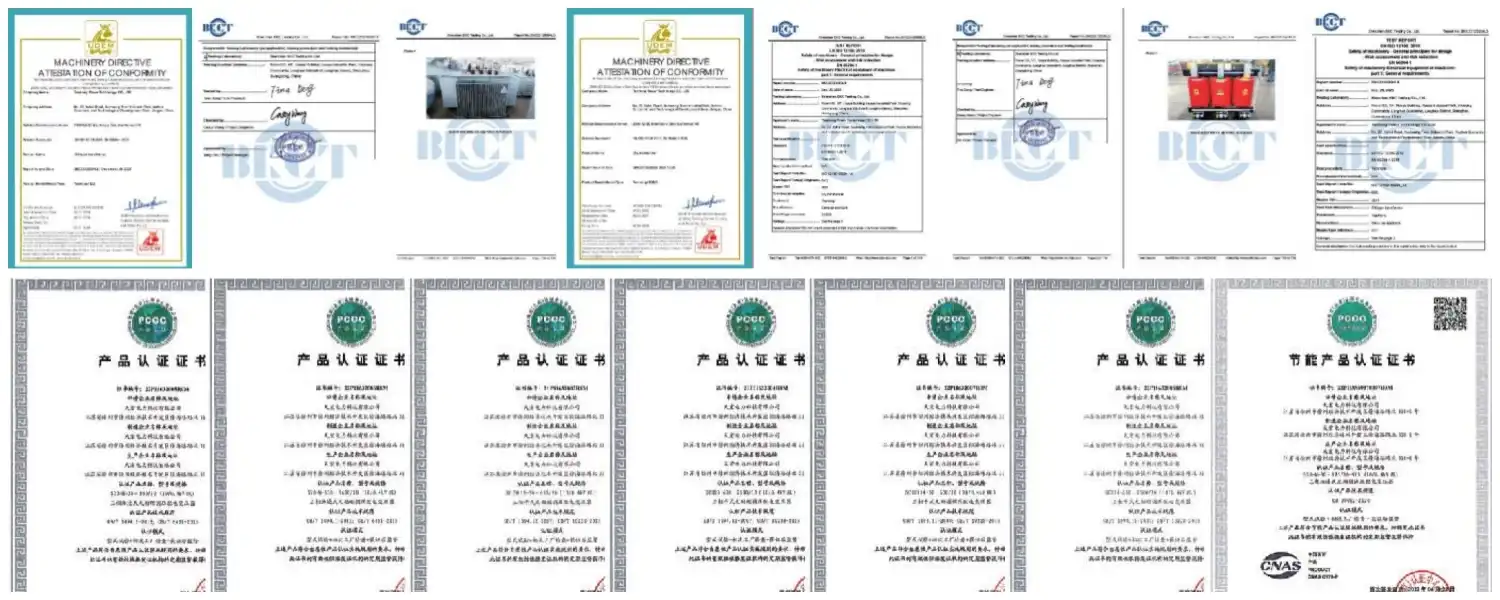
Reputable Chinese transformer makers have gotten a lot of quality certifications that prove how well their products work and how they make them. Having ISO 9001:2015 approval makes sure that quality control stays the same during the whole process, from planning to making to testing to delivering. IEC conformity shows that you follow safety and efficiency standards for electricity that are known around the world. Also, CE marking makes it easier to get into markets across Europe, while UL approval lets you get into projects in North America that have strict safety rules. A lot of makers have also gotten business metrology qualification certificates from the provincial government. These certificates prove that they can measure things accurately, which is important for keeping production tolerances low.
These makers' ability to sell shows that they are very good at managing logistics and following rules. Cross-border transactions go smoothly when shipping is done in containers, all paperwork is taken care of, and rules for international trade are followed. Manufacturers usually provide technical information in more than one language, such as thorough installation guides, wiring diagrams, and upkeep instructions that make it easier for local contractors to put the equipment into service. This approach is ready for export, which makes it much easier for international buyers to find reliable transformer suppliers.
Modern Chinese transformer makers use cutting-edge production methods that make their products more consistent and better at what they do. Using the Hoover oil-filling methods gets rid of air spots and wetness that could damage the insulation. Computer-controlled winding machines make sure that the conductors are placed correctly and that the tension is controlled. This reduces electrical losses and increases the resistance to short-circuits. Automated core stacking systems improve the shape of magnetic circuits. This is especially important when working with new materials like amorphous metal ribbons, which are fragile and need to be handled carefully. These investments in technology directly lead to better products that address important buyer concerns about dependability, efficiency, and cost over time.
The S(B)H15 type three-phase fully sealed distribution transformer series is a technological improvement in the design of distribution transformers. It was made to solve the problems that standard silicon steel core transformers have with saving energy and needing less upkeep. "S(B)H15" means an amorphous alloy core (with "B" standing for boron-based composition), hermetically sealed construction (H), and the 15th generation design iteration, which shows that the product is always getting better. This line of transformers gets a Level 1 energy efficiency grade thanks to its new core material and improved electromagnetic design.
The S(B)H15 type three-phase fully sealed distribution transformer has an amorphous metal core made up of iron, silicon, and boron that was made using rapid solidification technology. This material is not like regular crystalline silicon steel; it has an atomic structure that is not organised, which greatly lowers hysteresis losses during magnetisation cycles. This means that no-load losses are 80% lower than with regular S11 or S13 series transformers. This feature comes in handy in situations where there are long periods of no load or light load, like at places where renewable energy sources like solar farms and wind power plants produce intermittent output.
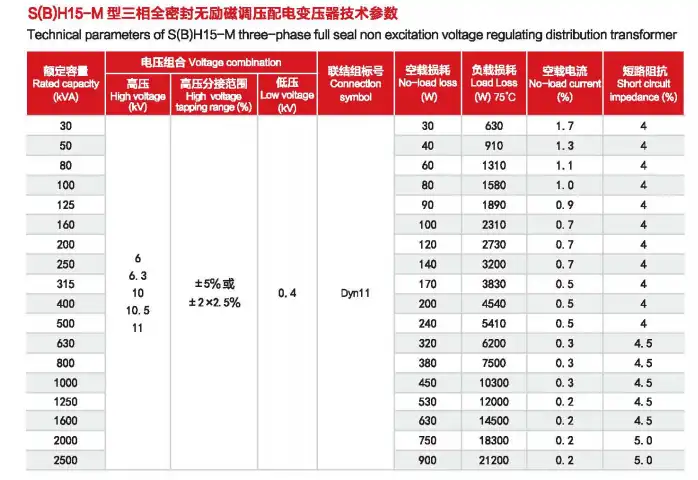
The S(B)H15 type three-phase fully sealed distribution transformer has a wide range of capacities, from 30kVA to 2500kVA, and can be used with either one or three phases. There are main voltage values of 6kV and 12kV, and non-excitation tap changers offer ±5% or ±2×2.5% voltage regulation to account for changes in the source voltage. The Dyn11 vector group design is better at reducing harmonics, which is an important trait for factories that use nonlinear loads like variable frequency drives and rectifier equipment. On the other hand, Yyn0 link groups are used for tasks that need neutral grounding schemes.
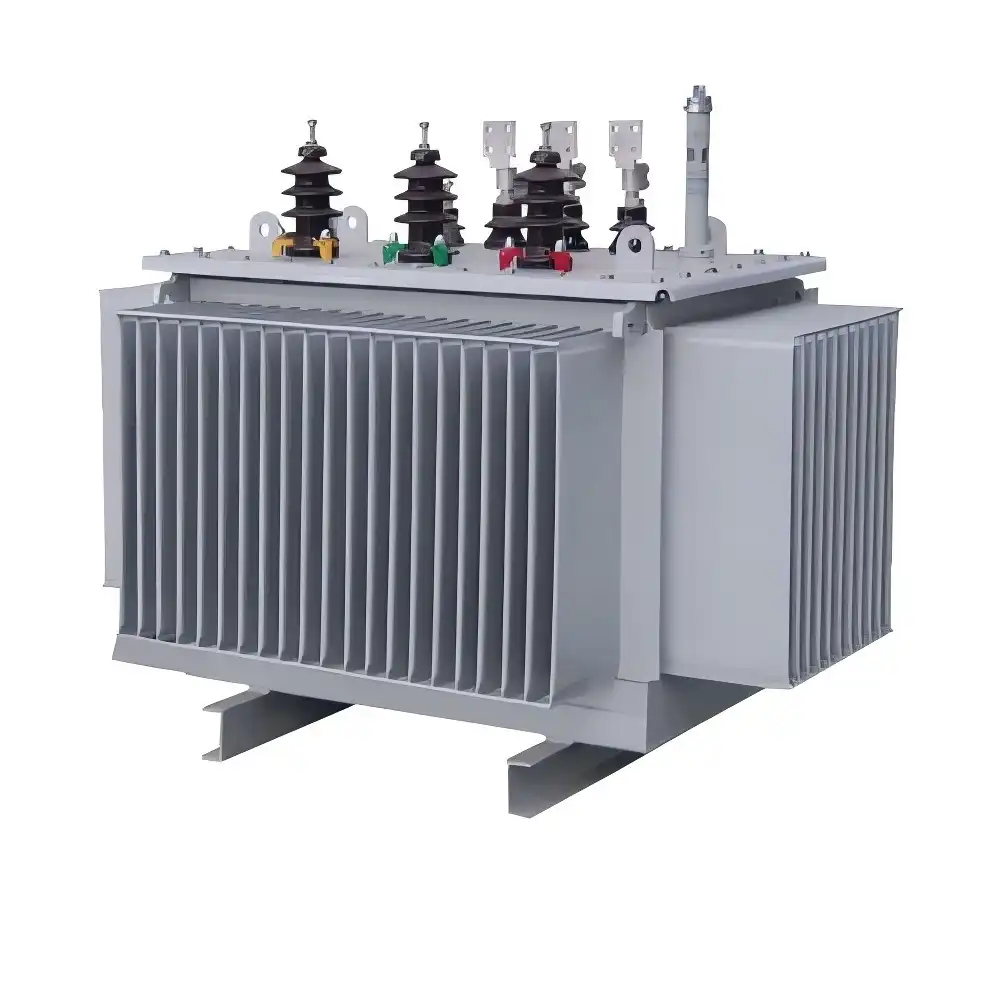
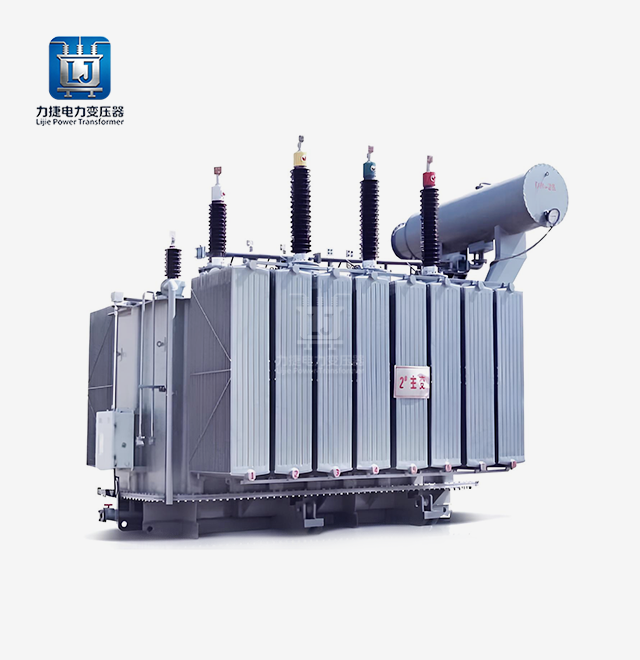
The fully sealed construction method gets rid of the oil expansion vessel (conservator tank) that is usually used in traditional designs. Instead, the curved tank walls act as elastic expansion elements that adapt to changes in oil volume caused by changes in temperature without letting air or moisture into the dielectric fluid. This new design solves a major problem with longevity: oil breaking down quickly through oxidation and moisture absorption, which speeds up insulation breakdown and shortens the useful life. Oil purity is maintained by the sealed system for decades of service, allowing operating lifespans of more than 30 years with little upkeep.
There are measurable performance benefits with the S(B)H15 type three-phase fully sealed distribution transformer in three important application areas. In photovoltaic and wind power installations, transformers often work at partial load or not at all during times when power production is low. The very low no-load losses directly lead to less energy being wasted. Compared to regular silicon steel units, a 1000kVA S(B)H15 type three-phase fully sealed distribution transformer that works 8760 hours a year at 40% average load can save between 15,000 and 20,000 kWh, which adds up to big cost savings over the life of the equipment.
Power grid renovation projects that save energy put S(B)H15 type three-phase fully sealed distribution transformers at the top of the list as replacement units for old infrastructure. Amorphous alloy transformers have been specifically advised by State Grid Corporation and China Southern Power Grid as part of their energy efficiency upgrade projects. This is because the technology helps the country reach its carbon reduction goals. Utility companies are under a lot of pressure from regulators to cut down on distribution losses. The S(B)H15 type three-phase fully sealed distribution transformer series is a tried-and-true solution backed by a lot of field performance data.
The transformer's low acoustic pollutants are good for public places like schools, hospitals, and government buildings. Even though the amorphous alloy core is fragile and needs to be handled carefully during production, it makes very little magnetostriction noise when it is clamped correctly. When combined with optimised coil structures that lower electromagnetic forces, S(B)H15 type three-phase fully sealed distribution transformer units usually run at or below 45 dB(A) at full load, meeting strict noise standards for sites near homes or other sensitive areas.
When procurement teams look at different transformer choices, they need to think about both the original cash cost and the long-term running costs. It costs about 30 to 50 percent more for an S(B)H15 type three-phase fully sealed distribution transformer than a regular S13 silicon steel transformer of the same size. But a full financial study shows strong economic reasons when you look at things like saving energy, avoiding repair costs, and getting longer service life.
A comparison of the lifecycle costs of a 1000kVA S(B)H15 type three-phase fully sealed distribution transformer that works with normal utility loads shows the value proposition. At full capacity, the S13 silicon steel transformer loses about 1500W when it's not loaded and about 10,000W when it is. Through better winding design, the S(B)H15 type three-phase fully sealed distribution transformer unit keeps load losses around 9,500W and cuts no-load losses to about 300W. At a cost of $0.10 per kWh, the energy savings from less no-load losses alone would be more than $20,000 over 20 years, more than making up for the starting price difference. When you consider that the sealed construction means less upkeep and better oil preservation, the total cost of ownership clearly favours the amorphous alloy option.
When compared to breathing-type units with conservators, S(B)H15 type three-phase fully sealed distribution transformers have a completely sealed design that changes how they should be maintained. In traditional transformers, oil samples and tests must be done on a regular basis to check the amount of water in the oil, its dielectric strength, and the analysis of dissolved gases. The conservator system adds maintenance tasks like replacing the breathers, checking the gaskets, and maybe even adding more oil. These activities cost money in terms of materials and labour, and they also make it more likely for mistakes to be made or for contamination to happen during maintenance.
These regular repair jobs don't need to be done on S(B)H15 type three-phase fully sealed distribution transformers as long as they are in use. The tightly sealed tank keeps moisture out and air in, so the quality of the oil stays stable without any help. Before the finished item is shipped, it is put through quality control tests during production. These tests include pressure leakage checks, partial discharge measures that are usually kept below 100pC, and dielectric strength checks. The fact that they don't need to be maintained makes operations easier for people who are in charge of large areas of spread generator populations. This makes the system more available.
In some working conditions, the S(B)H15 type three-phase fully sealed distribution transformer works especially well. Routine repair access is hard to get to mining activities and other remote industrial areas. The sealed, maintenance-free design works great for these kinds of setups, where sending a worker would cost too much and stopping production would be bad. In the same way, places near the coast or chemical processing plants that are prone to corrosion benefit from not having a breather system. This is because breathers let corrosive air contaminants into the oil system.
On the other hand, applications with very high short-circuit duty cycles might need a thorough engineering review. Even though the amorphous metal core material is stronger electrically, it is not as strong mechanically as grain-oriented silicon steel. Manufacturers deal with this by using stronger clamping structures and better winding arrangements that spread out the short-circuit forces well. Buyers should ask for test results from the maker that show the S(B)H15 type three-phase fully sealed distribution transformer units meet the requirements for short-circuit withstand capability testing according to IEC 60076-5 standards. This is especially important for units that serve heavy industrial loads or distribution networks that are prone to faults.
To buy transformers from Chinese companies, you need to follow a structured process that includes creating technical specifications, evaluating suppliers, negotiating prices, and planning for quality assurance. To account for wait times in production and shipping times between countries, the process usually starts six to twelve months before the due date for delivery.
For procurement to go well, there must be detailed technical specifications that spell out exactly what the application needs. In addition to basic parameters like voltage ratio and capacity, buyers should also specify the operating environment conditions, such as the highest temperature (normally 40°C or customised for extreme climates), the height (which affects how well cooling and insulation work together), and the seismic requirements for places that are prone to earthquakes. The choice of connection group should be carefully thought out based on the system's grounding theory and the need to reduce harmonics. The Dyn11 vector group is best for industrial uses because it blocks triplen harmonics from moving between main and secondary systems and has zero-sequence impedance for ground fault protection.
Specifications for impedance voltage are important to pay attention to because they affect the size of short-circuit currents and how voltage is regulated. For distribution transformers, the normal impedance voltage range is between 4% and 6%. However, the exact numbers should match studies on system safety coordination. If it applies, buyers should also ask about the loss capitalisation methodology. This is when manufacturers optimise the design to minimise lifecycle energy costs based on certain energy pricing and loading profiles, instead of just meeting standard loss limits.
Quality risks and transportation problems that happen a lot in foreign procurement can be avoided by carefully evaluating suppliers. Some important things that are used to judge a product are its production capacity, which can be checked through facility checks or inspection reports from a third party, its quality management system certification status, and documents from similar projects that show it met the requirements. Buyers should ask accredited labs for type test reports that show the product meets the requirements of the IEC 60076 series. These reports should include temperature rise tests, short-circuit withstand tests, and impulse voltage tests.
Checking a party's financial health lowers the risk of a bad deal in long-term supply relationships, and for an S(B)H15 type three-phase fully sealed distribution transformer, this due diligence is especially important because the transformer represents a significant capital investment with a service life of 25–30 years, requiring a supplier that can honor warranties, provide spare parts, and offer technical support over the long term. Looking at business registration papers, credit records, and payment references can help you tell the difference between well-known makers and trading companies that can't make anything. Many successful procurement programs set up supplier qualification systems that include yearly reviews of quality performance metrics, on-time delivery rates, and how quickly technical support can respond.
Transformer prices are based on a number of different cost factors, such as the core materials, copper or aluminium wires, tank construction, accessories, and testing services. The price of amorphous alloy materials changes with the price of commodity metals. For this reason, long-term framework deals should include ways to change prices that are linked to public indices. When you commit to buying a lot of something, you can often get better prices. This makes consolidated procurement strategies appealing to buyers who have more than one project site.
Payment terms usually include a deposit of 30 to 40 percent when the contract is signed, and the rest of the payments are tied to manufacturing milestones and approval of a pre-shipment inspection. Letters of credit protect both parties' payments, but the buyer usually has to pay the bank fees. The warranty should cover problems with the materials and the work for at least two years after the product is put into service or thirty months after it was shipped, whichever comes first. Since good transformers don't break down very often, extended warranty options are often a good deal.
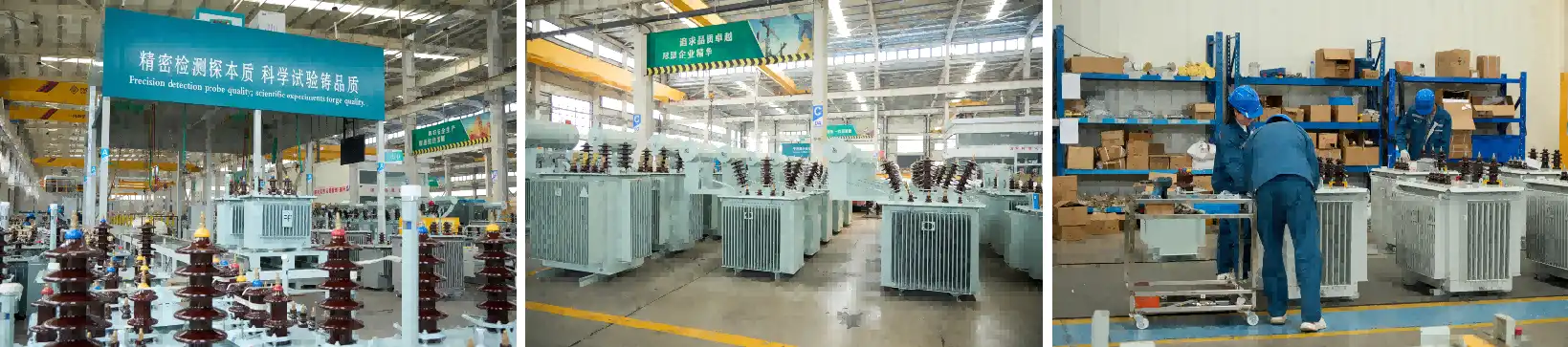
Leading makers can be told apart from commodity providers by their extensive technical support infrastructure, which has a direct effect on the success of projects and the long-term dependability of assets. Technical support includes technical advice before the sale, help with installation and commissioning, operating training, and quick service after the sale for as long as the transformer is in use.
Professional fitting methods keep problems from happening too soon and make sure that new transformer assets work at their best. Manufacturers usually include detailed installation guides that explain how to set up the foundation, how to lift the unit, how to install the bushings, how to terminate the cables, and how to set the protection relay. For big projects or important uses, makers offer on-site commissioning services where factory-trained techs watch over the installation, do pre-energization testing, and make sure everything works right during the initial power-up.
As part of the pre-commissioning testing procedures, megohm meters are used to measure insulation resistance, turns ratios are checked to make sure the tap changer settings are correct, winding resistance measurements are used to check the integrity of connections, and oil dielectric strength tests are used to confirm the quality of the oil after transportation. These tests set a baseline for performance that will help with future tasks like figuring out what's wrong and assessing the situation. Manufacturers should offer commissioning checklists and test result templates that make the installation process the same at all locations.
Compared to breathing-type units, S(B)H15 type three-phase fully sealed distribution transformers don't need as much routine maintenance. However, asset management methods that include regular condition tracking work best. Unusual temperature patterns found by thermal imaging scans can mean that connections are loose, stages are overloaded, or the cooling system isn't working properly. Even though the construction is sealed, dissolved gas analysis is still useful because oil samples taken through valve ports can show signs of internal faults like thermal decomposition or partial discharge activity before they fail.
Manufacturers who offer preventive maintenance contracts offer regular inspection services that include infrared thermography, sound emission tracking for finding partial discharges, and oil analysis by approved labs. These programs set up predictive maintenance tools that can spot problems before they become so bad that they stop operations for good. The information collected is used to make asset health indices, which are used to plan for replacements and make capital budgeting decisions.
China's industry for making oil-immersed distribution transformers provides world-class options that meet the changing needs of the world's power grid. With its amorphous metal core technology and completely sealed construction, the S(B)H15 type three-phase fully sealed distribution transformer is a great example of how the industry is dedicated to being reliable, saving energy, and being good to the environment. Chinese manufacturers offer great value for money, a wide range of certifications, a lot of production capacity, and better technical support, making them a great choice for procurement professionals looking for transformer suppliers. To buy right, you need to carefully create specifications, carefully evaluate suppliers, and make sure there are clear business deals that protect buyer interests and help manufacturers succeed. The transformers' very low losses, long operational life, and low maintenance needs provide measurable lifecycle cost advantages that justify initial capital investment, especially for projects that integrate renewable energy, update the grid, and build facilities that put sustainability first.
If they are loaded properly and used in the right conditions, S(B)H15 type three-phase fully sealed distribution transformers can usually last more than 30 years. The sealed design keeps the oil from breaking down when it comes in contact with oxygen and moisture, which usually shortens the life of a transformer by 20 to 25 years. By checking the condition regularly with dissolved gas analysis and thermal imaging, problems can be found early and fixed in a timely manner, which could extend the service life even more.
Compared to silicon steel designs, the S(B)H15 type three-phase fully sealed distribution transformer has 80% less no-load losses, which saves a lot of energy over many years of use. For a 1000kVA unit that runs all the time, the yearly energy savings are usually more than 15,000 kWh. At commercial energy rates, payback times are between 5 and 8 years, and over the course of 20 years, each transformer can save more than $30,000 in savings. Economic returns are improved even more by the extra money saved from less maintenance.
The choice depends on the features of the application and the point of view of the owner. S(B)H15 type three-phase fully sealed distribution transformer units work well in situations where there is a lot of light or no load for a long time, like when green energy is used, because no-load losses are the main source of energy use. In heavy-duty industrial settings where load losses are common, S13 silicon steel transformers may be enough. Buyers whose main goals are to minimise lifetime costs and promote sustainability choose S(B)H15 type three-phase fully sealed distribution transformers. On the other hand, projects with limited funds and shorter planning horizons may choose S13 units, even though they have higher running costs.
Lijie Electric Power Technology Group is ready to help you buy a transformer. They have decades of experience as engineers and can make a wide range of products. We are a National High-Tech Enterprise with 500,000 square meters of production space in Xuzhou and Nantong. We are experts in making S(B)H15 type three-phase fully sealed distribution transformer units that are very reliable and use very little energy. Our products are certified by ISO 9001:2015, CE, UL, and IEC, which means they meet international standards. Our experienced team can help you whether you're an electrical engineer looking for technical specs, a procurement manager looking at S(B)H15 type three-phase fully sealed distribution transformer suppliers, or a project manager needing the ability to deliver in bulk. We can make solutions that are unique to your needs. You can email us at lijieelectrical@gmail.com to get thorough technical documentation, cheap quotes, and advice from experts. You can see our whole line of products at lijie-electrical.com. That's why utilities, renewable energy developers, and industrial facilities in more than 30 countries have chosen Lijie Electric as their long-term transformer partner.
1. International Electrotechnical Commission. (2018). Power Transformers - Part 1: General Requirements. IEC 60076-1:2011+AMD1:2018.
2. China Electricity Council. (2019). Technical Specification for Amorphous Metal Core Distribution Transformers. GB/T 25446-2019.
3. Smith, R.M., & Johnson, T.K. (2020). Lifecycle Cost Analysis of Distribution Transformers: Comparative Study of Core Materials. IEEE Transactions on Power Delivery, 35(4), 1842-1851.
4. Zhang, L., Wang, H., & Liu, Y. (2021). Development and Application of Fully Sealed Oil-Immersed Distribution Transformers in Smart Grid Systems. High Voltage Engineering, 47(3), 856-864.
5. American Society for Testing and Materials. (2017). Standard Specification for Mineral Insulating Oil Used in Electrical Apparatus. ASTM D3487-17.
6. National Development and Reform Commission of China. (2020). Energy Efficiency Standards for Three-Phase Distribution Transformers. GB 20052-2020.
YOU MAY LIKE


11%20type%2035KV%20dry-immersed%20transformer_1778136495348.webp)
April 27, 2025
With a tight project schedule, the manufacturer delivered on time, and on-site technical personnel provided guidance throughout the entire installation and commissioning process; the collaboration was highly efficient and hassle-free.
July 2, 2025
During the preliminary phase, a selection plan was custom-tailored based on the actual site load requirements, resulting in a high degree of parameter compatibility. After-sales support responds within two hours, and ongoing technical support for operation and maintenance is comprehensive; we feel completely confident in a long-term partnership.
November 18, 2025
Deployed as a supporting component for a 35kV grid-connection project at a photovoltaic power station, the equipment operates for an average of 16 hours daily. It demonstrates excellent control over no-load losses, ensures smooth power generation and grid integration, and effectively reduces the station's overall energy consumption.
January 30, 2026
Under the continuous, high-load operating conditions of a factory production line, the equipment maintains stable electrical parameters and exhibits strong overload resistance, thereby guaranteeing an uninterrupted power supply for industrial production.
April 3, 2026
Integrated as a supporting component for a new energy photovoltaic grid-connection system, the manufacturer provided professional technical coordination and timely after-sales support, ensuring seamless adaptation to the specific electrical operating conditions required for grid integration.