April 27, 2025
With a tight project schedule, the manufacturer delivered on time, and on-site technical personnel provided guidance throughout the entire installation and commissioning process; the collaboration was highly efficient and hassle-free.
Oct 14, 2026
Yes — a properly specified electric power transformer absolutely can support stable power delivery for large industrial loads. These devices transfer electrical energy between circuits through electromagnetic induction, stepping voltage up or down without changing frequency. In demanding industrial environments — steel mills, mining operations, chemical plants — voltage stability directly affects production continuity. When sized correctly and maintained well, a high-capacity power transformer manages load fluctuations, limits voltage drop, and filters disturbances, keeping your facility's power supply consistent and within safe operating parameters across the full production cycle.
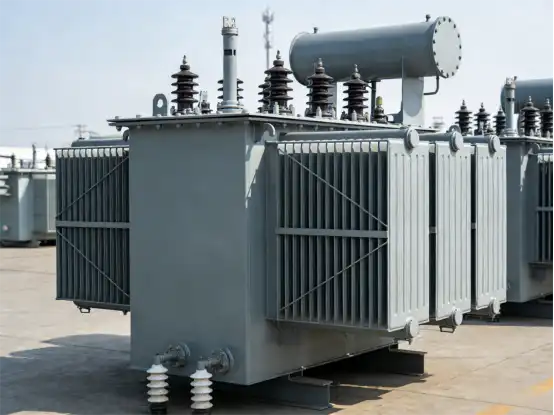
Faraday's law of electromagnetic induction tells us how a power transformer works. A magnetic flux through a layered silicon steel core is caused by alternating current in the primary winding. This creates a corresponding voltage in the secondary winding. The voltage step-up or step-down ratio is based on the number of turns between the windings. High-permeability grain-oriented silicon steel cuts down on core losses, and high-conductivity electrolytic copper windings cut down on resistive losses. This means that in modern units that meet IEC 60076, overall efficiency stays above 99.5%.
ONAN and ONAF units that are oil-filled use mineral oil as both a coolant and an insulator. They can handle higher loads, from 5 MVA to more than 1,000 MVA, and are good for heavy industrial sites or outdoor substations. Dry-type transformers are better for indoor installations in places like shopping malls, hospitals, and industrial parks where fire safety is important because they use cast resin or open-wound insulation and air cooling. Each design has pros and cons when it comes to cost, installation space, and upkeep needs.
Three-phase transformers are most common in large industrial settings because they provide equal power to all phases, which lowers neutral current and makes energy use more efficient. In some control circuits or for smaller secondary loads, single-phase units are used. For places that use electric arc furnaces, rectifiers, or big motor drives, three-phase transformers with delta-wye or delta-delta vector groups stop flowing currents during parallel operation by controlling phase displacement.
A lot of harmonic distortion, sudden load surges, and reactive power demand are caused by heavy industrial loads. For instance, an electric arc burner takes electricity in short, irregular bursts that cause voltage flicker that affects equipment nearby. These shocks spread across the whole facility bus without a custom-built generator, leading to control system errors, motor overheating, and shorter equipment lifespan. IEEE Std 519-2022 says that the total harmonic distortion (THD) at the point of common connection must stay below certain limits to protect sensitive equipment further down the line.
Transformer engineers deal with uncertainty in a number of tried-and-true ways. These are the main technical ways that high-capacity units work when they're under a lot of stress:
In the case of on-load tap changes (OLTC), electric power transformer units automatically change the turns ratio when the load is applied, maintaining the output voltage within ±0.5% of the setpoint even if the primary voltage or load current changes. This is very important for steel rolling lines and chemical electrolysis systems.
Together, these design features keep the output voltage stable and protect the integrity of the insulation. This directly lowers unexpected downtime on production lines that work 24 hours a day, seven days a week.
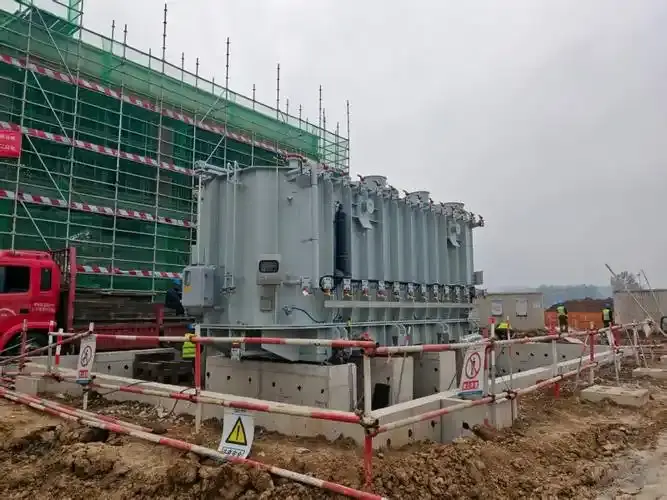
Every year, oil-filled transformers need to have oil samples taken for dissolved gas analysis (DGA), which is the best early-warning system for internal problems in the business. There should be a written plan for the Buchholz relay checks, breather silica-gel inspections, and oil dielectric strength tests. The air tubes in dry-type units need to be cleaned every so often, and the resin surfaces need to be looked at visually for cracks. Thermal image studies can find hotspots that regular instruments can't see, which is good for both types.
Insulation resistance (Megger) testing and the polarization index (PI) ratio are clear signs that water is getting into the insulation. If the PI number is less than 1, there is an immediate risk. Testing the turns ratio makes sure that the tap positions work properly after any maintenance work has been done. Power factor (dissipation factor) testing on bearings finds insulation that is getting old before it breaks. These tests follow the testing rules set by IEEE C57.12.91 and IEC 60076-1. This makes sure that results are the same from one maintenance cycle to the next.
A good power generator should last between 25 and 40 years with regular upkeep. The main thing that causes things to age is thermal stress. According to the Montsinger rule, insulation life is cut in half for every 6°C rise above the design hotspot temperature. The two most important things an operations team can do are keep the load below the nameplate rating during peak ambient periods and plan for predictive replacement of OLTC contacts at set switching-count intervals.
A correct load study, including peak demand, power factor, harmonic spectrum, and duty cycle, is the first step in the selection process. Undersizing an electric power transformer leads to thermal aging, while oversizing it raises the cost of capital and no-load losses. In the US, industrial sites that are linked to the grid must meet the DOE 2016 energy efficiency standards for both liquid-filled and dry-type transformers. These standards set base levels of efficiency across a range of load profiles.
When there is a risk of fire inside a system up to 35 kV, like in industrial parks, data centers, and urban distribution substations, dry-type transformers are the standard choice. For outdoor substations with a voltage above 35 kV and for heavy industrial uses needing capacities above 10 MVA, oil-filled units are better because they can handle higher temperatures better and cost less over their lifetime, so the need for oil containment infrastructure is not necessary. There is no one right answer. The right answer relies on the rules of your page.
Check that providers of electric power transformers meet the requirements of IEC 60076, IEEE C57.12.00, ISO 9001:2015, and, for projects in the US or other countries, CE and UL certificates. Not only factory test certificates should you ask for, but also type test results from approved third-party labs. Check to see if the seller can deliver in batches and be clear about wait times. An EPC supplier that can't commit to a production plan in writing is a real project risk.
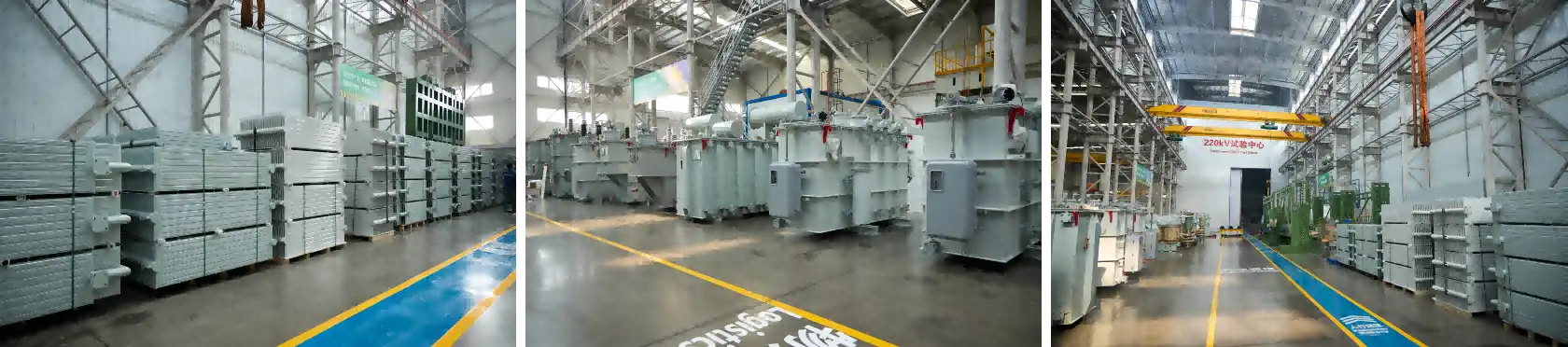
Online DGA sensors, fiber-optic temperature sensors, and cloud-based analytics platforms are now all built into smart transformer systems. Real-time tracking lets you do predictive maintenance instead of planned maintenance. This saves money on service costs and finds problems before they cause breakdowns. A number of companies in the US have started to make their entire transmission lines digitally manageable.
Amorphous metal cores cut no-load losses by as much as 70% compared to silicon steel cores. This is a big savings in operating costs for buildings that are open 24 hours a day, seven days a week. More and more places that care about the environment are using natural ester (vegetable) oil instead of mineral oil because it is recyclable and has a higher fire point.
Power from solar and wind generators, and sometimes inverters, is sent to industrial buses. For these mixed systems to work, the transformers need to be able to handle higher harmonic loads, wider voltage ranges, and the ability to flow power in both directions in some grid-tied setups. All of these require specialized design.
A well-designed electric power transformer does more than just change the voltage; it also improves power quality, smooths out load fluctuations, and safeguards equipment further down the line in tough industrial settings. It is important to make sure that the type of generator, its size, how it is cooled, and its safety features are all right for the way you will be using it. As long as you get the right unit from a certified source and keep it in good shape, it should last between 25 and 40 years. This makes it one of the best long-term investments you can make in any industrial power system.
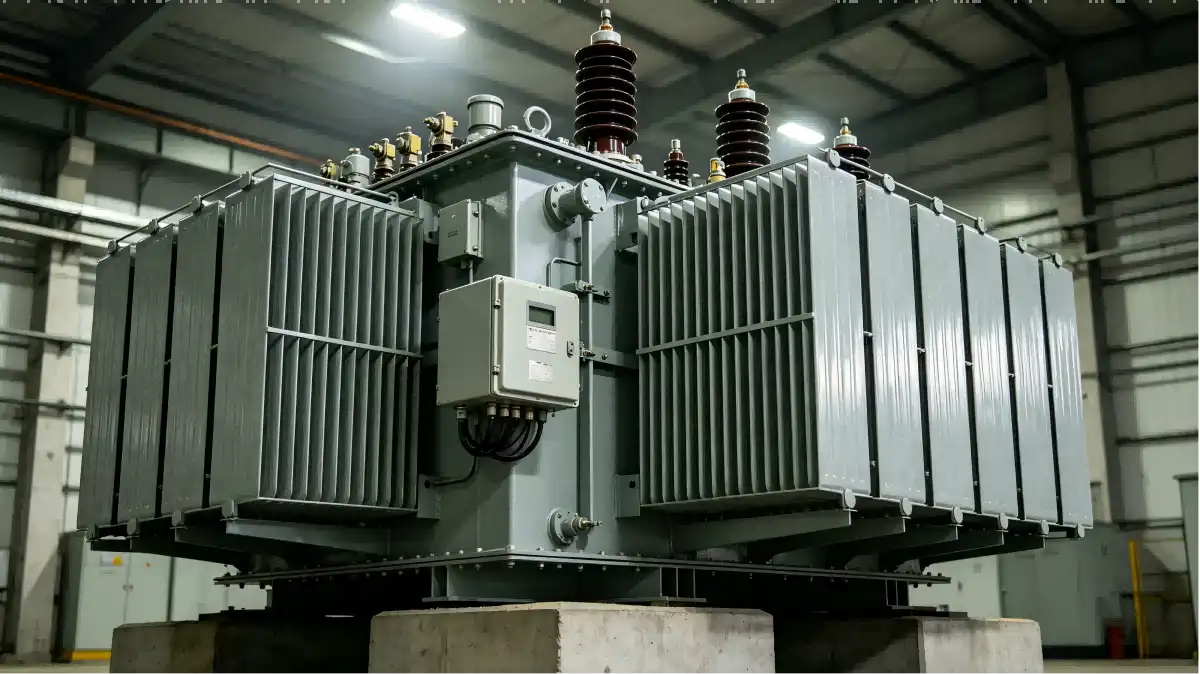
A well-made power transformer should last between 25 and 40 years with good DGA tracking and thermal load control. How long something lasts depends a lot on how much it's loaded on average and how well the shielding system keeps wetness out.
For indoor systems up to 35 kV where fire safety is important, like in business buildings, industrial buildings, and enclosed substations, choose the dry type.
Yes. When transformers are properly specified, they have low-impedance winding designs and short-circuit ratings that let them handle surge currents without damaging themselves. IEC 60076-5 spells out the short-circuit resistance standards that makers must meet. This gives buyers a performance standard that they can check.
The phase shift between the main and secondary windings is set by the vector group. When connecting two transformers in parallel, the vector groups must match. If they don't, large currents will form that can damage both units right away.
It is common to take samples of oil once a year. Units that are under a lot of stress or are essential to the grid, like those that handle big industrial loads all the time, can benefit from sampling every six months or having DGA tracking running all the time.
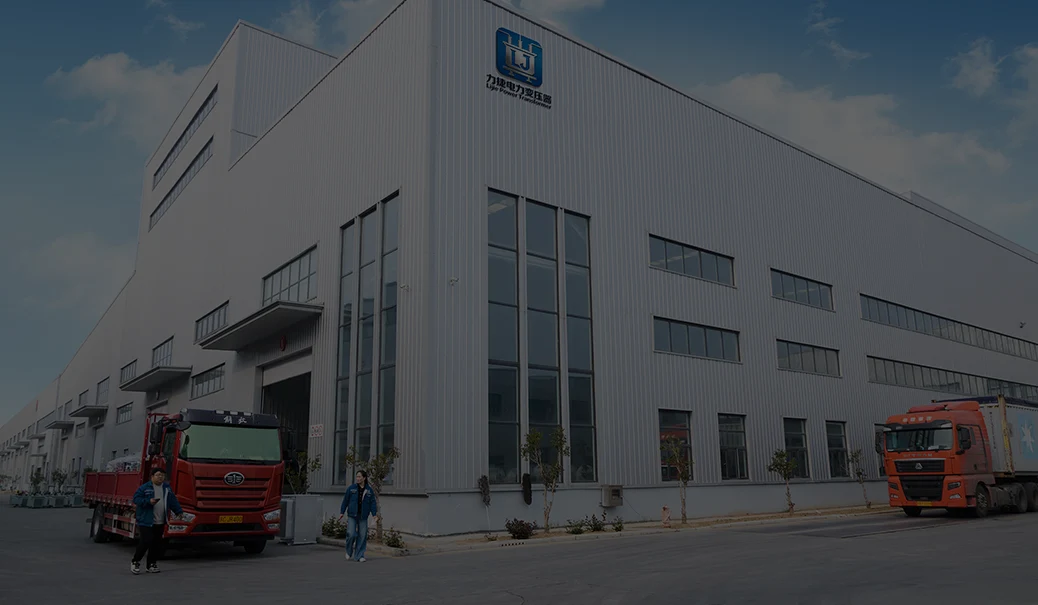
The Lijie Electric Power Technology Group makes all kinds of power transformers, from 35 kV distribution units to 500 kV ultra-high-voltage models. Their transformers are certified by ISO 9001:2015, IEC, CE, and UL. We deliver on time for large-scale projects because we are a trusted maker of electric power transformers that make more than 5 billion RMB in sales every year and ship them to more than 15 countries. For a personalized technical plan, please email our engineering team at lijieelectrical@gmail.com or visit lijie-electrical.com right now.
1. IEEE Std C57.12.00-2015 — IEEE Standard General Requirements for Liquid-Immersed Distribution, Power, and Regulating Transformers. IEEE, 2015.
2. IEC 60076-1:2011 — Power Transformers – Part 1: General. International Electrotechnical Commission, 2011.
3. CIGRE Working Group A2.37 — Transformer Reliability Survey. CIGRE Technical Brochure 642, 2015.
4. IEEE Std 519-2022 — IEEE Standard for Harmonic Control in Electric Power Systems. IEEE, 2022.
5. U.S. Department of Energy — Energy Conservation Standards for Distribution Transformers: Final Rule. DOE, 2016.
6. Kulkarni, S.V. & Khaparde, S.A. — Transformer Engineering: Design, Technology, and Diagnostics. CRC Press, 2012.
YOU MAY LIKE



13%20type%20epoxy%20resin%20cast%20transformer.webp)

April 27, 2025
With a tight project schedule, the manufacturer delivered on time, and on-site technical personnel provided guidance throughout the entire installation and commissioning process; the collaboration was highly efficient and hassle-free.
July 2, 2025
During the preliminary phase, a selection plan was custom-tailored based on the actual site load requirements, resulting in a high degree of parameter compatibility. After-sales support responds within two hours, and ongoing technical support for operation and maintenance is comprehensive; we feel completely confident in a long-term partnership.
November 18, 2025
Deployed as a supporting component for a 35kV grid-connection project at a photovoltaic power station, the equipment operates for an average of 16 hours daily. It demonstrates excellent control over no-load losses, ensures smooth power generation and grid integration, and effectively reduces the station's overall energy consumption.
January 30, 2026
Under the continuous, high-load operating conditions of a factory production line, the equipment maintains stable electrical parameters and exhibits strong overload resistance, thereby guaranteeing an uninterrupted power supply for industrial production.
April 3, 2026
Integrated as a supporting component for a new energy photovoltaic grid-connection system, the manufacturer provided professional technical coordination and timely after-sales support, ensuring seamless adaptation to the specific electrical operating conditions required for grid integration.