April 27, 2025
With a tight project schedule, the manufacturer delivered on time, and on-site technical personnel provided guidance throughout the entire installation and commissioning process; the collaboration was highly efficient and hassle-free.
Sep 11, 2026
Upgrading power infrastructure starts with understanding what sits at the core of your distribution network. A medium voltage transformer operating between 2.4 kV and 35 kV is the critical link that converts transmission-level power into usable energy for commercial and industrial facilities. When specified and maintained correctly, these units cut no-load losses, stabilize voltage under fluctuating demand, and reduce total lifecycle costs across decade-long service windows. This article walks through how modern medium voltage distribution transformers drive measurable efficiency gains—and what procurement teams should know before their next purchase decision.

These Medium Voltage Transformers connect low-voltage end-user lines to high-voltage power feeds and typically handle 2.4 kV to 35 kV. Core components—grain-oriented silicon steel cores, continuously transposed conductors, layered insulation systems, and ONAN or AN cooling configurations—allow them to absorb industrial-scale load swings without destabilizing the downstream network. (Reference: IEEE Std C57.12.00-2021)
Manufacturing plants, data centers, solar collection grids, mining sites, and large commercial campuses all depend on power distribution units at this voltage tier. In data centers, K-rated dry-type designs manage harmonic currents generated by server loads. In solar farms, step-up units handle cyclic output from string inverters. In mining operations, NEMA 3R or IP66-enclosed units resist corrosive dust and vibration where hourly downtime costs can reach five figures.
Efficiency isn't a single number—it reflects how effectively a unit converts input power to output power across its entire load range. Two loss categories define performance: no-load (core) losses, which run continuously regardless of demand, and load (copper) losses, which scale with current squared.
Here are the core efficiency variables every engineer should evaluate:
These variables compound over a 25-year service life. A unit with 15% lower no-load losses than a standard model can return its cost premium within 4–6 years through electricity savings alone, depending on utility rates and load factor. Compliance with IEC 60076 and IEEE C57 series standards ensures that published loss values are independently verifiable, giving procurement teams reliable data for total cost of ownership comparisons. (Reference: IEC 60076-1:2011)

Oil-immersed Medium Voltage Transformers suit outdoor substations, utility feeders, and applications where higher kVA ratings are needed at competitive cost. Dry-type cast-resin units are the preferred choice for indoor commercial buildings, hospitals, and data centers where fire risk mitigation overrides cost-per-kVA considerations. Neither design is universally superior—environment, load profile, and local fire codes drive the selection.
Undersizing accelerates insulation aging; oversizing inflates capital cost and increases no-load losses at partial load. Accurate sizing combines peak demand data, power factor, harmonic load content (expressed as K-factor), and projected load growth over a 10-year horizon. Most engineers apply a 75–85% nameplate loading target as a practical operating band.
When evaluating vendors, total cost of ownership matters more than unit price. Lead time, batch consistency, certification scope, and post-installation technical support all affect project risk. Established manufacturers with ISO 9001 certification, IEC-compliant test reports from accredited laboratories, and proven export logistics reduce procurement exposure on large-volume or time-sensitive projects.
Proper foundation leveling, adequate ventilation clearances, and correctly torqued buswork connections prevent the majority of early-life failures. Before energization, insulation resistance testing (Megger test), turns ratio verification, and winding resistance measurement confirm that the Medium Voltage Transformer survived shipping and installation without hidden damage.
For oil-filled units, dissolved gas analysis (DGA) performed annually identifies incipient faults—arcing, overheating, partial discharge—before they escalate. Infrared thermography of connection points and load tap changers during scheduled outages provides non-invasive fault detection. Dry-type units benefit from periodic visual inspection for surface contamination and annual partial discharge testing. (Reference: CIGRÉ Technical Brochure 771, 2019)
These routines extend service life toward the 30-year design target and protect the capital investment embedded in large commercial power infrastructure.

Real project data consistently validates the efficiency argument for premium Medium Voltage Transformer specification. A steel processing facility in the Midwest replaced aging standard-efficiency distribution units with amorphous alloy units rated at 2,500 kVA, 13.8 kV / 480 V. Metered data over 18 months showed a 62% reduction in no-load losses and a 9.4% decrease in annual electricity consumption attributed to transformer losses—translating to approximately $47,000 in annual energy savings at prevailing industrial tariffs. (Reference: EPRI Report 3002019537, 2021)
A multinational logistics company retrofitting three distribution substations for a new warehouse campus in Texas specified cast-resin dry-type units with N+1 redundancy. The project achieved zero unplanned outages during the first operational year, and the elimination of oil containment infrastructure reduced civil construction cost by $85,000 across the three installations.
These outcomes reinforce a straightforward principle: specification decisions made at the procurement stage have consequences measured in decades of operating cost, reliability, and maintainability.
Efficiency in commercial power systems depends heavily on the quality and specification of voltage transformation equipment at the Medium Voltage Transformer tier. Selecting the right design type, sizing accurately, verifying loss performance against certified test data, and maintaining units through structured condition monitoring programs collectively determine whether an investment pays back or drains operational budget. Procurement teams that treat selection as a strategic decision—rather than a commodity purchase—consistently achieve better lifecycle cost outcomes and fewer unplanned outages across their facilities.

Dry-type Medium Voltage Transformers use air or cast resin for insulation and cooling, making them suitable for indoor installations where fire safety is a priority. Oil-filled units use mineral oil or ester fluid, offering lower losses per kVA and better thermal performance for outdoor substations and higher power ratings. The choice depends on installation environment, fire code requirements, and total cost of ownership.
Industry best practice recommends a comprehensive electrical test—including insulation resistance, turns ratio, and winding resistance—every three to five years. Annual visual inspections, infrared thermography, and oil sampling (for liquid-filled units) should occur on a 12-month cycle. High-load or harsh-environment installations may warrant more frequent monitoring intervals.
Core material (silicon steel vs. amorphous alloy), voltage class, cooling type, enclosure rating, and certification requirements all affect unit price. Lead times for standard ratings typically range from 8 to 16 weeks. Custom specifications or large batch orders require early supplier engagement—ideally 6 months ahead of project milestones—to secure manufacturing slots and raw material allocation.
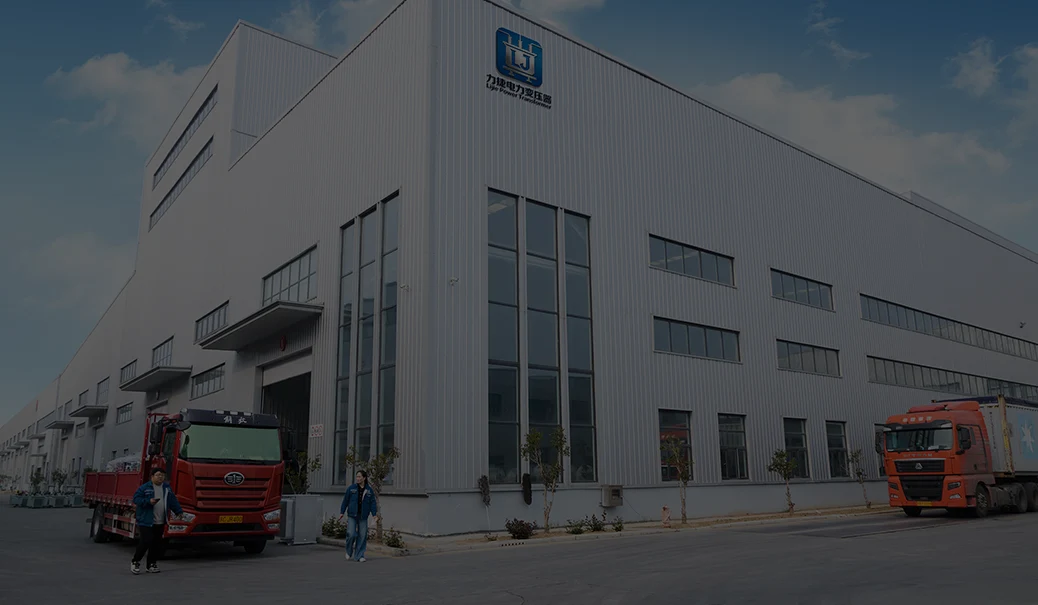
Lijie Electric Power Technology Group manufactures a comprehensive range of Medium Voltage Transformers—including dry-type, oil-immersed, amorphous alloy, and prefabricated substation solutions—backed by ISO 9001:2015, IEC, CE, and UL certifications. With annual output exceeding 5 billion RMB and two major production bases covering 500,000 square meters, we deliver consistent quality at scale. Contact our technical team to discuss your project specifications: lijieelectrical@gmail.com | lijie-electrical.com
1. IEEE Std C57.12.00-2021, IEEE Standard for General Requirements for Liquid-Immersed Distribution, Power, and Regulating Transformers. IEEE, 2021. https://standards.ieee.org/ieee/C57.12.00/10695/
2. U.S. Department of Energy, Energy Efficiency Standards for Distribution Transformers: Final Rule Technical Support Document. DOE, 2023. https://www.energy.gov/eere/buildings/articles/doe-finalizes-efficiency-standards-distribution-transformers
3. IEC 60076-1:2011, Power Transformers – Part 1: General. International Electrotechnical Commission, 2011. https://webstore.iec.ch/publication/590
4. CIGRÉ Technical Brochure 771, Transformer Reliability Survey. CIGRÉ, 2019. https://www.cigre.org/GB/EVENTS/brochure-771
5. EPRI Report 3002019537, Amorphous Metal Transformer Performance Assessment. Electric Power Research Institute, 2021. https://www.epri.com/research/products/3002019537
6. U.S. Department of Energy, Transformer Basics and Energy Efficiency. Office of Industrial Technologies, 2022. https://www.energy.gov/sites/default/files/2014/04/f15/amo_motors_trans_fs.pdf
YOU MAY LIKE

H15%20type%20three-phase%20fully%20sealed%20distribution%20transformer.webp)


14%20Epoxy%20Resin%20Dry%20Type%20Transformer.webp)


April 27, 2025
With a tight project schedule, the manufacturer delivered on time, and on-site technical personnel provided guidance throughout the entire installation and commissioning process; the collaboration was highly efficient and hassle-free.
July 2, 2025
During the preliminary phase, a selection plan was custom-tailored based on the actual site load requirements, resulting in a high degree of parameter compatibility. After-sales support responds within two hours, and ongoing technical support for operation and maintenance is comprehensive; we feel completely confident in a long-term partnership.
November 18, 2025
Deployed as a supporting component for a 35kV grid-connection project at a photovoltaic power station, the equipment operates for an average of 16 hours daily. It demonstrates excellent control over no-load losses, ensures smooth power generation and grid integration, and effectively reduces the station's overall energy consumption.
January 30, 2026
Under the continuous, high-load operating conditions of a factory production line, the equipment maintains stable electrical parameters and exhibits strong overload resistance, thereby guaranteeing an uninterrupted power supply for industrial production.
April 3, 2026
Integrated as a supporting component for a new energy photovoltaic grid-connection system, the manufacturer provided professional technical coordination and timely after-sales support, ensuring seamless adaptation to the specific electrical operating conditions required for grid integration.