April 27, 2025
With a tight project schedule, the manufacturer delivered on time, and on-site technical personnel provided guidance throughout the entire installation and commissioning process; the collaboration was highly efficient and hassle-free.
Oct 21, 2026
Voltage instability is one of the most expensive problems a large industrial facility can face. A single voltage sag can shut down a production line, damage sensitive equipment, or trigger cascading failures across an entire electrical system. So, can a power transformer actually fix this? The short answer is yes — and in this article, I'll walk through exactly how, why, and what to look for when choosing the right solution for your facility.
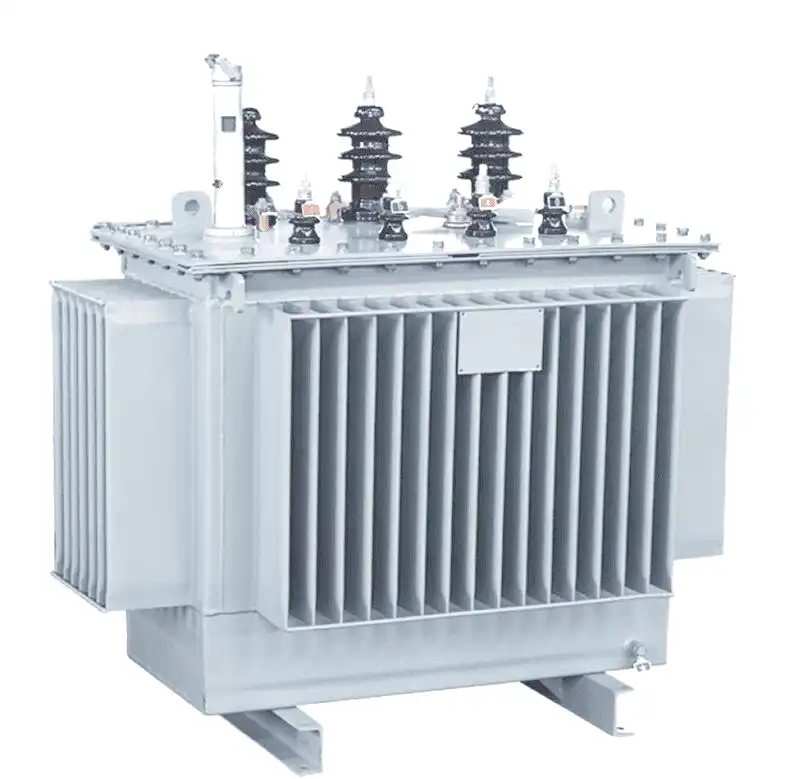
When it comes to power systems, voltage stability means how well they can keep voltage levels acceptable across all buses, even when things go wrong. IEEE Standard 1159 says that voltage differences greater than ±10% of nominal levels can make equipment not work properly, cause insulation to wear out, and cause equipment to fail before it should in industrial settings.
Electricity is stressed in a special way in large industrial settings. Power demand spikes happen instantly when heavy motors start up, electric arc furnaces turn on, or loads switch quickly. Voltage levels drop because of these events, which sometimes happen quickly enough to mess up sensitive control systems and PLCs.
Distribution networks that are older were not made to handle the loads that are used today. Long-term voltage instability is caused by transformers that are working above and beyond their stated capacity, connections that are rusted, and tap settings that are out of date. If a steel plant or chemical mill is open 24 hours a day, seven days a week with changing loads, it needs equipment that is rated for those conditions, not equipment that worked fine ten years ago.
An electricity transformer that is built well does more than just change the power. It controls the ratio of main to secondary voltage, smooths out reactive power fluctuations, and keeps sensitive industrial loads from touching the high-voltage grid. When units are made with high-permeability grain-oriented silicon steel cores and high-conductivity electrolytic copper windings, they have efficiencies of more than 99.5%. This cuts down on losses that would otherwise cause voltage drop.
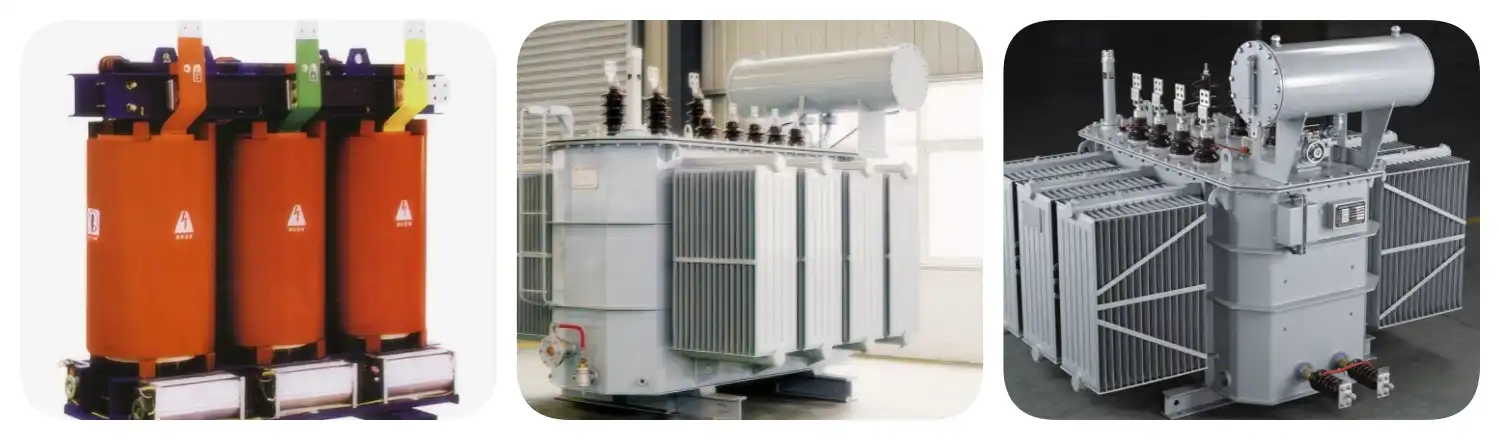
For high-capacity outdoor uses like utility substations and large industrial switchyards, oil-immersed transformers with ONAN or ONAF cooling systems work best. Dry-type units work better indoors, like in data centers, chemical plants, and green energy projects, where fire safety and environmental rules are more important. Different designs handle reactive power and harmonic distortion in different ways. Picking the wrong type for your surroundings can make the problems you're trying to fix worse.
Three-phase power transformer configurations spread electrical loads more evenly across phases, which makes voltage imbalance much less of a problem. Electric furnace transformers and rectifier transformers are designed to handle high-order harmonics and frequent load changes without damaging the insulation in heavy production settings like steel smelting or electrolysis plants. Choosing the right transformers during the design phase can save you years of trouble with voltage-related repairs.
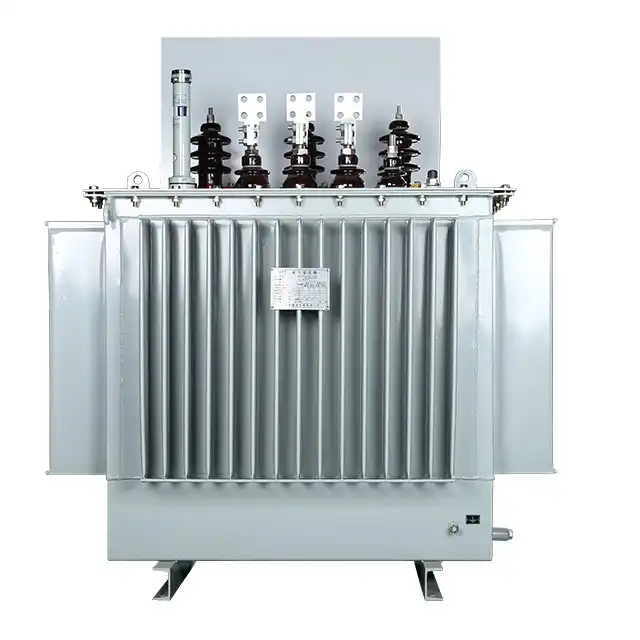
On-load tap changers (OLTC) allow operators to adjust the transformer's winding ratio while the unit remains energized. This is essential in facilities where load demand shifts significantly throughout the day. An OLTC can automatically correct voltage deviations within seconds, keeping output voltage within the rated regulation range even during sudden load spikes or grid supply variations.
Here are the core technical features that directly support voltage control:
These capabilities collectively reduce unplanned downtime and protect the broader electrical system from cascading failures caused by a single transformer fault.
Scheduled maintenance is not optional — it's the difference between a 40-year service life and a unit that fails in year 15. IEC 60076 recommends regular insulation resistance testing, oil sampling, and load profile reviews. Catching a developing fault early, before it causes a voltage event, protects both the transformer and every piece of equipment downstream.
Distribution transformers work with smaller voltages, usually less than 33kV, and are made to work with a varying partial load. Power transformers are designed to send high voltages (above 33kV) and are optimized to work as efficiently as possible when they are fully loaded. Distribution-level equipment can't regulate voltage as well as a properly rated transmission-class unit can in big industrial facilities that need a steady, high-current feed to electric arc furnaces or large motor banks.
For outdoor, high-MVA uses, oil-filled power transformer units are more cost-effective and have better heating capacity. However, they pose a risk to the environment through oil leaks and need holding areas that are surrounded by bunds. This problem is not a problem at all with dry-type transformers, which makes them better for placements near water or inside buildings. Risk estimates for each place, not just unit cost, should help make the choice.
In the transformer market, big names like Siemens, ABB, GE, and Schneider Electric are well known. But procurement managers working on big infrastructure and industrial projects are looking more and more for manufacturers who can offer certified, custom solutions at low lifecycle costs and reliable bulk delivery. When judging a seller, you should look at their IEC/CE/UL certifications, factory testing procedures, level of after-sales support, and how well they've handled big orders in the past.
Transformer supply chains are getting tighter because of the need for grid infrastructure and the integration of renewable energy around the world. In some areas, lead times for large-capacity units have grown. Teams in charge of buying things should plan their orders 16–24 weeks ahead of time for basic units and longer for custom specs. By making bulk order deals with makers, you can lock in stable prices and delivery times that work with your project's schedule.
Heavy transport coordination, site preparation for proper foundation loading, and alignment with installation contractors are all needed to move high-MVA transformers. When suppliers help with the whole project, from factory acceptance testing (FAT) to on-site commissioning, it makes things easier for project managers and lowers the risk of delays.
Spot buying is not the best way to get things for large-scale generator projects. Long-term framework deals with manufacturers who keep stable production capacity, expert engineering teams, and service networks after installation give better value over the 25–40 year life of an asset. Any real industrial buying program must start by choosing a manufacturer that has ISO 9001:2015 certification and a history of meeting IEC and national standards.
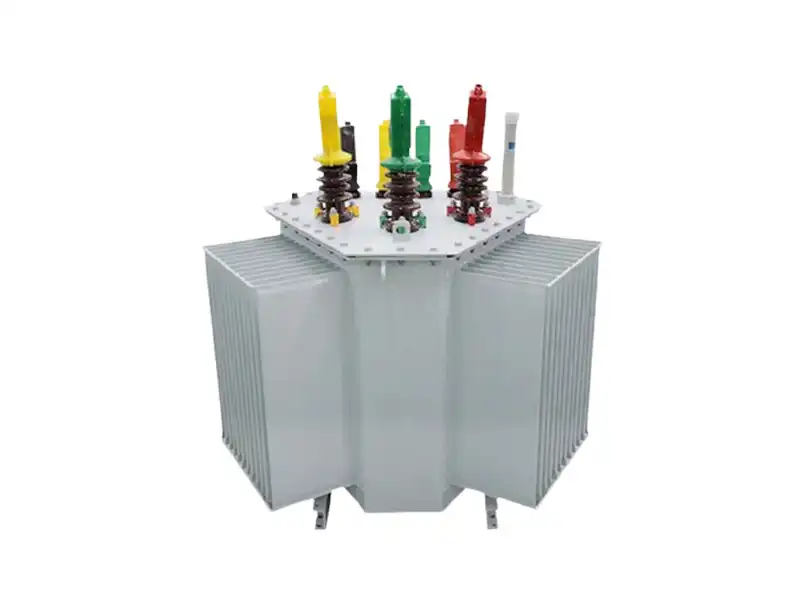
One of the best ways to keep voltage stable in big industrial facilities is to use a power transformer that has been properly chosen and maintained. The main reasons for voltage instability are directly addressed by current transformer technology. This includes real-time tap changing, load balancing, harmonic suppression, and smart tracking. It's important to get the right unit for the job and work with a maker that knows how to handle the technical and organizational needs of large-scale power systems.
Annual visual inspections are standard practice, with comprehensive maintenance — including insulation resistance testing and oil analysis — recommended every three to five years. DGA monitoring on oil-filled units should be continuous or at least semi-annual. Facilities running heavy, variable loads should increase their inspection frequency accordingly.
Unusual humming or vibration, oil discoloration, abnormal temperature readings, and tripped protection relays are common indicators. DGA results showing elevated levels of acetylene or hydrogen in oil samples signal active internal faults requiring immediate attention. Catching these early prevents voltage disruption events and protects downstream equipment.
For most large industrial facilities, yes. Three-phase configurations deliver more balanced voltage distribution across phases, reduce neutral conductor losses, and offer better fault tolerance than single-phase setups. For applications like mining operations or chemical processing, the operational gains from three-phase supply typically justify the upfront upgrade cost within a few years.
With proper thermal management and scheduled maintenance, a high-quality unit typically operates for 25 to 40 years. Service life depends heavily on operating temperature, load cycling frequency, and moisture control in the insulation system.
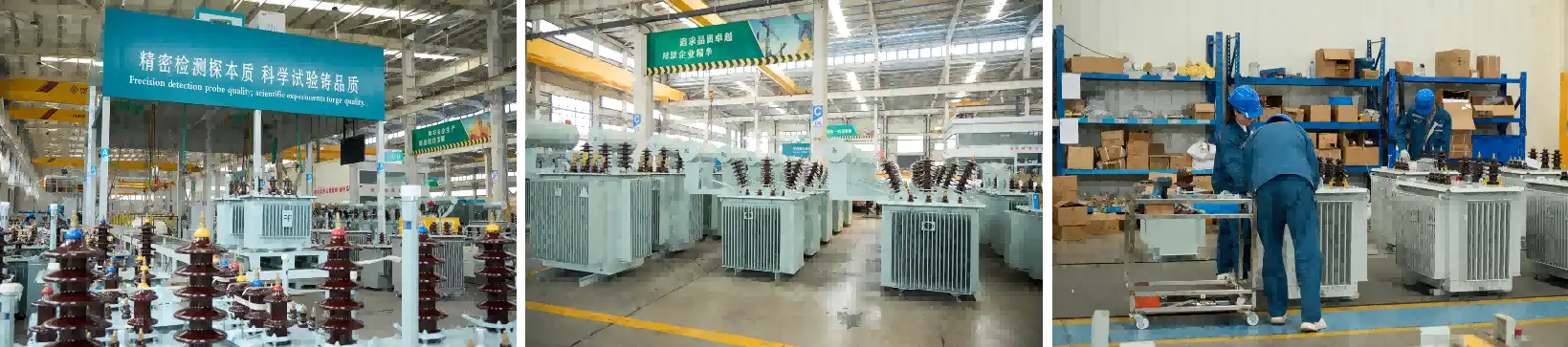
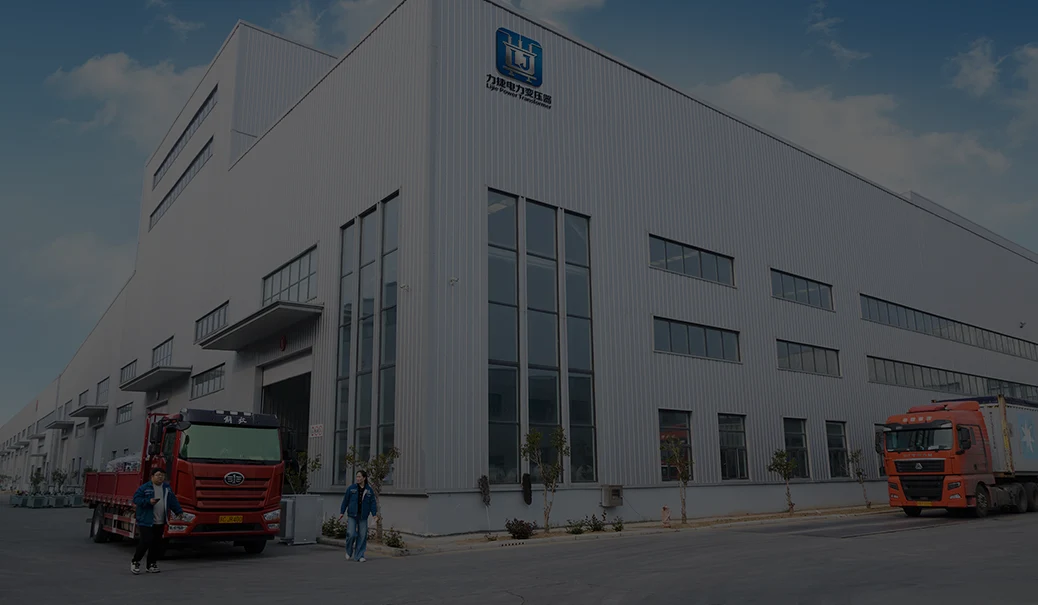
The Lijie Electric Power Technology Group makes approved transformers that meet IEC, CE, and UL standards. Their models range from 10kV power units to 500kV ultrahigh voltage ones. We can handle large-scale project orders with consistent quality and on-time delivery thanks to our more than3,500 workers, 800,000 m² of production space, and yearly sales of more than 9 billion RMB. Because we are a reliable power transformer maker, we offer full after-sales service after the sale for all of our products. For a detailed discussion, email us at lijieelectrical@gmail.com or go to lijie-electrical.com.
1. IEEE Standard 1159-2019, IEEE Recommended Practice for Monitoring Electric Power Quality, IEEE, 2019.
2. IEC 60076-1:2011, Power Transformers – Part 1: General, International Electrotechnical Commission, 2011.
3. IEEE C57.12.00-2015, IEEE Standard for General Requirements for Liquid-Immersed Distribution, Power, and Regulating Transformers, IEEE, 2015.
4. Kundur, P., Power System Stability and Control, McGraw-Hill, 1994.
5. U.S. Department of Energy, Transformer Efficiency and Reliability in Industrial Applications, Office of Energy Efficiency & Renewable Energy, 2020.
6. Montsinger, V.M., "Loading Transformers by Temperature," Transactions of the American Institute of Electrical Engineers, 1930.
YOU MAY LIKE




April 27, 2025
With a tight project schedule, the manufacturer delivered on time, and on-site technical personnel provided guidance throughout the entire installation and commissioning process; the collaboration was highly efficient and hassle-free.
July 2, 2025
During the preliminary phase, a selection plan was custom-tailored based on the actual site load requirements, resulting in a high degree of parameter compatibility. After-sales support responds within two hours, and ongoing technical support for operation and maintenance is comprehensive; we feel completely confident in a long-term partnership.
November 18, 2025
Deployed as a supporting component for a 35kV grid-connection project at a photovoltaic power station, the equipment operates for an average of 16 hours daily. It demonstrates excellent control over no-load losses, ensures smooth power generation and grid integration, and effectively reduces the station's overall energy consumption.
January 30, 2026
Under the continuous, high-load operating conditions of a factory production line, the equipment maintains stable electrical parameters and exhibits strong overload resistance, thereby guaranteeing an uninterrupted power supply for industrial production.
April 3, 2026
Integrated as a supporting component for a new energy photovoltaic grid-connection system, the manufacturer provided professional technical coordination and timely after-sales support, ensuring seamless adaptation to the specific electrical operating conditions required for grid integration.