April 27, 2025
With a tight project schedule, the manufacturer delivered on time, and on-site technical personnel provided guidance throughout the entire installation and commissioning process; the collaboration was highly efficient and hassle-free.
Oct 18, 2026
High voltage transformers are central to every major segment of modern power infrastructure. Whether it's stepping up generator output at a thermal plant, stabilizing voltage flow through a transmission substation, or integrating solar and wind energy into the grid, these devices carry the electrical load that keeps industries and communities running. For procurement managers, electrical engineers, and EPC contractors, understanding how these transformers function across different applications is the first step toward making the right sourcing decisions.
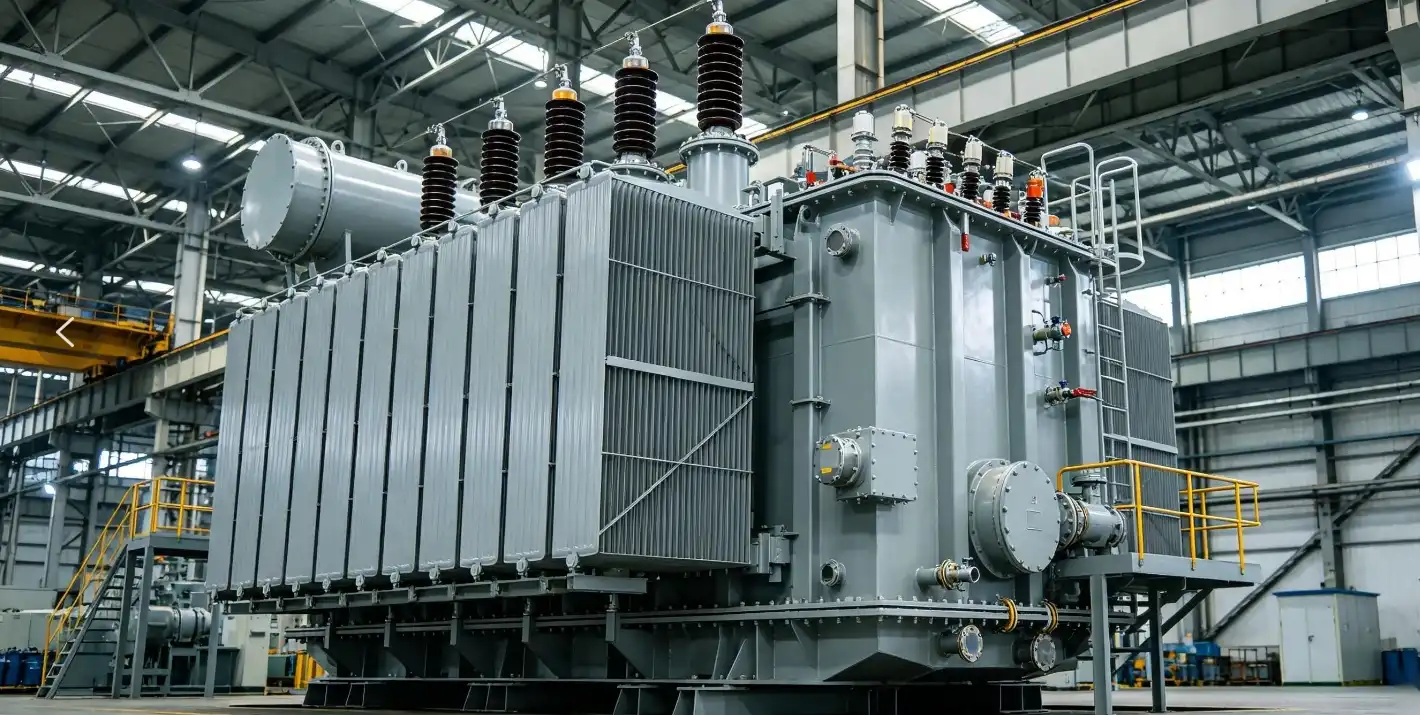
A high voltage transformer can handle voltages higher than 33kV, and ultrahigh voltage (UHV) types can handle voltages up to 1100kV. Through electromagnetic induction, these units move electricity between circuits. They can either step up the power for long-distance transmission or step it down for use in factories and delivery centers. When voltage is higher during transmission, current is lower. This lowers I²R line losses immediately, which is a key way to lower lifecycle running costs.
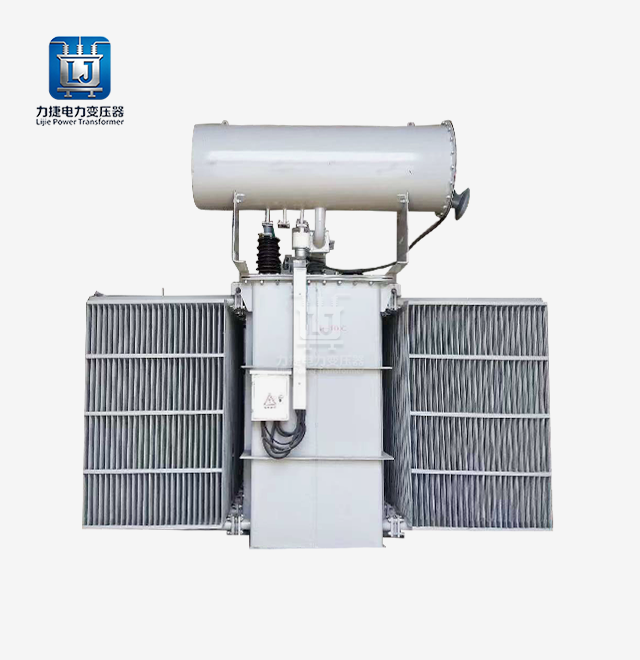
The two main types of building work best in different settings. Mineral or manufactured ester fluid is used to cool and insulate oil-immersed transformers. This makes them perfect for use in outdoor substations and high-MVA power plants. Dry-type units use solid and air insulation, which makes them safer for indoor installations like industrial facilities and urban distribution centers. When the load is full, cooling methods like ONAN (Oil Natural Air Natural) and ONAF (Oil Natural Air Forced) directly affect how stable the temperature is.
In the magnetic core of most new units, cold-rolled grain-oriented (CRGO) silicon steel is used. This material cuts down on hysteresis and eddy current losses by a large amount. Performance guidelines are based on IEC 60076 and IEEE C57.12.00, which have strict rules about no-load losses, short-circuit resistance, and partial discharge levels (usually less than 10pC). Buyers who want an asset to be reliable in the long term must meet these standards.
In the transmission network, substations are like nodes. At each node, a transformer checks the voltage to make sure it stays within safe limits. Step-down transformers lower the voltage from 230kV or 500kV to a level that can be distributed, and step-up units allow power to move backward in renewable systems that are linked to the grid. Stable power control keeps devices further down the line safe and keeps the grid from becoming unstable during times of high demand.
Because substations are always on, when a high voltage transformer fails, it has big financial and operational effects. Some modern testing tools are Dissolved Gas Analysis (DGA) for finding early signs of insulation breakdown, Sweep Frequency Response Analysis (SFRA) for checking mechanical soundness after transport, and Partial Discharge (PD) measurement for keeping an eye on the health of insulation. Setting up these tests on a regular basis increases service life and lowers the number of unexpected outages.
At places where power lines connect to each other, transformers have to deal with changing loads, fault current surges, and sudden switching events. These needs are better met by units that have Buchholz switches and on-load tap changers (OLTC). How the transformer reacts to unbalanced loads and harmonics from industrial equipment depends on the vector group configuration. This can be delta-star, star-star, or some other arrangement.
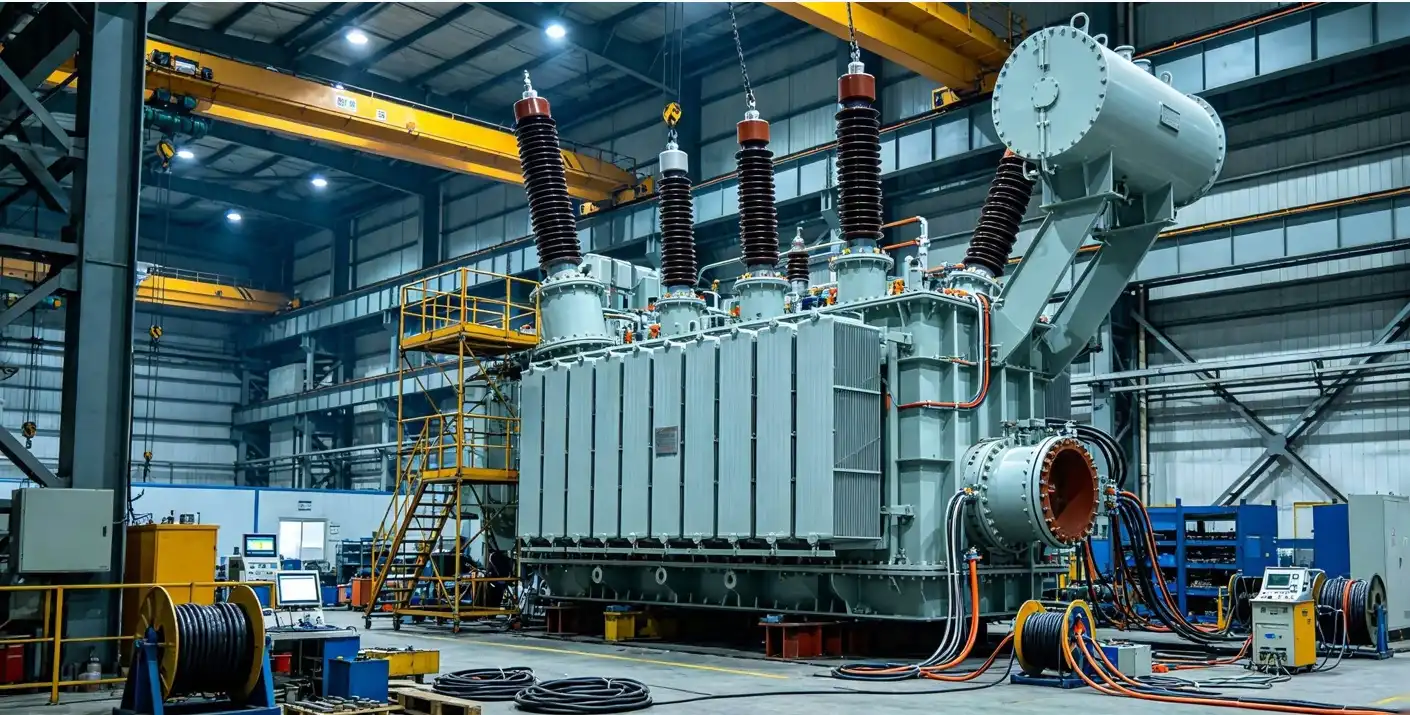
Standard power plants use a generator step-up (GSU) transformer to connect the generator output, which is usually between 11kV and 25kV, to the 230kV or 500kV high-voltage transmission bus. These transformers are always under heat stress and need to keep their resistance within very small ranges so that the voltage doesn't change when the load changes. To make sure that the cooling system works consistently when it's under full load, temperature rise tests must be done.
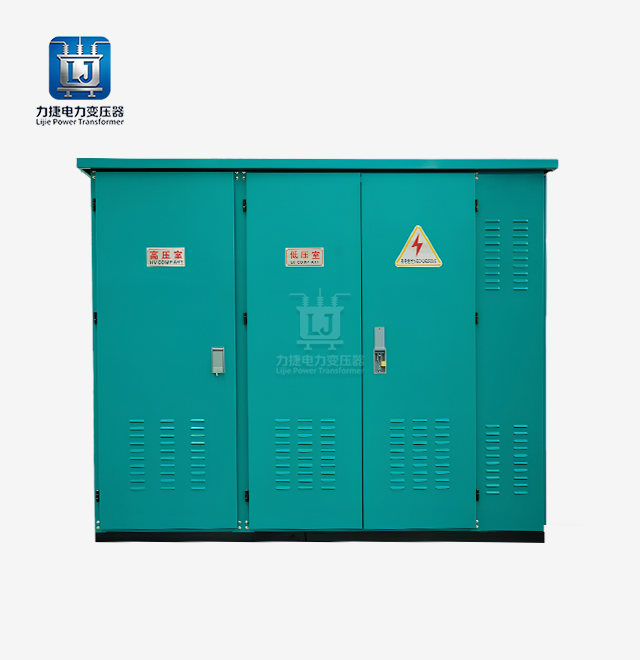
There are different needs for solar farms and wind power plants. In these situations, transformers need to be able to handle varied, two-way load flows and, in the case of offshore wind use, remain corrosion-resistant in salty environments. Large solar arrays are using prefabricated substations with dry-type transformers more and more because they are easier to transport to remote sites and take less time to install. Both IEC 60076 and grid interconnection codes need to be met by designs that are made just for these uses.
Teams that buy power plants look at a lot of technical and practical factors. Usually, people decide what to buy based on these main factors:
Rate of capacity (MVA): This must match the output of the generator and the rated capacity of the transmission system.
The U.S. Energy Information Administration (EIA) said that by 2035, U.S. energy usage will have grown by more than 15%. This is mostly due to the growth of data centers, the use of electric vehicles, and the electrification of factories. To meet that demand, the high voltage transformer transmission infrastructure needs to grow. At both ends of every mile of new transmission line, step-up and step-down transformers are needed.
These days, expanding the grid isn't just about adding more power. Adding thought is also part of it. Grid workers can find problems early on when transformers are connected to digital tracking systems that include real-time DGA sensors, thermal imaging, and remote SCADA connectivity. National grid companies and regional utilities are asking for these features more and more in their buying requirements.
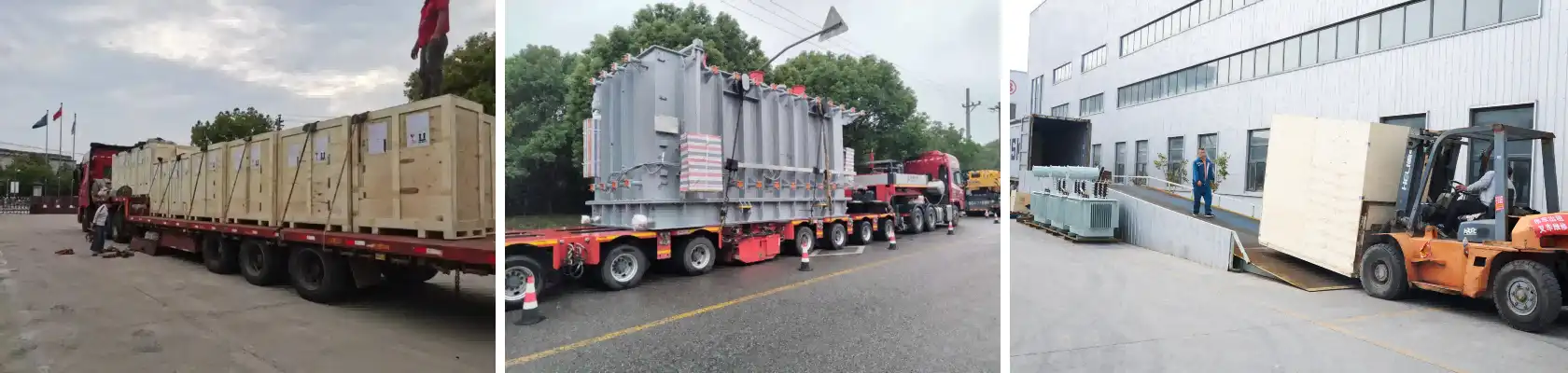
For big grid projects, dozens or even hundreds of transformer units need to be supplied on time and in the right order. This puts a lot of pressure on suppliers to handle wait times, make sure batches are consistent, and meet demand. When buyers buy from companies that have large production facilities and documented ISO 9001 quality systems, there are fewer delays and less variation in how well equipment works from batch to batch.
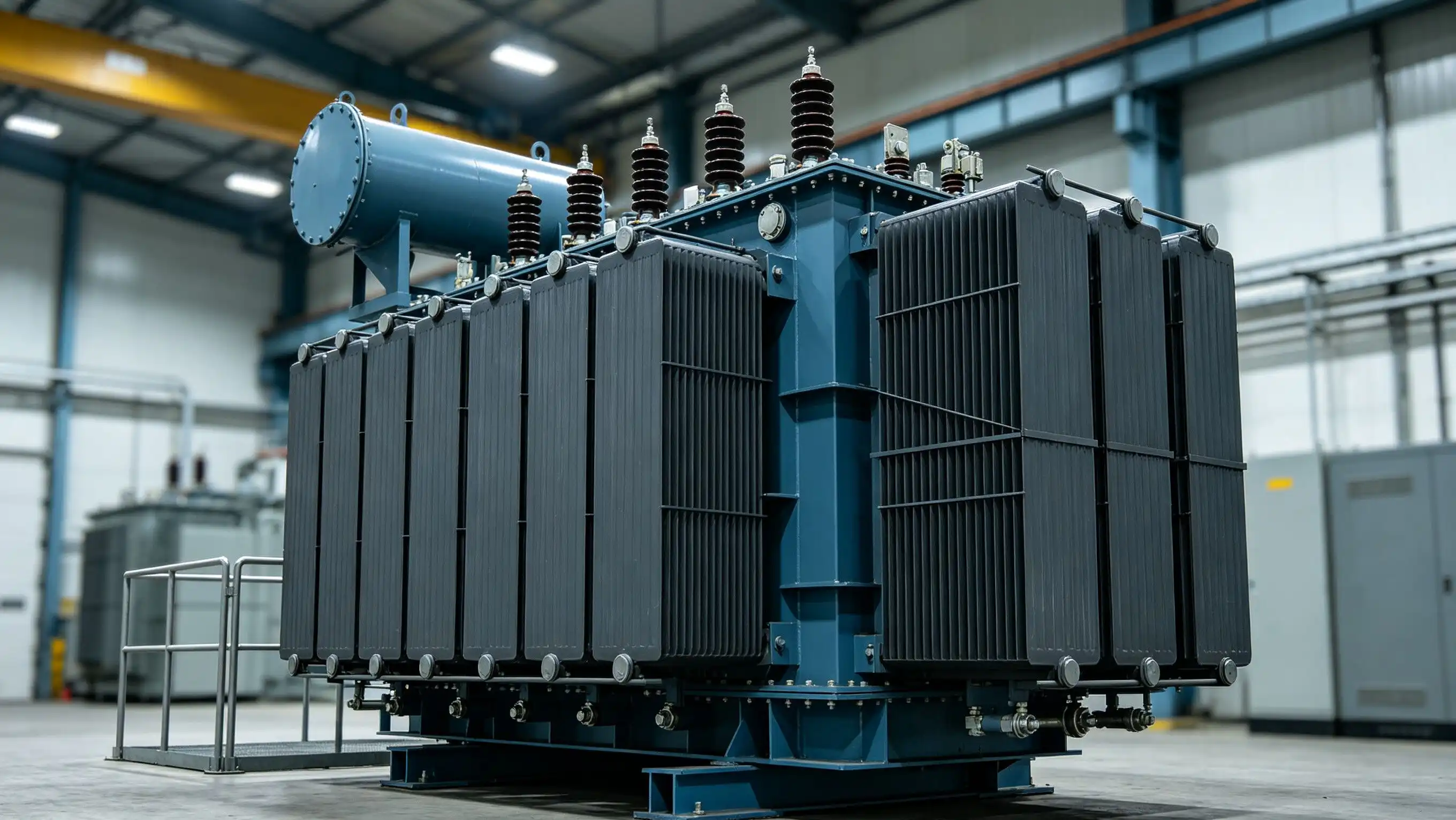
The voltage ratio and rated capacity needed for the project are always the first things that are looked at. The specs for a 500kV GSU transformer for a coal-fired plant are very different from those for a 35kV distribution transformer for an industrial park. If these factors are correctly matched during the planning stage, costly changes in the field will not be needed.
The price you pay is only one part of the issue. The total cost of ownership includes both no-load losses and load losses, as well as the cost of upkeep and the expected length of service life. Even though they cost a little more at first, transformers with CRGO cores and vacuum-impregnated insulation systems usually have lower operating costs over 25 to 30 years.
Before signing any deal, buyers should make sure they have full records of all the routine, type, and special tests that were done by recognized third-party labs. You should look for ISO 9001:2015, IEC compliance, CE, UL, and approvals from your own country. Test records from places like the National Transformer Quality Supervision and Inspection Center make people even more responsible.
Every significant project involving power infrastructure is supported by high voltage transformer units. To choose the right unit, you need to know exactly what the application needs, what the technical specs are, and how much it will cost in the long run. If you are looking for equipment for a new substation, a renewable energy facility, or a grid expansion project, make sure that the manufacturer you choose has the right certifications and a steady production capacity. This will determine the success of your project over its entire life.
High voltage transformers generally cover voltage levels from 33kV up to 1100kV for UHV transmission applications. Distribution-grade units often operate between 10kV and 35kV, while transmission-class models step up to 110kV, 220kV, 500kV, or higher depending on the grid architecture.
With proper maintenance and diagnostic monitoring, a well-built power transformer can operate reliably for 25 to 30 years. Scheduled DGA testing, thermal monitoring, and on-site inspection are the primary maintenance activities that extend service life.
Oil-filled models use dielectric fluid for insulation and heat dissipation, making them better suited for high-MVA outdoor applications. Dry-type units use air and solid insulation, which reduces fire risk and simplifies maintenance in indoor or enclosed environments like industrial facilities and urban substations.
Lead times for custom high voltage transformers generally range from 12 to 26 weeks, depending on rated capacity, special design requirements, and the manufacturer's current production schedule. Buyers with large-volume project needs should factor this into their project planning timeline.
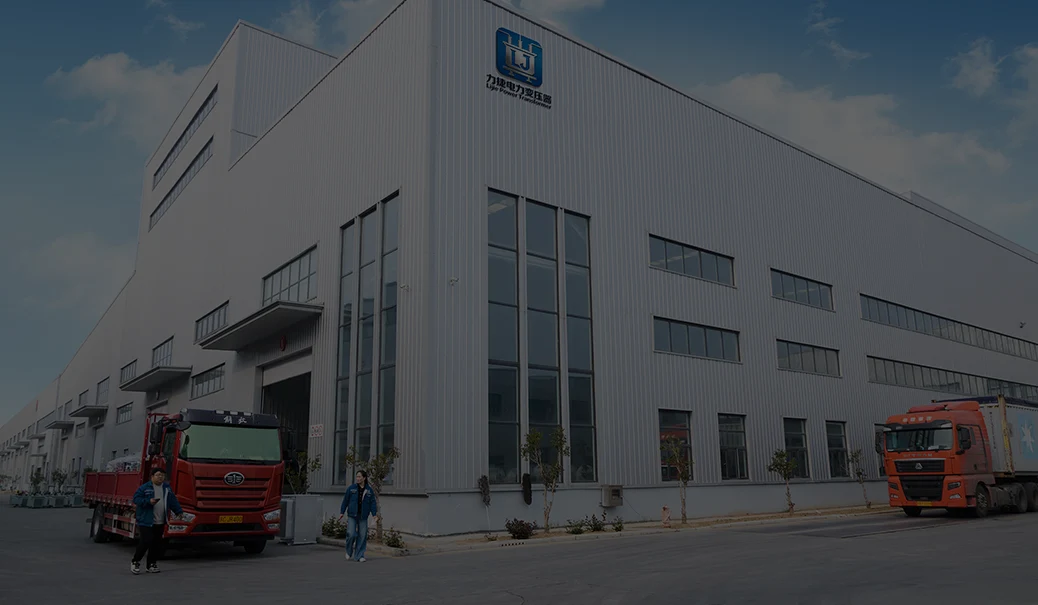
The Lijie Electric Power Technology Group makes high voltage transformers, ranging from 10kV power units to 500kV ultrahigh voltage types. Their products are certified by ISO 9001:2015, IEC, CE, and UL. We have two factories in Xuzhou and Nantong that are each 800,000 square meters. We have more than 400 engineers working for us, and they can fully customize substations, power plants, and grid growth projects. As a reliable high-voltage transformer provider that sends goods to more than 86 countries, we are open to long-term business relationships.
Email us at lijieelectrical@gmail.com or visit our website at lijie-electrical.com.
1. IEEE Standard C57.12.00 – IEEE Standard for General Requirements for Liquid-Immersed Distribution, Power, and Regulating Transformers, IEEE, 2021.
2. IEC 60076-1 – Power Transformers – Part 1: General, International Electrotechnical Commission, 2011.
3. U.S. Energy Information Administration – Annual Energy Outlook 2023, U.S. Department of Energy, 2023.
4. Kulkarni, S.V. & Khaparde, S.A. – Transformer Engineering: Design, Technology, and Diagnostics, CRC Press, 2012.
5. Heathcote, M.J. – The J&P Transformer Book, 14th Edition, Newnes/Elsevier, 2011.
6. CIGRE Working Group A2.37 – Transformer Reliability Survey, CIGRE Technical Brochure 642, 2015.
YOU MAY LIKE
12%20type%20epoxy%20resin%20cast%20transformer.webp)

10%20type%20dry-type%20distribution%20transformer.webp)



April 27, 2025
With a tight project schedule, the manufacturer delivered on time, and on-site technical personnel provided guidance throughout the entire installation and commissioning process; the collaboration was highly efficient and hassle-free.
July 2, 2025
During the preliminary phase, a selection plan was custom-tailored based on the actual site load requirements, resulting in a high degree of parameter compatibility. After-sales support responds within two hours, and ongoing technical support for operation and maintenance is comprehensive; we feel completely confident in a long-term partnership.
November 18, 2025
Deployed as a supporting component for a 35kV grid-connection project at a photovoltaic power station, the equipment operates for an average of 16 hours daily. It demonstrates excellent control over no-load losses, ensures smooth power generation and grid integration, and effectively reduces the station's overall energy consumption.
January 30, 2026
Under the continuous, high-load operating conditions of a factory production line, the equipment maintains stable electrical parameters and exhibits strong overload resistance, thereby guaranteeing an uninterrupted power supply for industrial production.
April 3, 2026
Integrated as a supporting component for a new energy photovoltaic grid-connection system, the manufacturer provided professional technical coordination and timely after-sales support, ensuring seamless adaptation to the specific electrical operating conditions required for grid integration.